Showing posts with label future of journalism. Show all posts

Sunday, May 23, 2021

How the News returned to Cinema, rendering 70 years of Television obsolete


 In the 1970s the unthinkable happened. A thriving industry by which the public was informed about the latest news and current affairs was largely proclaimed dead. New media technology, swiftness and style from a relatively new contender, television, made Newsreels unattractive to audiences.

Some years earlier no right thinking Newsreel executive would ever have imagined their days were numbered, even links with a fledgling BBC getting into the TV news market. They (BBC) need us, would have been any riposte to impending doom.

Since 1910 with the first newsreel by the French Pathe called Animated Gazette, and the gaining in popularity in the 1920s, with films from outfits such as British Movietone News, the public were sated by Newsreels.
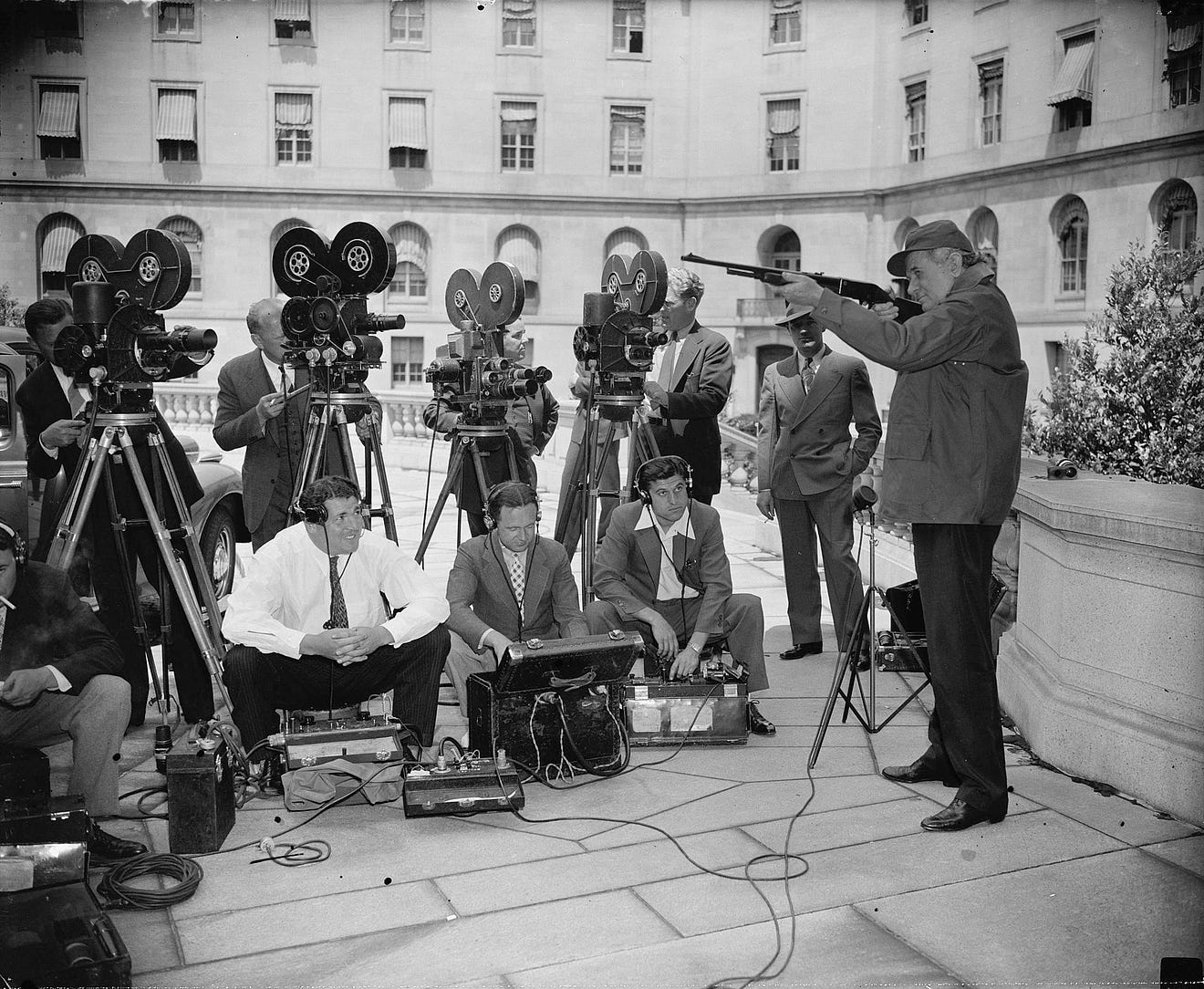
Wiki — Creative Commons

Features could vary in tone, such as serious news and war coverage in which cameramen used revolutionary small hand cameras, compared to the clunky (Mickey Mouse ears) ones in use in this photo.

The arrival of Black Britons on Windrush was covered by Newsreels, explained here in an excellent piece by Dr Luke McKernan from the British Library.

Then there was the absurd and fashionable and an indifference to news with , jaunty music and jocular mocking narrations, that would earn Newsreels scorn from scholars.

Television News hadn’t been invented in the 1940s, much less refined in the 60s from what is its legacy today. Public arenas designated as cinemas would take to showing five minute features of news from around the world before the main feature. It would be the equivalent of watching, what would now be, a BBC news bulletin before Bond’s Skywalker at a multiplex.

Here’s where the record on history scratches to a stop, and the real relevance of this piece begins, because the shunned newsreel executives from yesteryear may be in for the last laugh. History, does at least have a sense of humour.

No right thinking television news exec would contemplate TV News dying. It’s a multi billion industry, but the writing is writ large on the wall of AI, consumer choice, and new styles.

Just as the threat to Newsreels were technology, style of production, and immediacy, the threat to TV News is the same.

And just as new custodians took over from the old guard, so here too the new contenders will oust an antiquated form of production. This 30 second clip here from a previous senior BBCs News executive sums it up.

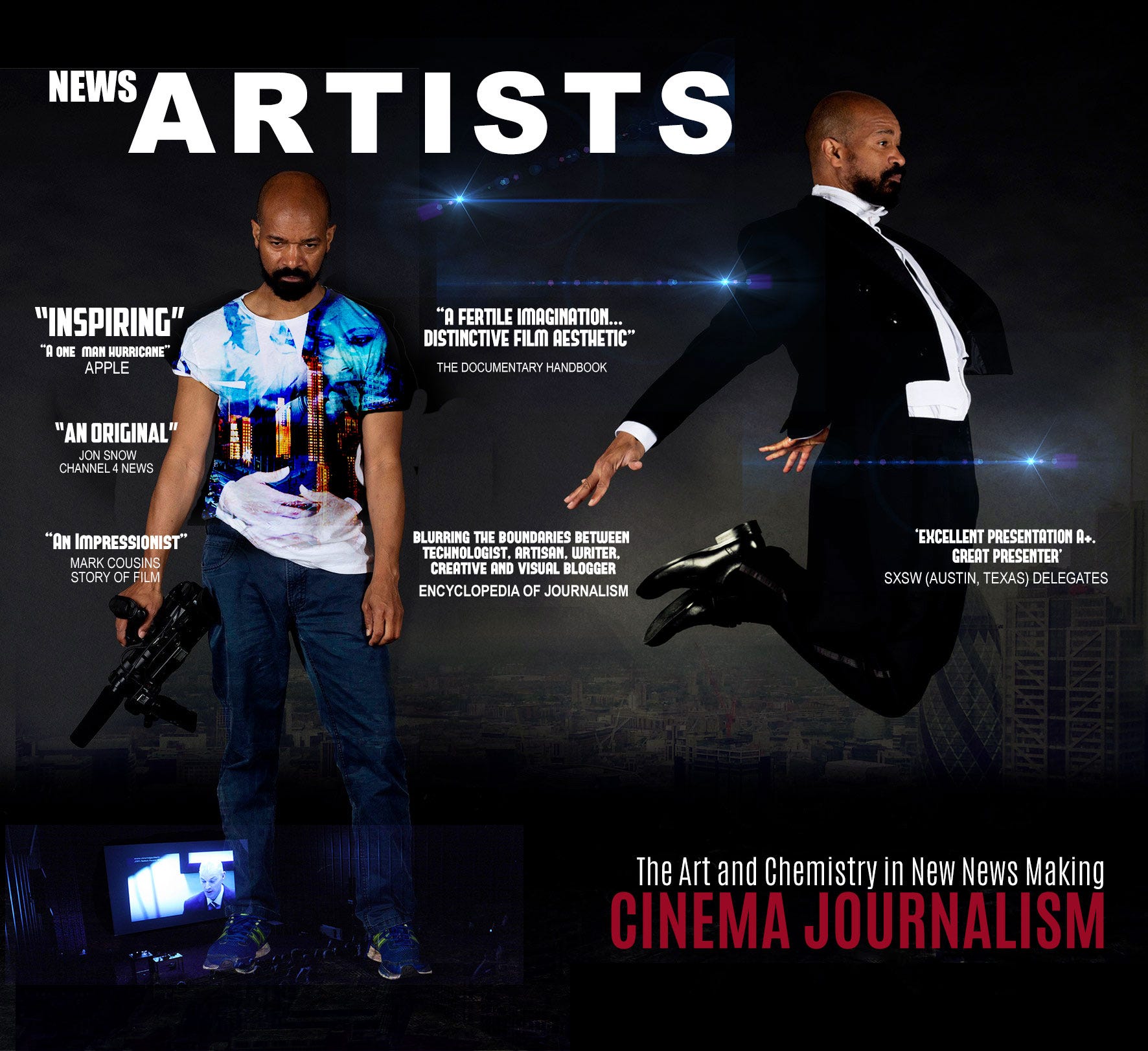
I started tracking this phenomena back in the 1990s, when I was part of a UK-wide media social experiment. This piece’s cover photo (thank you David Freeman) signifies the duality in analyses.

Firstly, the experience as a journalist who makes news films and has been doing so since 1994, when as a videojournalist it was unheard off. I’ve since trained thousands of journalist across the world. And before then reporting from Apartheid South Africa for the BBC World Service.

To the executive and academic side of explaining future trends in storytelling, such as here as a keynote speaker to one of the city of London’s dynamic entrepreneurs, The Guild of Entrepreneurs, and News Xchange.


This week I had the opportunity to speak to staff at a TV station in Denmark about the future. The threat to television exists, from amongst others, technology in AI, public boredom with the status quo, but also new platforms in streaming services. News, but not as you know it, in the same way Newsreels were caught napping is about to have a sense of de ja vu.

“A style of delivery that hasn’t changed… cannot be the answer” in the above clip, says Pat Loughrey, so what is?

Ironically the very thing ‘cinema’ discarded in Newsreels is resurfacing with lessons learned. Cinema back in the 1930s meant different things, a venue and style of filmmaking and not necessarily fictional.
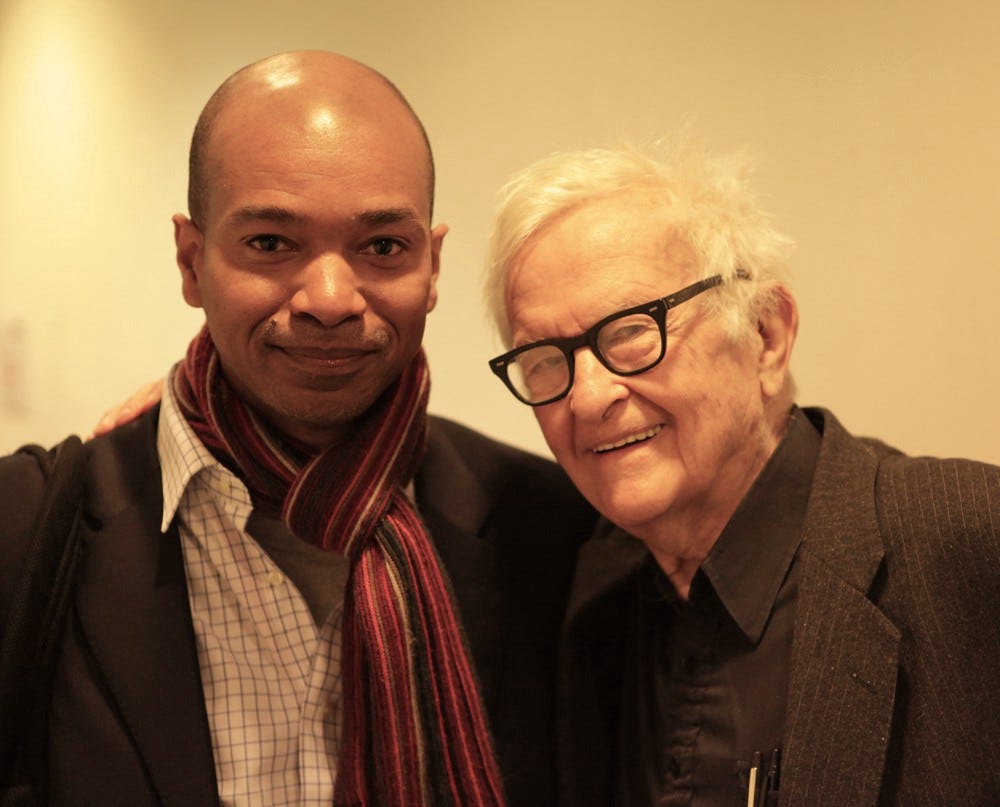
In the 60s one pioneer, Robert Drew with his friends such as Albert Maysles (photographed here at the Sheffield Documentary festival) was transparent about it, giving his way of doing news, a label, “Direct Cinema”.

It survived, albeit in limited form. News executive would be damned if they were going to let a style of filmmaking overturn a business and class model which was gaining ground.

From here to the present lessons have been learned. What will prompt change is happening right now in the shape of new streaming services. Not by taking a style and transposing it on this new form as news executives first did with the Internet. They simply lifted the newspaper onto the web, but by acquiring fresh thinking promulgated by audiences.

At most a decade is the cut off point. It’s easy to sneer. This cutting from 1963 spoke of Mobile phones in the future; something I repeated with a team speaking to the BBC in 2004, when mobiles as they exist then hadn’t surfaced.

The question you might ask yourself, as we have done in our Future Lab, is in the face of change and mergers, such as AT&T’s intended fusion with Disney, what would happen if Netflix or HBO did News?

The future of this revolution, much like the industrial one the shaped the multi-billion pound art industry will involve audiences seeking to come into more contact with new news artists. Expressions will be based on what the artists see rather than what they know. And it will fuel a yearning for new content and innovation from audiences, proven by Netflix’s growth over the last 15 years. People easily forget the past in a hurry even when the provider is one of the News behemoths. We know this by the history of Newsreels.

Dr David Dunkley Gyimah has been a journalist for more than thirty years and a technologist with a degree in Chemistry and Maths. He was an artist-in- residence at the Southbank Centre under its artistic director Jude Kelly CBE. He is based at the University of Cardiff. More on his background here

Sunday, March 02, 2014

The history of learning new filmic journalism in days

I
Frame from the film 37 Days to War
"In our administrative department we call this a period preparatory to war", says the count to Prime minister Asquith.

"Are you impressed with all those apostrophes?", the Prime Minister of Britain, seated opposite asks his minister.

Meanwhile, 1,000, 000 Russian soldiers were amassing at the Austrian border. This happened some 100 years ago.

Today, somewhat presciently, Russia gathers its troops in and on the outskirts of Ukraine. More double dutch follows from politicians with, we are defending the Russian people of Ukraine.

History is the greatest teacher in many circumstances, and we could do with investing more of our time in her. 

This "prepatory to war" dialogue emerges from the BBC's 37 Days  a three part drama that charts how the first world war started.


It's also an affirmation of what the BBC does better with public money, coming of the back of Royal Cousins at War, which shows how the royals falling out with each other contributed to the war.

On the Andrew Marr show, a political chat show which sets the days news agenda, Marr interviewed Tim Piggot-Smith, one of Brit's finest actors. 
Tim Piggot-Smith plays Asquith in 37 Days

Piggot-Smith plays Asquith, a prime minister, who historians documented was also a drunk and liked writing love letters to women in high society. At one cabinet meeting he wrote five to socialite Venetia Stanley.

Firstly, cherish the thought of writing a love letter, and on the brink of war! Often, the events of every day life are far more interesting and real than fiction.

And that's what the BBC have capitalised on, by bringing what Piggot-Smith identifies as a documentary team together to produce  37 Days.  Whilst Hollywood  film makers, such as Oliver Stone, start of with cinema in mind, with films such as Nixon, before employing advisers for accuracy, this film takes the opposite approach.

Produced by Hardy Pictures, whose creative director Justin Hardy has an MA in history from Oxford and studied film at UCLA, what you get is a more conscientious film fronting the facts first, but not letting go the importance of narrative and visual film schemas.

In many ways that's what videojournalism, as it was first touted in the 1990s, tried to do with news by looking for the dramatisation that helped construct the background to an event. 37 Days, appears to be doing this admirably and Piggot-Smith says the information is educative and intelligent. 

A similar style was the BBC's 10 Days to War  (You can see a pattern here). "What happened in the run up to the Iraqi war?", asked BBC Newsnight. Under the editorship of Peter Barron, who has since become a towering figure in Google, the BBC filled in the gaps, with journalist, documentary maker and cineists producing a set of great programmes.

One of the most compelling was this talk by Colonel Tim Collins.


I used this an example at a presentation at SXSW to state what happens when you collapse these disciplines into constructing a form that becomes an alloy of all of them. 


Videojournalist, filmmaker and former BBC Producer David Dunkley Gyimah presents at SXSW. Pic Steve Garfield.


In 2009, I interviewed an amazing photojournalist, Danfung Dennis who, in the right place and time, captured this and with his team went on to create his Oscar-nominated To Hell and Back Again. 


When we talk about new forms of image making and knowledge, the key to these answers often lives in the archives. Unfortunately, we dismiss anything over a decade old as irrelevant, and that makes us us poorer for understanding  the contemporary and the that waiting to be birthed.

And whilst this mode of working mixing forms, is not new, there is a claim that it inhabits new sensibilities in the digital age. That is rather than doing because we could, talent are actively seeking to disrupt the very citadels and boundaries created by policy makers from the past.

And, it seems the BBCs not alone on thinking of this bridge, between filling in the gaps of our knowledge. If you want to know what it was like to be one of the UK's first regional newspaper videojournalists, then you might find some answers in my own film made in 2005 called 8 days.
Dunkley-Gyimah's videojournalism 8 Days

Clearly, there's something in this "Day" business and the implicit arguments in 8 Days about creating factual drama ( with a reporter) make me reflect even deeper on what the BBC is doing with the likes of 37 days..

David Dunkley Gyimah is a videojournalist, filmmaker and former BBC producer. He is theorizing a new approach to filmmaking in his Doctorate thesis. David is the chair of jurors at the RTS's Broadcast Innovative category. He writes and makes films at Viewmagazine.tv 


Sunday, December 22, 2013

Viewmagazine.tv - The New Cinema Videojournalism of 2014: a different type of media - cinema comes home


Viewmgazine had been redesigned.

And David is really excited to bring you the new layout and  approach it's taking in 2014. This will  combine a return to my core roots of filmmaking, but bridging it with the innovations of cinema and social from the results of my six year research.

Whilst the carousel effect is no by new, we hope your like the way viewmagazine.tv has laid out its themes and the design.

Carousel 1 
Features the big theme of 2014. Cinema is coming home. It was always the intention of some of the brightest minds to bring you the zenith of storytelling e.g. journalism, through cinema, but the institutions fudged it.

They did so for various reasons, but in 2014, viewmagazine.tv and David through his work will explain the approach. Elements of this led to awards in the past. e.g. Knight Batten and Videojournalism and this year is also partly responsible for me being made chair of the UK's highest television awards in the category of innovative journalism.


Carousel 2This shows one of the biggest stories that was started late 2013 profiling some of the most courageous young people in Syria who supply stories to the international networks. Today, when I heard about the death of seventeen-year old Molhem Barakat, like many I was deeply sad and also angry [see his pictures here].

Sad that a promising photojo should lose his life and angry that whilst many are paying homage to him, there's a debate about risk assessments that is happening and should. A couple of weeks ago I attended a BBC event about safety. One of the popular news sites in the UK is looking to run that story.

The group I met near the Turkey-Syria border ttake incredible risks and they eloquently lay out the issues that we, outside of the war take for granted.


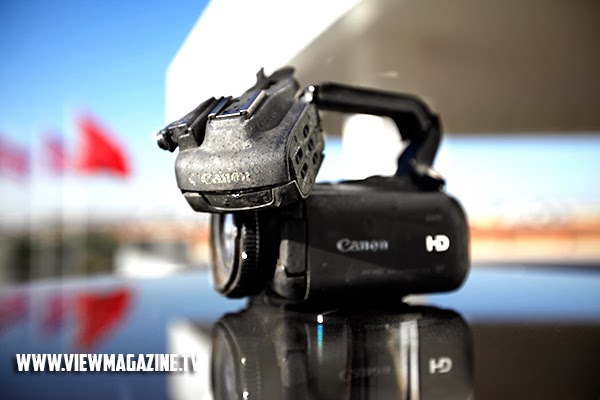
Take this pic above. A young videojournalist is taking a photograph of a camera, but there is a deep history behind this camera. Up close, the next shot shows the scars of the camera.


The camera belongs to the brother of the videojournalist taking the pic. The brother has been abducted by either the free Syrian army or government forces. But on the cameras chip may be clues to this mystery. The scars on the camera come from an explosion.


Carousel 3


Back in London, and the absurdity of segue way from war into the prosaic of music. One evening I was invited into a house of a friend of a friend. If you've heard of living room restaurants or underground restaurants, this is the underground gig.

But there is one significant difference, the host is an Ivor Novella award-winning singer/ song writer. Her friends e.g. Heidi Vogel,  like her fill out huge venues, but they're going local and intimate. Why?


The reason why this is significant and will have a meaningful effect in 2014 is because of what Beyonce did a couple of weeks ago. Friends, fan base, call it what you want, but by going intimate with your friends you raise social to a cool new meaning.

And in the UK, South London, the home of cool, this social matrix will revolutionise the music industry. As one friend, Q put it, why does Jay-z come to London all the time and quote Magna Carta in his records?

When Prince Charles met Prince Jay-z

Carousel 4


We are Social. Some months back I attended a BBC social meeting. Anyone who was anyone in the world of Social was there. Look carefully and you might just spot me.

But here's the question, why is it that most journalists don't have as many socialees as non journo types. OK, whilst some journos have huge followers, I am making the point that there;s something inherent in appreciating social networks that most journos need to unlearn.

Journalism is hierarchical, Social media isn't in that naked way, though by default the share acquires social power. I'll explain more of this in several projects I'm involved in. One of which is working with one of the UK's leading comedy houses to find out what makes different cultures laugh.

Carousel 5


This is the film that started it, back in 2005. The first UK newspaper videojournalists, who I trained and then turned this into a film. Since then, the same methodology has been extended to Egypt, Lebanon, Chicago, China, South Africa and the Financial Times UK.

So what have I learned and what can you learn from the interviews I have conducted?

Carousel 6


I dug this picture up from back-in-the-day. +ILICCO ELIA one of the UK's leading mobile technologists said recently "come back 2007". I took it to mean in 2007, as the industry was in stasis, people like +ILICCO ELIA were turning it upside down. I shot this below when he was at Reuters.

They pushed hard with their ideas, but institutions, Foucault stated in one of his philosophical musings that big business has a way of bending creativity to suit its own needs. He called it discursive formations.


In 2007, I had strong ideas myself and was invited to speak to the ONA about videojournalism. Those pictures were beamed to Time Square.

Seven years later my exhuberance has not diminished, but I am bound by a different type of curiosity. If I thought I knew what I did then the way I do now, my future would be different. In 2014, my PhD draws together. Six years of intense research comes not just from contemporary knowledge, but an understanding of the past.

Wow! One of the biggest revelations was to learn that what we're going through now is akin to what our grandparents went through in 1920. Technology was on the verge of breaking in a big way. It was a carnival of ideas.

If anything between the period 1930-90 could be argued as the destructive in terms of creativity. It's the period when the artisans give way to convention. When the suits came to dominate creativity through structure and finance.

I'll post more shortly, explaining other new structures to viewmagazine.tv

Sunday, November 03, 2013

How digital erodes what make you different


 In the library, between the methodical drone of thesis editing, "Oooh  look there's another stray comma". and reflecting on the next lecture, which has something to do with SEO, I reached for a magazine.

Uni libraries are good for that. I have passed on taking subscriptions, as I tended not to get through the magazines I subscribed to. Time magazine, for all its worthiness, was the worse. Pristine copies would gather dust in the hall way at home.

A quick flick through the New Statesmen became a stimulating distraction. New Statesmen, a political left leaning magazine, is enjoying a purple patch. And its latest edition illustrates perhaps why that is.

Comedian and Actor Russell Brand's guest editing turned out to be a masterly stroke of risk-taking. His interview with the coruscating BBC interviewer Jeremy Paxman, ( I am still scarred from being one of his researchers eons ago) was illuminating and a good piece of television. [ Fight ! Fight fight].

Paul Mason, formerly of Newsnight, now the Digital Editor on the other side,  C 4 News, likened it to a mutually aided symmetrical skewering contest. Brand got one up on Paxman, who also dug the knife in rather systematically.

And, if you want to see how journalism truly benefits from cultural baggage, witness the gesticulating finger jabbing of the presenter (Paxman) akin to a lovers tiff: "You're so selfish, you bastard", or headmasterish command "go-and-stand-in-the-corner "syndrome.

As Mason said, they both had a go. Paxman, on a more supine programme (Graham Norton) later in the week, let go of his feisty daschund persona to reveal that he believed Brand was correct to bang on about people being tired of politicians.

At that moment, along Tory hallways across the land, you could hear the thud of a door closing as Tory person (A) got into their Aston Martin to drive 50 metres to Tory person (B) to confirm, what they'd always maintained, and that is journalists are biased.

Of course they are! Who isn't. Except they are, what's that phrase I heard this morning on Radio 4? Yes, secular! That means many a journalists Jon Snow, Paxman, Humphreys and the late Charles Wheeler can be as cranky or disagreeable as they like, based on their own prejudice, but in a studio they make every attempt to be fair and honest.

I have been banging on my own mantra, which piquantly described journalism as a cultural construct courtesy of the writings of American academic Michael Schudson [read Deuze]. 


Being different
It seems rather controversial when I say this, and it is perhaps understandable, albeit erroneous. If you consider how Willem Defoe's  (of Robinson Crusoe fame)  separated himself from the creative writings of his peers, it becomes a little clearer.

He was after the stated facts. Getting to the truth or pulling together the facts is the bedrock of journalism and journalism putatively does so based on its parity with the judiciary.  A pound of flesh, is a pound of flesh Mr Shylock.

Brand's rhetoric and Paxman's interventions open up a secondary debate alongside abject discrimination amongst the disenfranchised young and the getting-rich-and-fuck-anyone-else gentry.

Sigh! Blimey, it's taken me this many paragraphs to get to the point. The point? Digital has no more redefined the media landscape than Barney makes children scared.

It's an odd thing to say. I'm an ardent digitalist. Without it, viewmagazine. tv and the bits and bobs I have focused upon would never have left my study room.

But the perspective from where I sit ( Yeah who cares ?) seems patently clear.

In the 80s and 90s, I was campaigning (banging on) about the inequities of media. To get a job in the big five as the broadcast media were back then, there was no room for culture to be displayed on your arm.

It was a frustrating period. I was into South Africa, science, and youth culture. The period was  made enjoyable by periods in broadcast media where as an individual ( Channel One TV) you were encouraged to pull from your cultural moorings to talk about the things that bothered you.

If traditional media successfully showed that media was done, one way and one way only. A big fat wrong! Then digital media was going to expose this, because of the methodologies of doing things differently.

The method includes the  process, so yes Twitter offers a new digital media outlet, but the sociology of journalism had remained the same. Nothing has changed. Today you hear less about what it means to be young and unemployed, or being black and being discriminated against or being a woman and being harassed.

Yes you can read/ see it somewhere in the pit less vaults of a Youtube or or some website off the digital landscape, but the brilliance of an alternative media impacting upon the heavyweights and thus changing the way we do business has not happened.

Thatcher's legacy has been more powerful than anyone could ever have managed. In her prime with social networks available, what would she have made of them? Cynically her phrase there is no such thing as society, would apply. There's no such thing as social networks. If so what have they done? What have they changed?

It's nothing more than self-interested individuals fleetingly flirting with others. Digital has failed us. Of course this is all relative. If you've never had the attention Twitter gives you, technology is all the rage.

However, if the point of technology is to make our livelihoods remakarbly better,  (Naively it never has e.g. Nuclear) then it's done it for the few. Russell Brand's inevitable revolution looks like a shoe-in.

Yes there have been movements, along the lines of either tacitly or intentionally calling themselves social networks, but as yet that seismic thing to change the status quo has yet to truly happen.

More so within journalism, where we still believe culture doesn't matter. And that diversity is a badge you wear to show how many different friends you have from  spain or say, Ghana.

 We need more stimulus from the external voices that shape our politics and for digital to be more than a gateway to more of the same. Brand's revolution-in-waiting is as much about politics as it is about information, less ordained, more explosive emerging. When?

At this rate we may have to wait for a  new movement  e.g. quantum,  to take form. I'm holding my
breath.

Here's ten things digital could have changed, but hasn't.

1. We're still interested in those self-interested subjects e.g. fame, celeb, meism. If anything digital expands conditions for all of us to be self-centred.

2. We've hardly invented a different journalism, and if we have its popularity is along the lines of Hogwarts and big foots. Sighted once in a while,  mythical ever so often, and trammelled where there are green shoots into oblivion

3. Digital: the have and nots of traditionalism have no become the haves and have-nots of the new system.

4. The view of the world is hegemonically based around a corpus of opinion. Thank Goodness Kenya's tech society is punching about its weight.

5.  When was the last time you went to a tech meeting and the diversity of people e.g Women and people of colour blew you away. Nah ! Thought so. I was at one two weeks ago. No comment!

6. Digital has become so corrosive as to discombobulate cultures. We all seek solace in a hashtag culture that erodes rather than strengthens. Somehow too digital has become a Western come-to-product.  If you've nothing to say, even though you might have bombs raining down on you. Shut up, as we listen to an ageing Joe 90 give us a peak.

7. Have we become less experimental now? Was 2000-2005 the last of the chaotic experiments, with big ambitions to change the world. Because now everything looks so well defined as to embolden complacency and erectile dysfunction set in because, guess what. There's no rush anymore, and yes you get this thing digital.

8. Most of the conferences and water holes of the digital spark of the 2000-2005 have folded. Others have been taken over by the multi-companies. Yes I read Clue Train  Manifesto when it first came out too.

9. Digital makes us less empathetic. You notice this in tertiary education. The availability of everything renders little emotional premium attached to the pursuit of that something. It's almost as if there's been a technological revolution, but not a social - digital one.

10. Explore what you can do for others, not what you can do for yourself. Otherwise proclaim yourself an absolutist. Alas there's no problem in doing so, but stop calling yourself digital social networker.


David teaching videojournalism at the Chicago SunTimes

David Dunkley Gyimah is a university lecturer and teaches digital journalism

Saturday, July 06, 2013

How video journalism will be shaped by a future of journalism by Cinema

DAVID DUNKLEY GYIMAH
David Dunkely Gyimah of  viewmagazine.tv is a former BBC and Channel 4 News producer with media experience spanning 25 years. He is an academic and filmmaker currently competing his PhD. He has presented at ONA, SXSW and Apple. This article explores how one of the most prevalent forms of media making is up for grabs, but it will need a shift in our cultural thinking. 

It matters less whether its twitter, or Facebook, Tumblr or You Tube, important as they are because sharing comes after we have something to share in the first place.
What makes great content? An idea and then its execution.  Execution is how you go about creating and that itself is dependent on an array of influences.
Your approach comes from the environment you've grown up in, its cultures and what's in and out of vogue. The USA of the 1960s was a different creative environment to today. If you've grown up in China creative concepts, say in design our the polar opposite to western values. The West treats design as two dimensional, a space to be filled. Chinese through Origami see space as 3-dimensional and negative space as aesthetic.
It is no coincidence at all that middle class parents encouraged their siblings to go on gap years, take in the world, see new things, expand the horizon of their ideas. As a lecturer with international Masters students, I see it time and time again, how transformative entering a new society can be.
But creativity is also predicated on behaviour which is contradistinction to trends today. Creativity best comes from collaboration. The late Steve Jobs knew that, and any designer or great filmmaker recognises that too.
In an age of meism and self-aggrandisement, when we no longer wait on our peers to critique us, but believe in our own grandeur, we're prone to abandoning or not engaging with one of the most powerful assets we have as people.
We're social yes, but not as Twitter after thoughts. The idea though we're better of doing things ourselves is plainly flawed, though yes you could count individuals who have risen by their own will-power.
How Hollywood can teach us to communicate
David Dunkley  Gyimah
David Dunkley Gyimah
But sustainability is about a creative pursuit.
One industry second only to the US defence budget spend knows this all too well. They've developed a trillion dollar industry creating stories.
The manner in which they do this appears simple in the execution of an idea. Boy meets girl and they fall in love. The end.
But it's a complex matrix involving philosophies, creative thinkers, blaggers and knowledge that comes and decomposes. Yes it involves businesses too, but I'll park that to the side for the sake of this post.
Hollywood and other related international industries created cinema, stories that tap into our very psyche so that we respond in ways that are personal. We cry, laugh and get angry.
Great content comes not only from what's in the frame, which needs to be produced, but then how it plays out. Inside that rubric is the gem of cinema and its constantly mutating. Cinema is one of most dynamic non-systemised languages.
Cinema is different from the cinematic. The former is an internalised concept, the other is an add on. The story acquires a cinematic look because of the 5D you're using. It may induce the feeling of cinema, but not necessarily so.
Why ? Because the cinematic is dependent upon technology and related ideas to that technology. That 5D you have with its extreme shallow depth of field will be out of vogue in less than ten years time. It's happened before within the period of the 1930s to the 1950s and will do so again.
Cinema is deeper than that. It exists to be found, before the application of a recording device makes it available to others. Great directors see cinema, not as fictional entities but as symphonies of visual matter and sounds colliding in a doppler effect of the two-step.
Have you ever worked with an editor who tells you the cut needs three frames less? I have and there is a great scene in the making of Jaws where Spielberg marvels over his editor's choices of a couple of frames less to make the scene work.
Cinema's renewed zeal
For the last 6 intense years and tacitly 25 years within the media I have been working on this trying to explain cinema is a way that is exemplified through a number of essences.
That means how any content can acquire a sense of cinema and as things stand at the moment and its likely will be in the future cinema is the apotheosis visual and aural art. Note even Baudrillard's hyperreality could not escape the clutches of the framework that is cinema.
But why should this be important? Simply the power of cinema communicates ideas in ways that proven to be lasting. Yes, you still remember ET, or John Ford's Stage Coach and Ozu's Tokyo Story.  But do you remember yesterday's news? Or the CEO's speech? Or that lecture.
Acclaimed director Steven Soderbergh puts it succinctly, cinema has nothing to do with the movies. It can be about movies, but not all movies are cinema. Just as when we say what we want are great stories, philosophers like Deluze might suggest you're referring to a specific visual and aural pattern.
Why does this matter even more? Because as video floods our social and private spaces, those who understand cinema, not necessarily theoretically, will produce artifacts that are eminently watchable and memorable.
The most shocking thing is this, many news managers will feel angered by this last comment. News, has a fixed and sustaining way of working. But in all likelihood,  traditional news structures while they'll be influential will not be able to guarantee audiences come to them.
Not with what lay ahead. If the web continues at its pace, the new cinephiles will usurp the constrained order of other forms.
Lest we forget, television came from cinema; video art from cinema; and documentaries from cinema. The last statement bears the scars of years of infighting over which came first. If you see cinema does that mean you're documenting it as well. If you're documenting are you making cinema. The two are not the same.
A firmer pedagogical understanding of how to match 21st century storytelling to the sub conscious lay in wait. It sounds like science fiction, but its here now and taking hold.
David is presently gearing up for training a new breed to cinema makers in Turkey. He's recently presented in Denmark to Journalists and photographers. This blog of his will soon migrate to a new home, together with a new website. You can find more of his work on his knight batten award winning site www.viewmagazine.tv
David is available for talks and consultancies.
[contact-form][contact-field label='Name' type='name' required='1'/][contact-field label='Email' type='email' required='1'/][contact-field label='Website' type='url'/][contact-field label='Comment' type='textarea' required='1'/][/contact-form]

Monday, May 27, 2013

Lessons in the entrepreneurial spirit of journalism into a future of journalism


There's nothing like being on the fringes of journalism, having tasted what it's like and wanting more to focus the mind. In journalism they say the most difficult leap is your second job. 
I have had lots of foci.

1. To become entrepreneurial, you must take risks.
My first television role was BBC Newsnight in 1991, before working for the hip flagship programme Reportage. And it was with that in mind, while I freelanced at one publication or another that the "totality of journalism" became more than a concept. You have to remember in the 90s bi-media, working in radio or television was an innovatory practice by the BBC which was heavily resisted within the corporation.

In the BBC, radio and TV, I would attempt to master as many roles as I could, whilst outside work I created promos that were aired on CNN International, wrote articles for magazines's like the highly acclaimed BluePrint and Creation and doubled working with Channel 4 News one moment to working for Jon Staton Agency in Soho. Jon had been the head of Television at Saatchis and Saatchi winning countless awards.

This commercial I made was aired on CNN International. The client, with no brief and upfront funds, gave me 24 hours and paid handsomely
Communication is key, but working the various shows provided and understanding of the nuances and skills of communicating in different forms and styles.

As you read this now, if you've not worked in radio with the requisite experience or let's say you're a fine editor, you've every right to presuppose that unless someone walks in your shoes, that theory thing or even work placement will not make you the editor for the big calls.

Experiential learning is the reason why the experienced journalists are still in demand; their future prospects though is predicated on how they rationalise journalism's new event horizon.

2. Entrepreneurism is about creating. You must create, so knowing any number of software is not only ideal but necessary. 
In 2001 I was able to coalesce various different roles that either found me jobs or scared off potential suitors like the BBC. BBC executives would ask me what exactly I did? How things have changed. Now in my role of a senior lecturer at the University of Westminster knowing about After Effects, FCP, and the rest was positively welcomed.

Here's what I set out to do in radio/ TV/ online/ print in news and advertising.
  • Learn to present ( art of inflexion and clarity)
  • Produce - the producer does not take no as an asnwer
  • Reporter- how to interpret and deliver news, features, documentaries etc.
  • For Television series directing - you supply the vision working in a team
  • Online- negotiating through the space of web 1.0, the Dotcom space, Web 2.0  and then Social Media.
  • Design - encoding is one thing, the art of design and balance is another
  • Writing - the power of copywriting whether commercials, news, print articles is undestanding the medium and the audience.
    Presenting at Apple Store in London on the totality of media
3. Give. Be generous, but don't expect the rewards. If feedback happens it's the icing on the cake for you, but more importantly is the thrill of seeing others mature.  
I lecture and still do in online, helping International Masters students create innovative experiences to develop as businesses outside. My lectures do not treat students as students, they are professionals entrepreneurs of varying degrees when they enter the lecture theatre.

Many have gone off to become successful creating industry's for themselves, such as the gifted
Stefanie Sohnchein who writes below:


But here's something from the category "success stories thanks to David Dunkley":
I get to create 13 national blogs for a big German company. Also I am leading a team of 6 Journalists who fill the blog with content. And: I get to teach 200 ppl (omg!) to blog until the end of the year - 60 more blogs are supposed to start next year. Crazy, right? Amazing where you kicking me to blog got me :)

It's not just the CSS, Flash, information architecture, or project management, but importantly letting the person develop, find themselves,  and the hurdles they must overcome in the job-world.

The same applies for docs and videojourmalism. To be an entrepreneur you have to understand the meanings (symptomatic and explict) of what you do and its impact on different audiences, comprised of different social groups and cultures. Presentation is the first thing. In a fraction of a second you've made your mind up so your narrative expectations must be met and some.

A sizable understanding of what we do is about cognitive human behaviour. To be an entrepreneur, you most definitely need something to say, and know the variables of interaction when you say it.

4. To be an entrepreneur, love and redefine what the word "work means". Engage with...
At the same time as I started my PhD to critically examine narratives and expressions and working with various groups around the world e.g. China, Cairo and Chicago, that entrepreneurial spirit has found its way into new paths working with a number of high profile UK companies in knowledge transfer partnerships.

The task is simple, but not simplistic. How do we fix this, how do we create that?  Present the conditions, express the knowledge and then source the best talent and help them.  A city company specialising in big data is the next company, whilst one of the UK's leading comedy houses is another. A medical company specialising in Bariatrics has just been successfully completed.

But whilst entrepreneurial spirit requires experiential learning, it grows on the moss of new innovative ideas and entrepreneurs who express whilst you can integrate and add value. The object is to facilitate innovation, foster creativity, train your thoughts to be malleable but know how and which direction the consequences of your actions will take you.

You need to develop your argument to the pursuit of the goal and never stop questioning.  Read ! I'm just about to start Rushkoff's Present Shock

In my role I am a perpetual entrepreneur, not exclusively for my own stake, but in creating the conditions for others I have come to respect. I nudge them into what I call an artistic space, where they must break from the perceived cosiness that journalism fostered.

More words for the journalism entrepreneurs.
Avinash Kalla,  a former Masters student of mine, organises one of the most succesful journalism conferences in India and works for the governments transport minister advising in Social Media
  • Load yourself with work, whether unpaid or paid. Entrepreneurial is taking advantage of a situation that presents itself. But judge how much you can give to your tasks.
  • Play the number's game but respect the person you're working with. The five percent rule that has just resulted in one of the knowledge transfer employers finding a new job, comes from flooding the market with 100 emails that will have 5 good returns.
  • The Entrepreneur in you must seek new challenges and on the Net they are infinite. Today I have written five new intros to people I would like to do something with. 
  • Understand the power of reception when you're writing to someone you don't know. You need to understand the dynamic of how and why they'll listen to you.  For instance the chances of your potential link up reading an email with five paras, is slim and a dull headline
  • When you fail as you Will, treat that as one step closer to your goal. The task is to learn from your mistakes and begin to play to your strengths.

Finally, Entrepreneurism is affected by depth perception. That is the busier you are, the more you're likely to be in demand by others. For that reason alone, get busy.


Friday, June 22, 2012

The Future Moving Image Makers - Videojournalism inside tips from Viewmagazine.tv

If you're familiar with this blog and  viewmag, then you'll know that since 2005 it's been sharing ideas on videojournalism.

In the last couple of months I have been writing a taxonomy about non-fiction making and wanted to share one theme with you, which gives you a flavour of the text.

From the many memos and contemporary documents I have been examining I came across a five page memo from one of my managers, who wrote this:

"Sometimes they will shoot on-the-day stories to back up a breaking news event. Sometimes ( and I used the example of  Leah Betts) all four might have to drop what they're doing and pitch in to get the stories for an on-the-day special".

Leah Betts was the tragic story of a young girl who took ecstacy and died in 1995. This paragraph that I have lifted from a 1995 Memo sent to us videojournalists is profound in many ways, in what it meant then almost 20 years ago and what it represents now. Nick Pollard, the originator of the memo, would become the head of news at sky a year later.


The videojournalists oeuvre 

Firstly, that the videojournalists worked on the day to turn around stories is common knowledge to most practitioners. What it doesn't reveal is that VJs would file in around three stories a day.

That aside, if you're able to do that now there's a sense of epiphany you develop approaching a story, in which rather than being complicit with what you know, you approach a story suspicious of what you don't know, and what you're being told.

But the idea of having four videojournalists work on a story is the gem and was used on the IRA bombing of London and other stories, but in a particularly co-ordinated way.

Now when the videojournalists were not working disparately on a bigger canvas story, they would be in close proximity within the theatre of the story and that meant understanding and coordinating what the acting profession calls "blocking".

This involves where you want an actor to stop, so you can place another camera to provide a different view point and a continuity of sequences.
One of three cameras I used. One is in shot. I'm shooting with the other...

Sounds simple enough, not getting in each other's shot path, but it was understanding what frame shot to pick up when you're colleague left the image, that was the interesting event.

The idea of different view points which surfaces between Edwin Porter and DW Griffiths in the early 1900s is one of film makings most eloquent and amazing developments and its held steady since, with more elaborate multi-shot angles devised, except in broadcasting which due to the costs meant one camera, one person.
In this frame from Chicago I have placed clandestine cameras around my run path.

So going back to the Memo, Nick Pollard has found a way for the videojournalists to act as ensemble directors picking up different view points for one production.

Yet what if you work for an outfit where you don't have enough videojournalists to simulate, here's the stylistic breakthrough

As a videojournalist you'd do well to understand multi-camera shooting, in which YOU operate a number of cameras. On the shoot I did for the Southbank and dance company I used four different cameras, placed strategically to minimise blocking. The picture above gives you an idea, as does these below working with Nato, and then my first Mac back in 2000 working with two cameras.

While the camera is the capturing device, what is significant is your understanding of spatial thinking. Where should I be, how does that orientate the viewer, what's the significance of the next shot?


Because, and this is the singular theme from all this: You're speaking through the art of spatial compositioning which placed on a screen is a film, within a building is architecture, and a fixed canvas is design.


What therefore do I conclude:

  • That the idea of one camera, one person is defunct. It's a legacy of the 1900s. If you ask anyone why they only have one camera they will probably not be able to give you an adequate answer.

  • That you would do well to try and learn spatial camera narrative. A part of the text, which I won't go into here involves a philosophy of thinking, transported to filming, developed by Heidegger.

  • That some interesting concepts exist that have yet to translated into common currency, which I guess is what I am doing now.

  • And that I hope to at some point extend a masterclass on narrative.


Sunday, June 17, 2012

The University of Quiddity - Viewmagazine's university


You can't remember can you?

And when you do, you want to apply everything you've remembered.

How to be the best,  how to create the most arresting video, how to win friends. It's stupefying that there exist no part in the brain, neuroscientists could have named "how to".

Of course there isn't because cognitive thinking is more peripatetic.

It roams searching for a place to land after imbibing ideas on the way.  "How to" is a resurgent 21st century phenomenon. It is more direct, constrains the matrix of "packet" thinking and its existed in some form or shape since the Book of Ecclesiastes and before.

Then, it provided answers how to lead a rich God-fearing life.  Then as much as now, we digested this knowledge attaching a great deal to its literal denotative value. Turn the other cheek and we physically did, when others walked away.

Today, "how tos"are so pervasive,  we're in danger of heading for a cognitive cul de sac.

We forget like the scene above, structures bend, compositions change, condition differ. In the next second, the pattern of people around me will have altered and I will be moved from my spot.

David Training at the Chicago SunTimes in Chicago.

And that's the analogical point. What works where, and how can never prevail in perpetuity. There is no fixed "how to". The mesh of communications is too vast for packaged formulas.

It was exposed in Mass Communication theory, Users Gratification and Transmission models, albeit, they enjoyed moments in the sun until the 1960s, before the post structuralists took over and now in the 21st Century it's the era of Quiddity, and the Quidditians.

Quiddity


Quidditians want to know why rather than just "how". They're not sullied by the mass, but intrigued by the individual. Their thinking is phenomenological: "to the things they are", one of its architects intoned.

It is about the idea, becoming an author or as Schopenhauer would say, having something to say.

I am considering creating a university. It would combine ethnographic journalism if that's not tautology -articles researched in the field to build knowledge. 

It would consider competing philosophies in conjunction with the warning that everything we learn is conditional. That's the beauty of knowledge,  that the more you learn, the more you understand and the more you understand should undermine previous ideas, which leads to confusion and debates about meanings.

From here further discursive learning should help untangle your state of mind, but this stasis can only be temporary.

A scholar yesterday piously condemned journalism asking for a return to its roots, and abandoning of theory, when the irony was he was himself promoting a theory, a theory of the skeptics, whilst forgetting their is no grand theory any longer. There never was, but we were too concealed from knowledge to know.

There is no tablet of knowledge. Mosses destroyed the principle physically, if not connotatively.
David discusses ideas with Tinia in Lebanon

The university would recognise that it's not disciplines and the promotions of "how tos" that are the principle cause of angst, but that there's something in the art of critique, the bold idea, which drills deeper and deeper  - which by default discards those ten points - and cognitively and flexibly considers how to think like the the prosumer.

It would flatten the hierarchy of learning, where the lecturers train and curate and Quidditians wisdom-of-crowd study.

It would attach more emphasis in our discursive world to artistic practice as expression, and logic or rhetoric as the power to rationale an idea. Then it asks what do you believe in and why?

You can't remember again, can you?

Remember what I have been saying because you might have been expecting a "how to" - that's the crux of the problem.

Here are my ten points...


In his career, David has worked for ABC News, BBC World Service, WTN, Channel 1, Radio 4, Channel 4 News, BBC Newsnight, BBC Reportage and through his thesis is devising a taxonomy of storytelling. See more on Viewmagazine.tv


Wednesday, January 25, 2012

The Era of Newspaper and Magazine Journalism Degrees and the AJ ( Academic-Journalist)

Instyle Editor talks to Masters in Journalism students about the need to hire the new generation.

It was bound to happen. The relationship between academia and publishers has been long standing. In the 1970s their relationship manifest itself in a publishing boom.

Where else might it explore? Academia publishing their own books, and publishers offering their own degrees? To one of the party plan A would remain too distant a concept.  

But the centrifugal forces of the dissociative economy are turning those pipe dreams now into concrete channels.

Super brand Vogue magazine's announcement it would start its own journalism degree at the Conde Nast College of Fashion and Design laid the foundation. Competitors, you'd imagine, might either have been falling to the floor with laughter at morning editorials while the more sanguine were trying to crunch the numbers.

Across town Academia was faring in a different way with mutterings: "They're having a laugh, it'll never work! "

Oh but it will ! The writing's been, well, er, slowly taking shape literally on the IPad.

Now in the UK an unspecified number of newspapers are looking to announce their own degrees. At the moment it's Chatham House rules, the equivalent of a super injunction.

Welcome to one future of journalism - brought on by the cause and effect of the Internet / Outernet

Future Watch 

The Internet out of its net- The Outernet from david dunkley gyimah on Vimeo.

But then many outfits have already been offering some form of pedagogy in the shape of higher national certificates. The Press Associations has been one of the major participants with links with skillset or recognisable accrediting bodies.

In 2005 it successfully launched and sustained an accredited videojournalism programme for it's regional press. I worked with their head of training, Tony Johnston,  devising the inaugural programme.

BBC Camerawoman and film maker Christina Fox took the helm bringing in her rich knowledge for its six years while I played an integral part captured in this Press Gazette report.  Close to some two hundreds journos were trained.

The Daily Telegraph, working with the Press Association,  offers an accredited training regime to 12 young very fortunate journalists, whereby psychometric testing is one of the selection criteria.

Many have gone on to do extremely well. Unsurprisingly they got the integrated form of videojouralism I advocate very quickly.

But a degree, Masters or even, say, a PhD, well that's another matter?  We've an inkling how we've got here; finance, sales and projections, and how seemingly one piece of technology provides hope on the Net.

As the Wall Street Journal commented
...with the iPad they (Magaziine Publishers) feel they have a technology that best marries the splashy look and size of a full-page print ad with the cool interactive features of a digital ad—and the ability to count how many people saw it.

The IPad Movement
The IPad has become the Tabula rasa of the web. In my lectures it's my interactive interface between working new ideas from the student enclose and projecting those ideas on the screen.

With the IPad, I can control the screen, and the raised platform barrier of the them and us - lecturer/ student

And the tech-fest, rights of social networking have never made the link with savvy young journalists more clear.

Last year, I accompanied a group of students (see top) to one of the UK's most successful womens' titles, Instyle.  Its editor, Emily Dean, stressed the importance of the new generation of journalists needed who can see this new future of journalism.

One enterprising students, a diligent blogger, duly pulled her CV from her inner coat and snuck it over to Ms Dean's and won some invaluable work time.

The idea of bespoke universities, and no one has a monopoly on knowledge, seems tangible. If you wanted to play for Manchester United one of your routes as the golden boys of Giggs, Beckham, Scholes et al  proved was to get trained young by attending their academy

Likewise tennis has its grooming for professional status at a tender age. So why not a journalistic output with a degree to boot.

Of course it raise interesting questions:
  • What is it worth ?
  • What happens if you leave the publisher before you've finished ?
  • What would a publication do that journalism schools aren't doing already ?
A lot I might say, but this is the beginning and in spawning a refined area of entrepreneurial journalism, those questions will get worked through.

Significantly though, this won't necessarily spell the end of tertiary institutions, though if this publishers make the figures work, it'll be interesting to see how the adoption of generic journalism degrees do against the bespoke, which might offer generic subject, plus a deeper understanding of the clients workings.

But the winners in this scenario are not just the publishers, or even applicants, but forward thinking institutions who will be offering support in the myriad areas professional learning calls on.

And then, as is slowly emerging, the new AJ ( Academic Journalist) whom balances practical knowledge and heuristics with classic and contemporary theory of journalism.  For the moment though all eyes are on which publishers gets off the blocks.