Showing posts with label cinema. Show all posts

Saturday, December 10, 2022

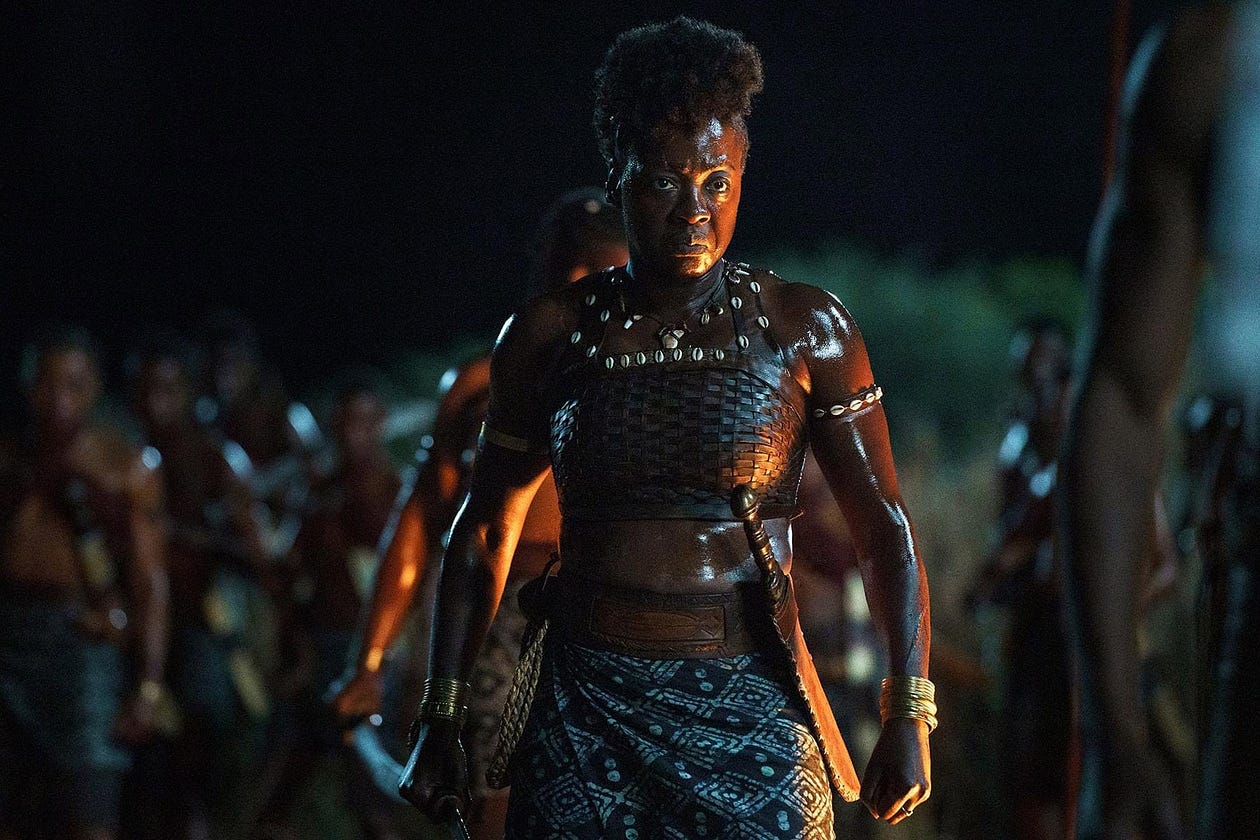
How a film about Dahomey Women Warriors stands to be a game changer — The Woman King (2022).

 News shapes our views of the world; Cinema does too, but also in a cultural shock way. Jaws left beaches deserted; Super Sized Me shifted eating habits; Lawrence of Arabia mythologised British Intelligence Officer, Thomas Edward Lawrence.

The Woman King (2022) is set to be a game changing movie that will have a global historical and commercial impact in many ways, not least storytelling.

That’s not merely hyperbole because for the first time in Gen Z’s time a historical movie, with Black and brown people at the helm is getting the Hollywood treatment. The director is Gina Prince-Bythewood behind Love & Basketball (2000), Disappearing Acts (2000), The Secret Life of Bees (2008), Beyond the Lights (2014), and The Old Guard (2020).

There have been previous Blockbuster films this side of the millennium, such as Black Panther that produced more than a $1billion for the studio. But this is different. The reason is it’s based on a true story and possesses a historical DNA which for centuries, particularly post 17th century, has been erased or maligned.

Take the history of The Congo. Belgium’s King Leopold II’s narrative dominates. He strafed the country — its land and people. In King Leopold’s Ghost by Adam Hochschild the reader is introduced to Nzinga Mbemes Alfonso.

He was a provincial chief whom in 1491 in his early thirties, with his country’s dealings with the Portuguese, steered his people and their interactions with Europeans. He is portrayed as a sophisticated man an abolitionist, learned — he learned to speak Portuguese. And yet his prominence is often overlooked, instead for narratives around the conquering Portuguese and then Belgium.

This is reality untold which in a post-Floyd era is as much about diversity, inclusion and correcting skewed narratives.

The evidence ( was in not always the case) now is there’s an audience that buys into revised ‘real histories’ version of events; helped by images (e.g. Instagram) and films that emphasise Black and brown people’s agency and outlook. This is happening increasingly in decolonising narratives and historical books such as David Olusoga’s Black and British and Peter Frankopan’s A New History of the World. Recently I posted on an African philosopher to rival the canons of enlightenment philosophers

With regard to film, exposing new narratives, furthermore, a globally young audience seeking self identity carries on its heart a purchasing power that even as combined long tail, must be recognised.

Black stars don’t sell

It wasn’t long ago that studios claimed, as relayed in an interview by Denzel Washington, that a Black lead meant they lost sales abroad. Shamefully, Boyega’s Fin character was minimised in the poster in China. Read: Hollywood’s irrational allergy to ‘black’ films by Roland Martin, CNN Contributor.

Historical Black heroic characters from Africa haven’t been given the Hollywood platform. Africa as a source of film for Hollywood has played into usual tropes, Out of Africa (1985), The African Queen (1951), The Legend of Tarzan (2016), Zulu (1964)— take your pick really.

The emphasis in this post is about historical based Hollywood films today, because there have been films from Africa, made by Africans. Nigerians have wowed audiences with films like The Wedding Party (2016).

Generally, historical narratives that undo the stereotypical view of Africa can be found in in books such as Hochschild King Leopold’s Ghost and Stamped From the Beginning by American historian Ibram X. Kendi.

In these books we learn how warped narratives from Africa were shaped. Particularly, from the 17th Century. Travel writers such as John Rowlands AKA Henry Stanley Morton, Richard Hakluyt etc. constructed racists myths for their audiences in which the Europeans were the civilisers.

Africans had no culture. It was a dark place, e.g. Conrad’s Heart of Darkness. Britain’s colonial legacy ownership by PM Boris Johnson veers to this when he said of Africa “the problem is not that we were once in charge, but that we are not in charge any more’”.

Real Stories

Based on a true events of the Dahomey women warriors, The Woman King (2022) opens an important window, supported by a digital generation to bypass old tropes. As I write this I’m thinking of the many others cultures e.g. Ashantis, Fantis (Ghana), ManiKongo (Kongo), Dogons in Mali etc with rich histories who fended off Westerners, built complex governing systems and the rest.

As a note of caution, and this is speculative, because of limited knowledge of the film at present ( though it is everything I hoped it would be when I watch it), I imagine a vigorous debate in academia and some press will commence after The Woman King (2022) about inaccuracies and aspects of the Dahomey which might either be minimised, or absent. That includes insights into their religious ceremonies and their own involvement in the slave trade.

This exchange of knowledge can only be beneficial in context and the comparative numbers of participants in the trade. Be mindful too that with “based on true story” genre films they’re not documentaries and hence their expositions can be narrow, focus on singular events and the license for storytelling tread pass fact.

The title itself, an interesting semantic pairing, and draws reflection. I lived in Ghana for almost a decade and attended the King’s college, that is Prempeh College In the Ashanti region of Ghana.

Here, the heroic tales of the Warrior Queen Mother is legendary. Yaa Asantewaa embodies an amazing story fighting off the British and restoring pride, whilst equally feared by her enemies. Her story deserves the Hollywood blockbuster.

In many ways the remarkable nature of the The Woman King (2022) isn’t the story per se, and that’s not to take for granted the filmmakers. The filmmakers take great credit in breaking Hollywood money and pioneering onto the screen a film that sticks a knife into empire stories. The fact is there are many Woman King stories that are part of folklore that would make great features.

Take this that we’re seeking finance to make, The Kings Men. It’s the story of how the King of the Ashanti people built a school with the help of a British reverend that is revered internationally. The college won the World Robotics Championship in 2020. How it came to be in the 1950s as the country stared at independence is the intrigue.

If The Woman King (2022) is to make a cultural impact by creating a window for historical African stories, the question of others films emerging to sustain this, is worth asking. From Cinema to Documentary, here the work of Channel 4 News’ in the Black to Front season where they investigate British looting of Benin Bronze and films by Historian David Olusoga are part of the Tent pole. Similarly, if If you’re a teacher of Black history this film is about to offer you the tesseract for your students.

The Woman King (2022) stars Viola Davis, NaniscaHero Fiennes Tiffin, Jimmy OdukoyaSanto FerreiraJohn Boyega, King GhezoJordan BolgerMakgotso MLashana LynchJayme LawsonThuso Mbedu, NawiSheila Atim, AmenzaAdrienne WarrenMasali BaduzaOdeIniyaFumbe. It’ directed by Gina Prince-Bythewood

Subscribe etc. (@viewmagazine twitter)

If you liked the above story, you may like this — The Kings Men, a film in which the King of the Ashanti people Nana Prempeh people created a school which has had a huge legacy on Ghana and globally. Yaa Asantewaa has a direct connection to the school.

Thursday, May 19, 2022

How the Avengers of Journalism rewrote the face of journalism.

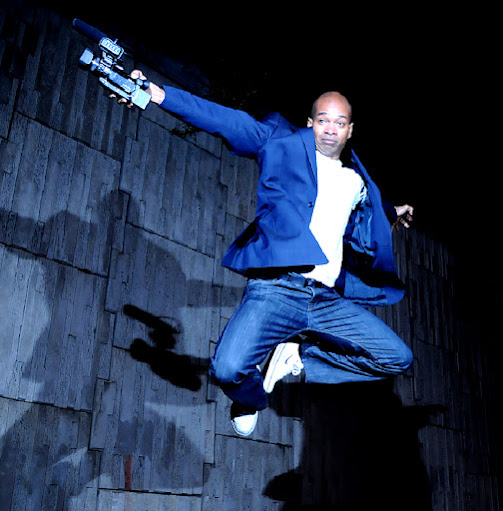
Here, pick up this camera and go out and shoot.

Shoot what?

Anything, but no more than five minutes. Don’t spend too long.

That’s all the instructions they were given. One by one they filed into the room unaware of the challenge. Some candidates were dismissed outrightly.

Yes! Thank you.

Your flaw; that intuitive look and feel at handling a camera. And by the way if you were from the BBC, chances are you didn’t last long in the interview.

There’s such a thing as institutionalised journalism in which you prefigure you know how journalism works. This here location off Soho street in London, about to give an electric shock to journalism as a patient, wasn’t it.

It was like you were about to jump off a 100 foot cliff insisting on a paraglider helping you descend. There is no paraglider.

And so 3000 applications applied to a small print in the Guardian newspaper with a P.O. Box extolling the virtues of a new film form for journalism. The advertisement, blink and you’d miss it, looked likely something from the pages of dodgy job offer. You will become video journalists, whatever that was!

You’ll be the first in the UK, and amongst a select few in the world. 3000 hopefuls were painstakingly whittled down to a hundred, and then thirty like something out of the X-factor, before its days.

“We were odd people, very odd people”, says one of the successful Steve Punter. “It was a mix of Black people, white, Jewish, Moslems, agnostics, LGBs and so on”.

Steve Punter got accepted by filming a bike courier at work, except he got so close to the courier’s approach that he got clipped by a wheel, the camera smashed into his face with blood pouring from near his eye socket.

Heavens knows what the interviewers must have thought when he walked inside to deliver his film, blood now all over his shirt. Actually we know. They were horrified at his condition, but wow what a film when they cleared the blood from the lens and hit playback. This guy had the eye of Hawkeye and a film sensibility to boot.

Another applicant wowed the interviewers by riding pillion on a motor cyclist he flagged down. Yeah, just like that! The shots were like something out of the film Premium Rush (2012) as the cyclists weaved through rush hour traffic at some ridiculous speed.

“They didn’t want people who fitted into a box; they were looking for a particular form of dynamism, adds Trish Adudu.

When we all gathered for the first time, you couldn’t help but question why you, and the person in front of you what super powers they might possess.

Thirty people were pulled from newspapers, magazines, research posts, secretaries, civil servants etc, says a leading figure in British media Sir David Nicholas narrating a soon-to-be made documentary.

Personnel, tick! The next thing was what the f*** are we all going to do? That’s when they wheel in this guy, something like Nick Fury, except he ain’t black and doesn’t wear a patch. Michael Rosenblum was a New Yorken, who didn’t pull his punches.

The UK team behind this new “amazing” venture were scouring the US for ideas. Chicago, Philly, New York, when they came across an operation called NY1. These reporters did everything themselves, everything, and ran journalism like it was a beat operation. That is you had certain areas and patches you covered. It was like you were your own boss, an uber driver of journalism deciding on what fare, or in this case story you’d cover.

The team liked the set up, and in the process of transplanting it to the UK, made Rosenblum an offer. The thing was though in the free-for-all entrepreneurial cage-fight spirit of New York, where anything could go, would the idea work in the British sensibility of Queensberry Rules?

Management, the team, Rosenblum and this motley outfit were about to find out, and it wouldn’t be pretty. The press would quietly, then full scale, come to loathe us. Why?

“Well, we were part of the breakdown of a well ordered unionised and structured way of producing television”, says Dimitri Doganis, “ and everyone was trying to produce cheap but high quality TV”.

It’s 1994, the year of Friends, Kurt Cobain’s earthly Nirvana, and Nelson Mandela being crowned president of South Africa, shedding Apartheid.

Rosenblum’s training included the art of the quick steal. Where as TV news making could take 3 hours, we learned to do it in 45 mins. We’d go out for shoots and then deconstruct them afterwards. The visuals mattered, and behind the scenes there was a tug of war happening inside management about what cameras to use. Would it be the nimble handy VX1000, at UKP 2500 which wasn’t quite your definition of pristine pictures, or would it be the Beta cam at UKP 15,000, which weighed a bit and whose pictures weren’t top notch.

Meanwhile, countdown to the launch was imminent, the press were having a field day with shifting opinions; some who saw it as the end of the BBC monopoly rubbed their hands with glee. Others like the Mirror newspaper launching its own service, which would feature bunnies reading the weather, probably had effigies of the station’s heads somewhere.

There’s a saying, “everyone has a story to tell”, but how do you know, and is it worth the listen? At an expensive Chinese restaurant in North London, where the videojournalists were taken out for supper, we’d find out. After our meal, we were instructed to find a story from the diners.

How on earth are we going to do that? I thought. Minutes later I found myself crouching down to table height of a couple, whilst I explained my plight and they regaled me with their life. Job done!

We were something approaching numinous. It was like a weird sprinkling of dust in which the industry would come to fear and loath you, says Dimitri.

Each one of us had something strange that would make this gig work. Julia Caesar, who became entertainment correspondent would wear the brightest read coats in premieres which caught the eye of celebrities like Tom Cruise, so much so that at every premiere he’d walk over to her. From pariah in which camera men ( they were mostly all men) rubbished her, soon they were leaving prime spots when she’d arrived, knowing that anyone next to her would get their money shot.

Me, fancifully I thought I could have been Tony Stark looking back on the days. I was forever tinkling with the tech, something that would pay a major dividend a decade later, when I would build one of the first video-magazine platforms encoded using the Flash engine and lingo from Director.

In the meantime, we had a point to prove, and the industry was about to be turned upside down. You see, you can revolutionise through tech how to fashion films on a platform, but the real revolution is a mindful one, analogical thinking that makes connections with the unexpected taking on board the seemingly impossible or absurd. Through the combination of fun, and our own innovations the most bizarre ( to some) relational adaptations emerged that fostered compelling but odd outcomes.

And one of them, years later of incubating, was going to be the story of how Cinema would usurp a penchant for journalism-making, and its practitioners would offer the widest source of expatiation from their own diverse backgrounds. This really was like the Avengers.

Sunday, December 19, 2021

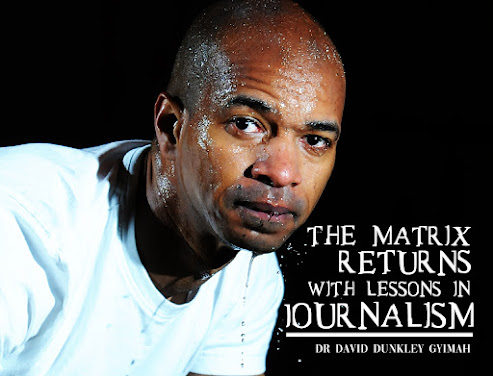
The Matrix’s Legacy to Journalism is terrifyingly real . What can you do to help?

Photo Sitbonzo

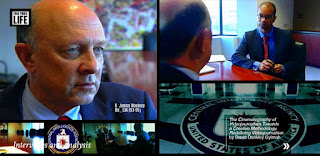
The ornate room, with royal blue painted oakwood doors I have just hurriedly entered, and sat down draws momentary attention from a dozen or so attendants. I nod. No one challenges me. Five mins later I realise I’m in the wrong meeting — a room of intelligence chiefs including a former CIA chief.

The discussion: open source Intel and whether all secrets should be made available.

You can find a ton of secrets on the Internet away one speaker says. I will interview James Woolsey in DC.

Then someone, a number of outfits, actually do. No need explaining what happens next.

Abored computer hacker seeking more to his life is wooed by a revolutionary group of hackers who seek an end to those that control the system. Simple really. But the Matrix resonates as both a reflection of and chiral of the human condition.

Source codes and undoing secrets is a major one thing, but 1999 when the Matrix was first released few could envision how Jungian philosophy, Hollywood’s mythical heroes’ journey, boyish and girlish intersectional desires and fantastical kung fu fights would pale in comparison to the “inevitable” that lay ahead.

The Matrix is a film. Facebook and its Metaverse and the Smiths it’s unleashed are not. Narcissistic programmed algorithms, the glaring enticing flicker of time hoovering likes and emojis explained in Nir Eyal’s Hooked, being plugged into devices that flood the veins with dopamine and cortisol, QAnon and dystopian theories, one after another. This is not a film.

It’s been 20 years since the first Matrix when I boarded a plane from London to New York purposefully to purchase my first Mac book. The return flight was much cheaper than buying a mac in the UK where the pound was colossal compared to the dollar. I had a pizza and took the next plane home. The Net then was generally benign and relatively few journalism networks gave it a chance. In 1999 too you could have purchased ABC.com

The Matrix’s siren was about disrupting, forewarning the dotcom boom of 2000 and DIYers — early adopters making their own films, writing code, decoupling from a system where originally you’d have to pay hundreds of pounds to an editor.

The very idea of having a platform. Me, a former in-care lad, who graduated at Maths and Chemistry and was bored, then headed to Apartheid South Africa to hack a career as a reporter, was way too alluring. In years to come it would appear to pay off some as I lectured on the Outernet (profiled on Apple) and videohyperlinking.

This short promo film I made embraced the spirit to disrupt, as lone reporter, the videojournalist — forerunner of mobile journalist — could create stories outside of editorial systems. But if the one wo/man band back then was championed. Today sees the need for greater collaboration.


The Matrix spoke to me and millions of others as an allegory of life. That’s what the best of cinema does. Spielberg speaks of War of the Worlds and its influences from Post 9/11. Kubric asked what happens when the machines take over — an enduring message to cyber military unfolding now.

If Neo wasn’t the de facto journalist trying to make us understand the nature and frailty of human pursuits against the behemoths, then at times I let my mind run amok. Underneath the carriage of science fiction was implicit science facts for journalism. Who controls what and why? Could journalists explain their stories and garner massive audiences too. Journalism is haemorrhaging, has been for a while.

The system that controls economies and livelihoods, when they crash as they did in 2008 no one e.g. banker is held accountable. Would you give up a steak for Gruel and a cause? Warnings after warnings about the planet choking; floods, famines, tornados, wild fires and poverty, yet industrialists continue burning fossil. And when the elephant in the room is a lie, why not call it out?

The next instalment of the Matrix appears, (I have not seen it yet) to revolve round a love story of the two main characters entering matrices of the lines of reality and ireality and a new threat. It’s just a film though. Two hours of escapism.

Yet now more than ever, some of the film’s easter eggs need revisiting. One of its earlier lines of enquiry was the idea of the individual’s prowess, a Descartian theme of “I think therefore I am” — that’s Neo.

Such blind individualism ( Neo was always reluctant) today appears highly misplaced. #BLM was about the collective. #MeToo too. Change requires a village if not cities to take head on the structures whose PR messaging distorts truths. The Father of PR Edward Bernays had always intentioned this in getting women to smoke or eggs and bacon as breakfast.

Such myopic faith in individualism may always have been flawed. Thatcher’s “there’s no such thing as society” was a whistle to end collectivism — real pulling together as one, which is what’s needed to address today’s untold issues.

I said this was about journalism. It is. There is and never was a perfect utility for journalism, and perhaps there never will be. It’s the reason why it’s continually contested.

Journalism is storytelling. It is culturally predisposed. It is class bound. It is whether you’re there to make a difference and the many that do are not paid handsomely, or that it’s a ticket to stardom. Both can be achieved but they’ll rub up each other. It is the matrix of pre-programmed beings offering a view of the world— some of whom can see their own sins.

Yet there is a singular thread that runs through journalism in a system where people can easily be led astray and believe so blindly in fairies, witches and unicorns, that is there own assumptions and be convincing to others. There is no COVID!%$!

That thread is to tell the truth — an act that weighs up different statements and then applying logic and humility reaches a state. Many do so in private but in public compromise for what it might do to their brand in the system. The thread is to expose events that have meaning for audiences and relay those through stories.

And however much you feel, or are an expert in journalism, you may not deny that being taught the idea of writing stories, and shooting video is not enough at any grad school. In a world of systems, culture (diversity) psychology, behaviour, economics, and history etc are integral to getting to truths.

If I were to make a film called Journalism’s Matrix it would make a case for a reboot. It would involve understanding that breaking free of the system places you in a new one — one where you seek not to wreck, but to find solutions. One where there’s a hippocratic oath as a framework, and that understands as a legacy storytelling is a selfless act.

I might even call it cinema journalism. It may require a third pill.


You can find out more on my stories looking at memory and Inception, wrestling with thermoclines in deep water dives, working on the Syrian border with brilliant Syrian filmmakers, making Obama’s 100 Days film and being a former foreign correspondent. Oh and being a former dancer on British Soul Train, by subscribing to my Medium Posts.

This year I’m a juror for the UK’s highest TV News Awards, the RTS, and was chair of the organising committee for the flagship future of journalism conf at Cardiff.

Saturday, March 06, 2021

What is Cinema Journalism and Why it Matters Most for New Generations


“The stories have really brought worldly conflicts to the table and have shown the disparities of diverse human views”, 22-year old Steffi from the Phillipines told the Guardian newspaper.

You’d be forgiven for thinking Steffi, like other interviewees, are debating Victor Orbán’s endgame with the EU or the global pandemic but, no. She’s referring to the world’s most profitable movie Marvel’s Avengers Endgame.

“Why is it young people will watch fictional cinema of an event but they won’t bother with the same one in news?”, asks 25-year-old Wenwen from China.

Fifteen years ago I led a team of international journalists through Nato’s simulated war program. It was a high profile project in which we travelled from Northolt’s military base to Sweden on her Majesty’s Royal jet. You can see the insignia above the headrest on my seat. Outside the plane a fighter jet accompanied us in British airspace.


The military wanted to know more about how the media might cover asymmetric wars. Watch these two short ( 1 min )videos. We’re in a ditch trying to report on a car full injured people. But surrounding us are snipers who’ve trained their laser scope on us. What do we do?

I told the military about an emerging phenomenon in journalism and how a generation related to news through a cinematic experience. “It wasn’t entirely new” I said, “you could go back to Star Wars which represented the conflict between super powers”. But something else was happening amongst the socially media literate.

At the World Editors Forum in Sweden to a gathering of hundreds of people I said the one man/ woman crew as video journalists were driving this, but it wasn’t focused on equipment per se. Video, Mobile, Drone, these are all styles of journalism in themselves but attached to modes of equipment.


 A cinema journalist approaches a story like a director on a movie set. What can I use to best tell this story. It’s a mindset. This was made in 2005 way before TikTok.


In the UK working with the Press Association over five years we’d transformed Britain’s regional journalist from writers to video journalists. It was a success in conversion, but new practitioners easily defaulted to styles they lifted from traditional journalism seen on television.

At a summit at CUNY in New York of I joined twenty of the world’s leading media. Vice.com had caught the media by storm and was about to go on Television. I wrote How Vice had become the Voice of a Generation which aligned with this new universe of styles in cinema.

To delegates from world leading tech their London flagship store would become an engaging platform to talk about new styles. It was no coincidence it also emerged during the boom of the iPhone. In 2012 as a judge for the Royal Television Society Awards we watched in awe a documentary, Syria: Songs of Defiance, made by Al Jazeera which was shot entirely on iPhone. For the filmmakers the practicalities of shooting clandestine footage outweighed any aesthetic.


Trust in news over the years has hit low points. It is compounded by news execs telling the same old stories in the same styles as competing media such as Netflix, TikTok, YouTube and Snapchat aggressively compete for attention.

Fictional cinema continues to borrow from an array of medium including news to forge its narratives whilst experimenting with different ways to tell a story. Meanwhile, newsmakers steadfastly refused to see what cinema could offer.

It sounds confusing, even alarming that any mention of journalism or factual storytelling should include cinema in the same breath. Yet some of the world’s leading figures don’t see confusion. Documentary maker Michael Moore says stop trying to make a documentary and make a movie. Martin Scorsese sees the fusion in this short clip. It’s a question of self control.


Sixty years ago the pioneer of the mobile news camera Robert Drew posed the question in the overlap of forms. In an interview with him in 2010 he would repeat that whilst TV News people took his equipment they largely ignored his techniques. Reporters, for instance, talk over strong pictures but a generation will uncover future forms that build on his work, he told me (below). Robert Drew was called the father of Cinema Verite or Direct Cinema. He was an out and out newsman.


Movements have a life of their own. In 1994 the birth of videojournalism in the UK really took off when five years later the BBC provided it with critical mass. Hence, last week represented a significant breakthrough in the relationship between journalism and cinema when one of the UK’s most respected and journalists Television News’ highest awards in journalism fromThe Royal Television Society (RTS).

The BBC’s Clive Myrie with his camera operator David McIlveen were independently awarded in their respected categories Best Television Journalist of the year and Best Camera Operator of the Year. Clive also won Best News Presenter of the Year.


Image by David McIlveen

Working on stories as diverse as COVID-19 and Trump’s America during the election, they produced television that was compelling viewing. It fired up twitter with resounding praise and left some journalists wondering how the team had done it

I saw the news films when they were broadcast last year. They looked nothing like you’d usually see on television news. Through friends I managed to get an interview with Clive whom I’d met at previous events and had been exchanging emails. Asking open questions, Clive provided answers that referenced cinema. That research remains to be produced at large but listen here to what he says as part of three-part question.


And here’s the denouement when I showed it to 80 young people I met for the first time studying to become journalists, they too saw connections. From open questions almost all agreed it was cinema or nearer to cinema.

I’ve only scratched the surface in this article in which there is no essence of cinema. There are trends throughout history of emerging forms and practitioners like Clive, David and many others like Raul Gallego Abellan are the ones shinning a light on it.

Ihave been fortunate to have ridden a career that has been rich in innovation, from being one of the first NUJ videojournalist in the UK in 1994 chosen from 3000 hopefuls to 2005 when I won one of the US’s most coveted awards.

The Knight Batten for Innovation in Journalism, which the Guardian newspaper would win in 2011, was for developing a platform before YouTube to show how embedded video, photos and text could work. US judges from the cream of journalism networks said in their words “it foreshadows the future”.

I then followed up my research with an exhaustive study that would lead to a Doctorate. I covered many continents and interviewed some of the most powerful people in news.

It’s not a matter of if, but when, and I wager that Clive’s work, coupled with others I’ve researched will give further impetus to this form, if it’s recognised for its nuanced approach and how it’s accepted by young and mature generations.


If you’d like to get in touch with me you can reach me at Gyimahd (at) Cardiff (dot) ac (dot) uk

Dr David Dunkley Gyimah is an international multi award winning journalist and innovator who’s reported from conflict zones in Apartheid South Africa and along the Syrian border. He’s worked for top brands in news and startups. He’s a former artist-in-residence at the UK Southbank Centre and specialises in Human Centred Design Thinking in storytelling running the Futures Story LAB at @Jomec.