Friday, August 31, 2012

News reddesign cinema stories for viewmagazine.tv


Viewmagazine.tv which has acted a repository for storytelling in videojournalism is being overhauled.

By David Dunkley Gyimah. Connect with him on Google 

Whilst previously centred upon videojournalism at large, supported by aspects of multimedia and innovation, it will lean towards the following:
  • Audiencing - what audiences will watch?
  • New story forms in film making and innovation, recapitulating storyform in videojournalism.
  • Maturity in digital theory and training programmes, such as Psychovideojournalism. 

Years back I made a point on videojournalist exemplar Colin Mulvaney's blog that the nominal 640x480 media size could no longer be an issue and that the impending issue would be one of skill set. 

Ten years earlier I was struggling on Mrdot, my first site, how to upload video on a 28k modem.  We did so using Flash. Necessity yields invention.

Solo filmmaking which is in vogue now with the Canon 5D has spawned a slew of sites proclaiming the arrival of Cinema Journalism. I hasten caution in your acquisition of knowledge from sites where supposition and beliefs are corralled as a substitute for theory and experiential  knowledge.

David with various in cinema journalism
As a journa-academic, the gulf between journalism which posits theory to often support sales is often different from academia which more often than not supports theory as a critique on the banal by using rhetoric. 

Though yes academics too must sell books, but as any Masters student will testify that to prove a theory is to present your case logically and be able to reflect on your own short comings.

Take the photo still camera's video capabilities and the allure for  shallow depth-of-field which has given Cinema Journalism a new philip, but cinema journalism is not new. It can be traced to Mikhail Bakhtin, Vertov and Rosellini.

Often though, anything outside the experience of our life times is given short shrift. Why else would two world wars mean very little to present generations. So social media, and say data scraping are also viewed as new. 

Thomas Hobbs circa 400 years ago detailed what made us social, while Turin is the giant all data scrappers stand on. 

These neologisms appear new because of the containment powers of the old media and undoubtedly the presence of facilitating technologies.

My own experience with cinema journalism comes from 1999 with my film for Channel 4 News, the UK's fourth network, called Successor Generation (See picture above) which featured the new South Africans creating wealth for themselves.

It was shot on the Digi-beta 900 ( see above) and I used two interchangeable lens. That said Cinema Journalism or cinema has little to do with the latest camera accessories at a normative level. 


Otherwise how could the VX1000, a fairly mundane camera looking back to 1994 have spawned one of the most trail blazing film movement called Dogme 95. 

In 2005 I addressed the then leading film funding body in the UK, the Film Council, about cinema journalism and developments in film making.


New Story form Ideas

I am  delighted, however that these reinvigorated ideas are already gaining traction with enquiries from Indian and Asian companies and Universities in the US. The theoretical practises include the following.

Videojournalism Egypt

Egyptian Videojournalists.

More extensive media will be unveiled indicating how new ideas are forging ahead in storytelling and videojournalism in Cairo. Four years ago working with a leading media agency we started a programme.  

Today, many of them are successful storytellers, but what has been rewarding is the direction they've taken. 

Last month in Tunisia, Tahir Memento, a reflexive cinema story of Egypt's uprising was screened in their cinema, You can watch that on the front page of viewmagazine.tv


Videojournalism Tunisia
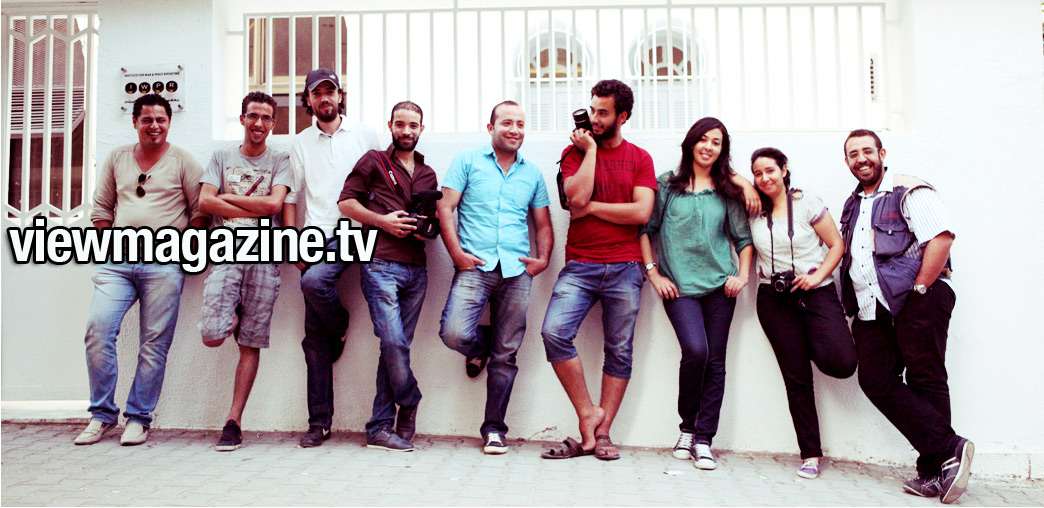


Tunisia in contemporary politics is the seat of the Arab spring revolution, and the videojournalists I met and worked with are the beneficiaries who are also finding new expressions. 

I am looking forward to going back, but in the meantime, I have just completed a trailer of my visit, which I'll post soon.

This branding places them alongside their counterparts in more noticeable territories such as the UK and US.

Videojournalism Beirut


Working with Annahar newspaper, I have previously posted details of my film working with the group. Again somewhere I am looking forward to revisiting. 


Videojournalism China

It would be beyond arrogance in any of the aforementioned to assume any definitive knowledge of videojournalism, particularly in any of the above territories, and particularly in Chongqing, where I was part of an invited team by five universities to illustrate what I call "total media".


Videojournalism UK


This was the Press Association programme I helped set up with the Press Association and then was involved in running one of its programmes for five years. Its still running. All the above have gone on to amazing things


Interviews with Industry figures


various interview such as this with the BBC's senior executive of news Peter Horrocks


Photojos videojournalism


With a couple of photojournalism articles and more colleaborations with photojournalism, this is a space I' looking forward to enjoying.


Click here for insight into major new findings on

What is videojournalism on the web, in multimedia and offline - a major study and film - and why it matters

Wednesday, August 29, 2012

New Wave VIDEOJOURNALISM. What we really know

The past has no relevance unless it instructs our future. The problem is much of our past is unsighted and deemed to many to be of no consequence. 

Ken Richter's 16mm camera which predates Electronic News Gathering asks the question, What's the fuss all about?

And we thought tiny cameras of the present, the iPhone heralded new thinking!

What is unavoidable is that the DNA of the past is responsible for everything surrounding you and me.

Were it not for Turin and the telegraph, there would be no Twitter. How we know film and exult new findings, can only be new if we understand the past. Yet this comparison seems so abstract, and weighs down the soul. Where do you start?

If yesterday isn't part of our memories and experiences it has no consequence; beyond that is the pursuit of creating artificial experiences involving learning from books, the Net, and films.

But the greatest repository of great, as well as inconsequential knowledge is YOU. But how many of use have told our stories. And how do you find great stories. If anything the great storytellers were artisans, curious souls who walked to discover their craft.

Reporting as a videojournalist in 199

Having been a videojournalist for twenty years and a journalist starting with the BBC in 1987, I commenced a PhD some years ago blithely assured my experience was the surfboard I needed. Yes I'd been writing about News, Current Affairs ever since, as some of these articles below show.

The Value of VJS - article for The Producers, 2001

And yet I was rudely awakened on my odyssey. Knowing something is admirable, but how do you know that?  This is an acute challenge for today's student awash with information on the net, and the pros looking to build new edifices on the existing foundations of knowledge.

For me the knowledge journey has taken me into the vaults of ITN's film library, the British Library, and extraordinary meetings with some of the stalwarts of film making e.g. Albert Maysles.

Reporting in 1994
I now acknowledge the narrative I look to share yields new findings, and yes, given the volume of this area: news and documentary, I so love, there will be gaps.

I wish I could document more of my findings working in Egypt over a four year period, or be more expressive about the places I have worked and sought knowledge e.g China, South Africa etc.

The new video on Viewmagazine.tv is my latest documentation as a videojournalist from one of the most important contemporary seats of politics and humanity, Tunisia.


Thursday, August 23, 2012

Hidden Art of Web Media and TV


In days to come Channel 4 commences its mammoth coverage of the `London 2012 ParaOlympics. They've already stated to Broadcast they're clearing their schedules, amounting to a 400% coverage with the games from last time.

As a broadcaster Channel 4 must be licking its lips. For once the audience has shown an appetite for sports and believe me, to them that's never been the case.

In 2001, I went to a producer with a brief for a programme about a teen aged racing car driver who was being feted for stardom. No one took a second look. His name was Ian Hamilton, and a good friend of mine was one of Hamilton senior's friend. And I'm not alone, traditionally the networks will tell you sports programmes don't sell.

Live Sports however is a different kettle of fish, but Channel 4 has reason to be nervous. Unlike the juggernaut power of the BBC, it has one channel and therefore will have to look for new strategies to sate the viewer's appetite.

It's already pitched its tent cleverly well, with the below promo and its proclamation of "Superhumans" to the rousings of Public Enemy.  For the BBC it was Muse (above) - another titan that wooed.


In broadcast speech words such as tent-polling, hammocking an stunting - used by American networks are all programming strategies designed to keep the users glued.

For the BBC tent-polling presentations around the games meant the super appropriate presentation team e.g. John Inverdale and co, took the evening slot, and saw you through to midnight and beyond. Remember the hysterical jumping up and down by Jackson, Lewis and Johnson making it onto the news. They did not disappoint.

You could further atomise the broadcast itself, where in between the drama of human cinema, the BBC hammocked all sorts of things. My favourites and perhaps yours as well, were those promos such as Muses.

The symphony of song and human endeavour was almost enough to convince me, I should go and buy running shoes and aspire for Rio 2016. Er, in my dreams.

Note to that as soon as they finished on track, there was a team to capture the yet-to-subside andrenalin interview. Only a few walked away from those interviews not understanding, irrespective of how they felt, this was their one shot. Bless Mo Farah, for getting in the name of his foundation.

So Channel 4 will have its work cut out for it in creating its programme strategy, which while it will be convinced of the BBCs style will obviously want to create its own branded ID. But watch, having already shown the power of the promo, we're bound to see some more.

Such was the implicit emphasis on this cinema reality, did you notice that ever so often when they cut back to a race, or event it was in slow mo. We, viewers, as Hollywood has proved love the art of the gaze.

But how does this all affect the hidden art of web and media TV?

Arguably, BBC and C4s site are in good shape. We've come to realise that theoreticians and their musings about design cannot be divorced from the power of TV, mag designs and what has influenced generations.

But we not quite there yet. Volume as the Daily Mail has shown wins eyeballs, but when you don't have an army of on liners and the resources, what do you do?

In his text on digi-textualities John Caldwell provides some stepping stones, which I'll summarise and share in my next post.


Monday, August 20, 2012

Lessons from Tunisia in Video journalism and Creativity

David Dunkley Gyimah training videojournalists in Tunsia with the IPWR
"Creativity in television depends upon the building of teams of individuals whose talents are complementary and who, in combination are, able to make programmes which are more original, more effective and more valuable than any of them can achieve alone".
Grace Wyndham Goldie, Pioneering BBC exec. 

True or false?

The example given by Wyndham Goldie to support her point is of Tony Hancock, a brilliant comedian of the 1950s who begun to resent the writers and producers who shaped his material. His team would break up and Hancock would commit suicide.

But being at the beginning of television Wyndham Goldie, a revered figure in broadcasting, could see creative genius much closer than anyone else could.

But how many of us will get to work in television?

Through out the years,  a coterie of creatives e.g. Eddie Murphy, Robbie Williams, etc. have at times try to rid themselves of the team that made them who they were.

But if creativity cannot be achieved in a team how do we account for the many such as the artist e.g.  Cezanne; Musician e.g. Jay-Z; Olympic Medalists e.g. Mo Farah and the Videojournalist, YOU accounting for your brilliance in what you do?

In reality all these sets are still supported creatively, at the very least through emotional support.

Even the lone painter or photojournalist seeks the comfort of others. The octogenarian photographer Bill Cunningham in his absorbingly portrayed documentary Bill Cunningham New York  is the loner personified, but don't be fooled. Cunningham's experience comes from absorbing a life time of support - some concrete, some abstract.

If Videojournalism was about working solo, then it inadvertently propagated a lie, which was not of its choosing.  Being able to work alone, doesn't mean you must work alone. Conversely as one of my favourite philosopher's Heidegger put it, being able to think doesn't give you the power of thought.

One of several promos, some broadcast on CNN International made in the 90s by David
The experience of working as a videojournalism-driven station and also within a structured environments proves something. We, ill-equip the individual who needs to believe in their own independence and creativity. By yourself Gladwell's 10,000 hour rule is a yardstick, but there are many other factors.

The maths goes if you work 8 hours a day, 5 days a week then that's the equivalent of 250 working units, of which could constitute 250 stories. For two consecutive years as a videojournalist I, with other video journalists shot and produced more than 500 stories each ; after that working a news agency I must have cut the equivalent.


Innovation was a hallmark of videojournalism, but so was swift turnarounds.  This stand up covering an early morning police briefing on a raid involved no other camera operator, circa 1994

The quest then becomes what structures we need to increase the knowledge of the lone videojournalists. Renaissance creatives built the idea of the apprentice. When the teacher became too remote in contemporary society we searched for exemplars through literature. But we could never question them, so the preferred route was to look for flaws in their monologues by reading others.

The unchallenged dogma in a blog is as dangerous as Wyndham Goldie's understanding that the unchallenged documentary film of the 1930s, was no barometer at reaching truths, just because some one said believed so.

My role in working across regions has been to build a sort of library of learning and output styles.  And something appears to be emerging from my experience working across Beirut, Cairo and now with Tunisian videojournalists and its profound enough for me to believe it mirrors the creativity of television of the 1950s, which I'll talks more about in my next post. In the meantime I'm posting a short on viewmagazine.tv as an introduction to videojournalism - Tunisia.


Emerging talent from Tunisia in the new wave art of videojournalism
David Dunkley Gyimah is an international award winning videojournalist who has taught around the world and is completing a radical study of future film making for his doctorate. He lectures at the University of Westminster and publishes on Viewmagazine.tv

Saturday, August 11, 2012

BBC video gets it wrong with Olympic Boxing Champion Nicola Adams

Viewmagazine's David Dunkley Gyimah (not in shot)  presents to BBC Executives in new ideas in video making at Bush House
Imagine the production meeting for Olympic coverage post British wins.

Nicola Adams, a self-effacing, girl-next-door from Leeds has just won the fight of her life, winning a gold medal.  The production team meet wanting to put together a VT ( a short video story) will go through the routine of what will be appealing and innovative for the viewer.

Word is Adams would like to go and max out on MacDonalds, as during her training regime, the Big Mac was off-limits.

The BBC production think it through and believe they have come up with a great idea. They have been stellar thus far with some exemplar VTs particularly in the promos and essays.

Cue the presenter Mishal Husain reading a prepared script... Adams wanted to go a MacDonald's, but we have a better idea.

Adams is then seen in a Rolls Royce being interviewed, but the impending car crash, metaphorically, is the BBC taking her to the Hilton Green Park.

The Olympic champion is out of sorts and either through careful editing or production avoids being overtly patronised and made to look starry eyed as she marvels about the place and earlier the Rolls Royce that carried her here.

Earlier on she noted how she got to the Olympics for her event on a bus.

Not one of the BBC's finest VTs, and hopefully a senior producer more sensitive to programming will ensure it's not repeated.

There was nothing wrong in taking her to a place she would not normally visit; these venues may soon become common place, given the change to her lifestyle.

But her naivety at this stage looked exposed and exploitable. I hope she finds some good communications people to manager her.

Having worked with Lennox Lewis (and other boxers) as one of his videojournalists; Lennox was incredibly media savvy, but would admit when he first won his Olympic title he would have been susceptible to media stunts, as well being a former BBC freelance producer, and radio reporter, I have an inkling how these things happen.
David, as  Lennox' videojournalist during training for his fight with Tyson in the US 

It's a good idea not quite rightly executed. Broadcasting works on the concept of semantic pairings. That means you work in an idea polar to that obvious with your subject in the film.

Note how a previous film with the new Olympic Gold Medallist Greg Rutherford took him to the highest building in London. An obvious semantic pairing; he lives on the ground, so lets take him up in the air.

The most obvious story semantic pairing is David and Goliath. He's small, Goliath is big - great story if Goliath is beaten. The trouble is semantic pairings don't always work, when social variables crop up.

The better more absorbing idea for Adams  would have been to also; I stress also, have taken Adams to a MacDonald's, or otherwise scrapped the Hilton idea altogether.

At MacDonald's that would have made great television.

First buy out £300 pounds worth of Madcees, the cost to hire the Rolls Royce, place it on a table -watch her reaction as she laughs herself silly. You wanted a Macdee how many can you chomp from here and then invite anyone in range, her new fans,  to join her for a Macdee brunch.

Round it off with pictures, which undoubtedly punters and Macdee staff would treasure. Instead, whilst the scopophilia of the Hilton worked for the cinematography there was little animation from supposed new fans at the Hllton. Yes the journey on the way taking picture with fans produced some good TV, but inside a roller ala Bob Hoskinesque er...!!!

Hopefully it's only a blip.

David Dunkley Gyimah is a senior lecturer at the University of Westminster and an RTS juror for Innovation in News, which judges UK broadcast news' best offerings. He is completing his Phd in Newsmaking at University College Dublin at the SMARTlab. He publishes at viewmagazine.tv


Friday, August 10, 2012

Learning to becoming the best there is journalism, art and videojournalism

Frontpage of Viewmagazine on Cinema Journalism

Have you ever wondered, which you surely have, how you become a Steven Soderburgh,  Bill Viola or Anderson Cooper/ or Matt Frei - the latter two are considered the best journalists around?

Well you can't.

Not that is if you believe you'll find the solution in a text book.  If you look around the text books of most academic libraries and your discipline, they're replete with books that are essentially "how tos".

These reveal the building blocks to the essential understanding of your chosen professions. On the one hand they are a necessity, on the other they mask a deeper comprehension of the form, because the student is led to believe everything they need to know rests in these books.

Technique in the end, as essential as it is, is no match for the poetics, individualism. Perhaps its thought the student will
  • not be interested in
  • have no time to learn
  • has no relevance for the poetics
The poetics abandons form for mutability, the text no more become a religion as you transcend to a higher plane of understanding. Things are not done because its said so, but because you, having gained wisdom in your profession know the path you take to be flawed or otherwise.

"How to" books have a fundamental purpose in pedagogy. They sell, and sell in the bucket loads, guaranteeing the publisher and author a return. The first more financially, the second more in reputation.

There is another shelf from those who question existing forms, the one you want for your thesis or the article on post-documentary form. They can be popular, but generally, you'll never go near one.

These books capture the interstices between the poetics of the form and a style that cannot be defined unless you read the biography of Soderburgh, Violla or Frei - that is if they exist.

Yet even then, the substance we want, the jewell of creativity is elusive. It's hidden between growing pains and the ending of a career. This poetic is rarely indulged in the academic journey.

If anything you'll stumble upon it by chance in your career, when one day you tire of speaking in the active voice, with no adjectives, and the absence of parenthesis.

But at a time of new  horizon journalism, more so than now, the need arises to rigorously question the essentials and move onto the poetics.

In some sense you're doing it already in your attempt to find new solutions and understand that which goes beyond the basics; the difficulty is in trying to capture this in a book in a way that isn't as formulaic as the "how to".

If you're interested I invite you to peruse a selection of articles and films I'm producing over at Viewmagazine.tv 


Sunday, August 05, 2012

And finally Olympics 2012- The Cinematic Super Fan. (images and words)

The Super Fans

The world's news could wait. Saturday 4th August, rightly or wrongly, was a blanket of one major news events, the Cinematic Super Saturday

Non-sports fans and Brits may have in the past stumbled upon the phrase, the "Barmy Army", a traveling carnival of fans so dedicated to their sport, they are as likely to provide entertainment about their beloved cricket dressed up as the Queen, as one of their heroes providing runs to take the game.

On Saturday 4th August 2012 Britain became a nation of the Barmy Army.

The question will be asked where you there? Or otherwise where were you? The tally of medals for the Brits clearly benefiting from an Olympic bounce need not be contested.


Yes! They are super athletes - pre-requesite, but the wall of noise that is said to carry athletes like a tidal wave and surfer will be studied by sociologists for a time to come.

Human drama on a scale in which this symphony of athlete and audience requires a new term that paints the picture of awesome cinema.

What like a film?

No, when the drama unfolding is met with deafening din of those willing you on. China's Olympics in sheer scale and technopholia could never be matched. Money seemed no object and a double dip recession had yet to bear its hairy chest.

London 2012 appears to have set its own standard,  which will have Rio officials thinking how do we top that.

Answer? Become "barmy".

Generations meet

How is it that the nominally dour Brits ( ask the Aussies) or no-hope-at-winning-anything (we didn't fail with the Great Britain team losing on penalties) seemed to have scored such a massive goal.

Could it be escapism from our economic austerity woes? Or the fact that Britain's multicultural status in sport, also reflected in the make up of its fans means there is a super fan/athlete for every sport.

From the putatively elite sports in scullying in which the quote of the Olympics must go to a stunned Katherine Copeland in the lightweight double sculls uttering : "We just won the Olympics", to the populist football, there was something for everyone.


And who could not be endeared by these super athletes, in which the bulk of them seemed pleased that they could be in the midst of other Olympians. Normally, we would baulk at Greg Rutherford's pre-game film swagger in which he proclaims how and why he should  win.

No not this time.

So where were you? Well for me a week ago, I was in 47 degrees heat in Tunisia working with the Institute of War and Peace training journalists in videojournalism.
David Dunkley Gyimah with cap in centre in Tunisia

I almost didn't make it back because of a mix up of flights, but I did and managed to watch the South Korea versus Gabon Match, and tomorrow will be at the Women's semi-final between France and Japan.

I suspect I am about to join the Army Barmy.


Super fans

Yes, but the food at Hyde Park was NOT!

Celebration time c'mon

Seats Anyone; there were few spare at Kickoff

Saturday, August 04, 2012

Imagineering - story telling a good story

Aficionados of radio need no convincing. The power of thought; imagining, the engineering of words into pictures create a cinema in the back of our heads.

And few rival this internalised cinema than BBC Radio, particularly Radio 4 which over the years from my student days produced Loose Ends with Ned Sherrin and the brilliantly witty Victor Lewis Smith.

Smith developed an artistry for story telling which was the equivalent of jump cuts, multiple authoring, and fast forwards.

The trick I learnt but could never replicate to a mile of his oeuvres was to play back a quarter inch tape back to yourself recording as a singer like Michael Jackson did when he was doing his own backing vocals.

It still isn't easy as it seems.

Saturday Mornings, then became John Peel, whose eclectic range of music and monoaural voice took you on an undulating journey across the world music. I loved radio. It had its own temporality and mnemonic which if mastered could do anything with you.

Who would deny that Alistair Cooke's Letter from America - an essay delivered as a grandfather would wasn't spell binding.

This morning I stirred to a similar memorable piece of radio.

Sian Williams, presenter of Saturday Live  - smogasbord magazine programme, whose theme is to find interesting people to tell stories, brought on prolific novelist Gerald Seymour behind Harry's Game, the Glory Boys and so on.

Seymour trained as a reporter for ITN when it was showing up the BBC in storytelling circa 1963.  Williams asked him about the Olympics. His response was effusive to which Williams replied it was like fiction.

Better than that was Seymours reply, this was human drama you couldn't make up. He then recounted one of those cinema-in-your head stories.

He was 21years old  in search of a job and went to ITN where he was interviewed by one of the giants of broadcast news, though described as a small man behind a large desk in a big room, Sir Geoffrey Cox.

The previous day Seymour had turned down the offer of coming from an interview and the supreme editor, perhaps a little ticked off wanted to know why.

Was Seymour sick?

Seymour said he was playing sport

What sport, enquired Cox

Cricket, came back Seymour

Cox asked who for?

Seymour replied, his university.

What position did he play queried Cox

Seymour answered he was a spin bowler and knew how to throw a googly. Now if you don't know you google from your googly, a googly is a delivery which is a bit like a baseball pitcher throwing a curve ball; suffice to say the ball changes direction in flight, or in cricket when it hits the ground.

By this time in the conversation between potential debutante and wise editor, Cox crumples up a paper and asks how do you throw a googly. The conversation continued with cricket. Seymour got the job.

What he subsequently found out was that the previous week ITN had tried its hand down on a village green playing cricket, presumably against the BBC and other media, and discovered they could do with a spinner to help their team.

Fancy that! A top job with a media outfit on the strength of your sporting prowess. Great Story, and not something that happens very often.


Friday, August 03, 2012

Teaching Journalism Beyond the Classic Journalism Age - letter from Tunisia


In the film world the expression became universal.

HOW WOULD LUBITSCH DO IT?"

The sign hung on the door of another of the film world's greatest directors, Billy Wilder as a reminder of his hero. Wilder called this thing the Lubitisch touch. Stay with me!

Ernst Lubitsch, a star director and polymath of the transition from Silent film to talkies in the 1930s, did to film what many contemporary directors could only dream about.

Take the scene at the top from the film if I had a million (1932) followed below by Wilder talking about Lubitsch.


But now we must pause a minute because this piece is in fact not about Lubitsch - a waste of google juice frankly, but in fact it's pertinent for a segue into education and the teaching of journalism.

For that  I turn to another giant, but from another world. To industrialists and educators Donald Schon is a name synonymous with learning systems.

And somewhere in my office - my head - reads the sign; HOW WOULD SCHON DO IT?

Teaching Journalism
Schon's contribution to knowledge in his classic book Reflection-in-Action makes the point that some of us approach problems with a positivist ideal, which is theory-based ideas that are grounded in rules.

For instance if you're a film maker or videojournalist you'll be told any number of rules supported by theory.

And then there are professionals, such as Lubitsch whom by intuition, experience, calculated serendipity approach their methods through artistry.

There comes a time in the career of the professional when they become disruptive, troubled and they look to new ways of doing what were rules. And when you ask them how they did it, usually they will shrug their shoulders.

In my career as a videojournalist, producer, educator and what not, that's what interests me. Capturing the elusiveness of artistic practice.

In fact I'm grateful for the support often given me which this year resulted in recognition from the National Union of Students at our university.

One of Schon's most seared ideas for me is that every profession suffers a disruption in which the knowledge we possess to understand it is made redundant by technical and societal advances.

In those situations, we're simply not equipped and any recourse to classical methods is flawed. Remember there was a time when doctors believed bleeding a patients cured them. And many patients were made to bleed litres of blood because of that.

Technical advances and new non-formulaic (artistic) thinking yielded new results. We are still in this ecology when it comes to journalism and videojournalism.

Hence in training, as I recently undertook in Tunisia, my job as an educator is not, I believe ultimately to provide solutions, but by using artistic practices challenge classical and grounded methods of thinking.
Training in Videojournalism in Tunisia with videojournalists watching films

The examples I give again are that while language is based on syntax and grammar so we might argue videojournalism and film making must subscribe to similar langue-like rules,

Yet the 'troubled professional', the Lubitsch's, the Schon's tell us differently. We should heed their words more.


David Dunkley Gyimah was awarded Outstanding Teacher by the Students Union of the University of Westminster's. There are 23,000 students at the University. He is a Knight Batten winner for Innovation in Journalism,

Thursday, August 02, 2012

All I wanted to do is become a journalist - so what's the problem?

David in Soweto 1992 freelancing for the BBC.

The letter that arrived, posted to me at the BBC was from the president of my graduate school's student union. It was to congratulate me on realising my dreams, with something along the lines of .. "you always said you wanted to become a journalist so well done..

It was a gracious and humbling letter. In 1992 to become a journalist, working on television, for some of the best programmes e.g. BBC Reportage was herculean.

Not me being herculean, but the effort to get there and even stay was a combination of making your own luck and believing you could make a difference.

There were hurdles to surmount: I had a chemistry degree, which may not seem a big deal, but cast a net across the newsroom and the significant major is English, Literature, History and the Social Sciences.

I understand now, like I didn't before. If you've undertaken literary critiquing as part of your discipline, you are in a strong position to analyse programmes semiotically.

There were other issue that dare not speak its name; the matter of difference from being sighted. I'm black. Now whilst that may make you raise a quizzical eyebrow, back in 1992 in the UK it was a significant deal.

So big that there was scheme after scheme to ensure ethnic minorities, women and those with disabilities got a chance to become journalists because they may have had what it took, but were held back for being different.

Twenty years on I am also wiser. Journalism, like most creative industries is incredibly competitive and is codified by ideologies and codes.

Not because it's a western model should it eschew examining the work of non-indigenous westerns, I'm British, but that the custodians of a journalism or creative genre will invariably pick examples of interests from their own ecosystems and backgrounds.

But that it is a western model, and a hegemonic one, has undoubtedly influenced journalism's global model brand?

So pick up any journalism list, blog and attempt a qualitative analysis and the results are remarkably the same as I recall from 1992.

It shouldn't be. We're global and the next generation of journalists, particularly the Masters students I lecture should be able to be compared by their merits and not where they are from. But again an understanding of semantic fields suggest why this is.

We possess a strong prediction to box things together cognitively and subconsciously.

I bumped into an editor who was asking about my work and what made it particular useful. I parried the question. Talking about myself can be self-deluding, but I said you'd have to try and figure out why the Knight Batten offered me an award.

Knight Batten, "What's that?" he asked.

Winning an award does not make one an exemplar, Oh no.. but in the Internet age, working in journalism, if you don't know what the Knight Batten represents, then  that says something.

Living in England can make you blinded by what's happening in the US and vice versa.

In Beirut, Egypt and more recently Tunisia I stress the point, journalism is a construct - a western model and there are issues with it that are now unsustainable. Truth doesn't vary, but how we get there doesn't have to be bound by ideological codes of others.

Next time you hear a broadcaster say this is "the news" write them an email informing them it's "their news".

If we're going to understand one another a little more, a little less on the hegemonic values and more on diversity and pluralism would help.

The super blogger I met in Tunisia, who managed to tweet while being put in jail, who has suffered jail time from writing copy, whose work is inspiring for how he puts his life on the line, but who is Lebanese, perhaps not like you,  should be at the top of any list on journalism or blogs.

The brilliant film scholar Mark Cousins knew that much in the power of plurality and diversity. His epic 15- part documentary on the history of film featured Ousmane Sembene (read this article please) , Youssef Chahine et al in  World view of cinema.

The Internet shouldn't make us more insular and perhaps we should be more avaricious trying to find out about those outside of our comfort circles trying to make a difference.


Wednesday, August 01, 2012

Beware of the Rules - Videojournalists


The only rule is that there is no rule.

There are a number of guiding principles, but they act as guides. It's simple, the rules many trumpet exist in videojournalism are presented to allow you to do something coherent to begin with.

The menu you chose from that book to cook your friends a meal. You followed it word for word and your friends loved it. Then one day you changed the ingredients, because you couldn't get fish, and instead of cooking the onions first, you fried the tomatoes.

What emerged was a meal with the same ingredients but a different flavour. The rules you abandoned were replaced by guides.  BUT, and here's the big BUT.

The only way your video/meal  worked the first time is that it was based on the exemplary techniques of someone at the top of their game. But even they will profess to it not being a rule, because it is an artistic practice

Learn enough and then drop the so called rules.

I have been fortunate enough now to work in Tunisia, Cairo, Beirut, China South Africa, Ghana and several other countries and where talent emerges it is based on ideas and concepts that the rules do not follow.

The trouble is it's difficult to sell books if we don't tell you about rules. What we should be teaching is artistry.

Otherwise we end up being automatans, and what's the point in that!


I'll place new videos on viewmagazine.tv that helps in this thought process.


David Dunkley Gyimah is an artist in residence at London's cultural centre, The Southbank Centre and has been a practicing videojournalist since 1994 

Sunday, July 29, 2012

Cinema Journalism Event in Tunisia

Presenting in Tunisia on Cinema Journalism picture by Trella.org
The hypothesis goes in regions where there's been strife,  conflict and transitions, artists creatives and film makers typically create new schemas to express themselves and tell stories.

Italian Neorealism is a classic example and perhaps one of the most enduring that used the post war period to create a style of film which used the streets as its studios and non-actors and plots to capture moments of moral issues.

Enduring too because it was one of the few film styles that provided an intelligent popularised alternative to America's hegemony on film making.  Neorealism laid the ground work for Noir and films such as Double Indemnity (1944) - one of my favourites.

In Neorealism, the closing scene to Umberto D (1952) by Vittorio De Sica features the desperate lead character feeling so suicidal from a spate of bad fortune, that he figures once he finds his dog a home, he will end his life. He very nearly does with his dog who later shuns him, before a touching reconcilation.


It's a simple story but deeply allegorical and there are many others.

More recently from Egypt, their crowd sourcing film making 18 Days in Egypt provided one of the most notable schemas to film crowd sourcing and has made its producers house hold names on the innovative doc circuit.


My own feature Tahrir Square illustrated how graffiti and fine painters, as well as theatre actors, poets and singer songwriters were inspired to be expressive.

As an academic, as well as film maker/ videojournalist the opportunity to visit Tunisia to gain an insight into the creative fraternity, which is by no means not a homogeneous mass, was something that intrigued me.

A couple of weeks earlier at a closed meeting held under the Chatham House Rule at Chatham House which is the UK's leading think tank, I asked a question of a high powered delegation talking about regeneration in the region.

They'd not mentioned media, I said, but would they agree that film makers etc have a huge role.

The delegation agreed, but the problem they said was invariably a newer media or even film makers become so determined to show their credentials, they end up practising a kind of 'gotcha journalism' against the old order.

I understood the subtlety of the answer.

At today's cinema journalism event three of the country's media outlets  interviewed me about cinema journalism.

Cinema journalism can be explained ontologically in its metaphysical way; and epistemologically, as a way of creating and understanding its knowledge.

The reason why I posit these two ways of looking at cinema journalism is I talk about it being about richer story forms, marching beyond classic documentary mode and news in terms of impartiality and finding plot and visual grammar to create meaning.

Yet ontologically just because it eschews impartiality or looks to be expressive doesn't mean its practitioners are rabid propagandists or can't be honest.

As one of the founding fathers of cinema verite, Robert Drew told me it's a very difficult art to master because it calls into question your own ideology and what you stand for.

Transparency thus in cinema journalism is crucial, because at the point you overtly direct the viewer's attention, you nakedly unlike news' fig-leaf disguise are making a statement about you. That's why its metaphysical.

Tomorrow, the IWPR the principle broker and other stakeholders will be  meeting some of the creatives from contacts that came to the cinema journalism event.

Thursday, July 26, 2012

Letter from Tunisia - the future of videojournalism

Ahmed - Videojournalist off on assignment


Being a videojournalist in the midst of Ramadan isn't some thing that weighs on the minds of many videojournalists, but the reality begs a rethink here in Tunisia, which adheres quite strictly to its fasting.

For one, you've not eaten since the morning, water won't pass your lips and the sun is scorching as you set out on your second assignment. You don't need to be a doctor to know your blood sugar levels are low.

That however is not a perennial issue. What is is how videojournalism is practised and the implications for a region that can look to the past for a blue print.

I am here on assignment collaborating on videojournalism and cinema journalism. They are two different animals that have arisen out of complacency to videojournalism. But that's another story.

For the meantime, we work to undo a series of conventional rules that are now stifling videojournalism film making (an oxymoron). For instance the use of the rule of thirds, no one can quite say why its used other than it's a rule. IT'S NOT!!!!!

When your lecturer tells you it is ask them to quote the source.

It is no more a rule than me saying when filming the subject should not look into the camera. The picture above breaks the rule of third. One of the great film makers ever Ozu rarely, if ever, obeyed some rule that said, place these figures into a third of the screen. It's about the balance of the picture, not the rule.

New Journalism
For the umpteenth time, I have showed the same video to a group of Tunisian videojournalists, Chinese students, PhD researcher and International Students and the results are the same.

Two videos - the same story, Which one do you like ?

The one video is traditionally news driven and the other more the videojournalists artistic feat which bears the hallmark of cinema at work and consistently the cinema journalism story style is chosen for being

  • Preferable
  • Treating the audience as intelligent
  • Being visually rich 

The paradox with videojournalism is the issue that most impales its ability to defend itself, because everyone can do videojournalism it's so easy, there's little need to attempt to understand what we're doing.

Point and shoot, just capture the data. Television got away with it for a long time because it developed a semiotic that appeared to fall in line with its aim to be impartial and all the rest. Thus the next time you record an interview, you'll likely to frame a medium-wide shot, placed a third of the screen.

And when asked why you're probably quote a book or that someone said something, and he or she when asked will quote someone else until we reach an impasse and we realise some executive determined that was the correct thing to do.

Just as, and if you read  Mike Conway's book on the origins of American television news and Green's television news, you discover news execs were so terrified of losing audiences they devised news should be short- less than 2 minutes, it's stuck with professional broadcast news since

The medium wide shot for interviews was the correct way then because the medium-wide swiftly established its connotative style as being neutral, but just because it was then, doesn't make it correct now, but no one's asking.

As a videojournalist and a researcher, something more tangible and researched should underpin our ideas in this digital era. Otherwise it's the equivalence of having someone try art drawings for the first time because the tools are available and saying well done for drawing.

Day 2 Tomorrow - when I make the claim how Tunisia's history of cinema journalism could have been lifted from a successful movement in storytelling 80 years ago

Post script - Three days later working we held this event on a creative approach to videojournalism. For the full story and more on cinema journalism - viewmagazine.tv


Wednesday, July 25, 2012

The camera is no match for content and context

This picture is copyrighted and permission to use must be taken with its author, Ken Mallor
Discussions over camera purchases often take on the form on Zeno's paradoxes, primarily the famous Achilles and the Tortoise race.


You've heard it before but here's a précis.


Achilles gives the tortoise a head start of a 100m before commencing his run. After a further 100m, Achilles would have caught up to the point the tortoise started, but the tortoise would have moved on say 10m.


Achilles must now proceed to catch up the 10m, but by the time he does that, the tortoise would have moved 3m. The paradox continues so that in principle, given the infinite number of times we can undertake this process, Achilles never catches up with the Tortoise.


Of course we know differently, but as a mathematically plausible statement, we believe Achilles is on for a hiding.


Cameras occupy this same paradox, mimicking the Tortoise. Content stands little chance catching up with the camera - all you need is a DSLR with a 1.2f and you're away.


But the realists know it;s the content that matters. Philosophers Noel Carroll and David Bordwell qualify this with terms for film such as "expressive" or that content shapes  the meaning - of course.


'Expressive' talks to the content of the film - the emotions. It's the content that make you feel primary emotions.


This is not to say the camera does not play its role, but a dramatic scene caught on an iphone or pinhole camera is still dramatic, where as a stodgy event filmed with different model cameras relies on aesthetics.


Content matters, as well as context. At present we're living in a character-driven video idiom; nothing wrong with that either. We need to know much more about our neighbours.


Yet content eschewing context is, I believe, is as flawed as Achilles being told he doesn't stand a chance over taking the tortoise.


So we must give credit to the new economists, the digital mediaist, the new agenda makers who are fashioning a sort of televisual experience in which our urge for aesthetic over content is being addressed head on.


In various movements around the world, over a century or so of strife, hardship has yielded new movements for the informed creating, or attempting
to create new understandings of why we're in this mess.


And if you're reading this, this, among the many blogs that talk about content,  should be the legacy for future generations, because whatever happens, Achilles should always have been the victor - and that story alone is a legacy to us.


Saturday, July 21, 2012

The Axis of New Journalism


The beauty of this lie past its denotative meaning: America is great no more!  That's merely the shock to get you interested. The signified, the implicit is way far interesting.

Of course it's difficult not to grind mentally to a halt and admire what any good playwright would do in challenging perceptions.

Shakespeare's plays contained implicit attacks on the religious structures in Verona, who ruled then as politicians do now.

Aaron Sorkin the creator and writer at large of HBO's the Newsroom has turned the mirror in this speech explicitly on the politicians, but implicitly on the media and its audiences.

But it's not America's media alone which is in the court of scrutiny. Sorkin has merely found a strong character to play with its semantic field: strong - weak, love -hate.

What's on display is a hegemonic system which became the sole export of a construct of reality called news, whose values since the 1950s, and now, finds itself crumbing under the most unfathomable weight of deprecation.

Except it isn't crumbling. It's adapted. It's values are as forceful as ever. It's a multi-billion business, this form of storytelling, which as imperfect as it is, ascribes to the notion that it can tell you anything you need to know to become an informed citizen.

And the traditional industry it supports will not give in that easy. The value of truth is one caught up in the number of people who recite the same thing, to the extent news begins to tell the audience what they need to hear.

Meanwhile Rome burns - a metaphorical statement for all what's wrong in the world.

It's a complex relationship - that much scholars and execs have debated and will continue to do so.

A student of mine from Ghana, a country whose media is barely a model of probity, you would think, compared to its surrogates, argued how strangely the UKs media acted.

For all the media's power he suggested, there was no empathy, no real cause to change anything, no soul. This might not have mattered when business men conceived of a way of informing those around them many years back.

It matters now and Sorkin provides the poetry to capture this in this clip below. The Editor just wants the facts.


Thursday, July 19, 2012

Learn Award Winning Videojournalism & Cinema Journalism Workshop

CINEMA JOURNALISM and VIDEOJOURNALISM Workshop


The Retwitter Show titles - journalism 2046 from david dunkley gyimah on Vimeo.


Photo-essays, auteur-driven narratives, ecology 3 & 4.

In the evolving field of video, these are some of the new ideas emerging which on the one hand capture my notion of videojournalism, which I lay out in this workshop. There are a number of ecological pieces that I will share and define with audiences.

Cine-journalism is not new, yet this current form, I believe based on experiential learning as one of the UK's first official videojournalists, pulls on a particular set of embodied style from changes which has the picked the seams of journalism.

For me this includes drawing on  experience, such as reporting from South Africa during the end of Apartheid, working with Nato, adventure pieces diving with the Turkish Navy, and various stories on international events over a twenty-five years plus career.

In this presentation, as a Senior University Lecturer and PhD researcher I describe this new terrain, with examples of work published on award winning website www.viewmagazine.tv - which I have previewed at Apple.


The workshop includes the following:
  1. In auteur-driven narratives. Here I unveil work from my doctorate thesis, which includes training non videojournalists to become videojournalists  over  4 years work with journalists in Egypt collaborating with them to tell life ecology stories: the street vendors who sell food, the actor who wants to go to hollywood, and behind-the-scenes of the crafts businesses. These are stories made by new videojournalists, but there were empirical reasons they had not been told before.                                  
  2. In photo essays, how the power of the image combined with scoring produces the kineasthetic. Here I review Obama 100 Days, commemorating President Obama's 100 days in office, made with a contemporary orchestra screened at the South Bank, and working with World Press Award photographers.
  3. In the Ecology 3, the report combines reportage with educational value such as Nation Videojournalism in which two African countries Ghana and South Africa came together to report on one another using videojournalism and more recently this report from Beirut's Annahar Newspaper where I spent time training their journalists.
  4. And in this Ecology 4 we see Tahrir Memento, four young people talk about what the events of January 2011 meant for them in personal terms in a style that marks out a territory between news and docs. 
  5. Producing online auter-driven narratives - a history of practices collaborating with students and clients to understand semiotics and produce rich multimedia sites.
A large measure of my work involves philosophy and hermeneutics presented in an accessible way to students and clients that provide meaning about what we do and why, and how to get the best out of your work.

And I think these methods are successful, as this year  I was extremely flattered to be  awarded 'Outstanding Lecturer of the year' by the National Union of Students - the University of Westminster (UK)..

The presentations and field work will take place over a bespoke number of days and I'll be opening this up for external engagement in the near future.


Bio

David Dunkley Gyimah is an award winning videojournalist and Knight Batten winner for Innovation in Journalism from the design and publication of viewmagazine.tv. Apple calls him a One Man Hurricane and he is recognised in the UK as one of its pioneering videojournalists. In his career over 20 years, David has worked for the BBC e.g. Newsnight and Channel 4 News, as well as ABC News. 

He has spoken about his craft all around the world e.g. China, Bosnia, Denmark, Germany, South Africa, Egypt, Ghana, Chicago etc. and has presented at conferences such as, ONA, SXSW, Apple Stores and the World Association of Newspapapers. He helped set up and train the first videojournalism school for regional journalists in the UK, and has trained many students and journalist such as The Financial Times and Chicago-Sun Times. 

David has been a member of the UK's leading international think tank, Chatham House for 20 years and has an educational background in Applied Chemistry, Economics and Journalism. He is currently a PhD researcher, senior lecturer and an artist in residence at the Southbank.