“H”ow can climate stories be improved?” was one message. “How can stories reach more people?”, was another. These were fundamental questions. Was I about to pitch too high?
This last week Pakistan has been devastated by floods submerging a third of land, causing 1300 deaths, 33 million people affected (which is almost half the British population in size), and untold human misery. Human-made changes to the climate, experts say is a contributory factor. Unusual catastrophes across the globe this year have left their mark too.
However, blink and you’d have missed its damning, humanitarian and ongoing affect on television news. For environmental officials, experts and ministers gathering for a months in planning the last few weeks are a reminder, if anyone needed it, of the impact of a fragile ecosystem convulsing. Speakers included: Wolfgang Blau, Co-Founder of the Oxford Climate Journalism Network, Leo Hickman, Editor of Carbon Brief (former editor, The Guardian) and Dean Emeritus, Professor Adil Najam from Boston University.
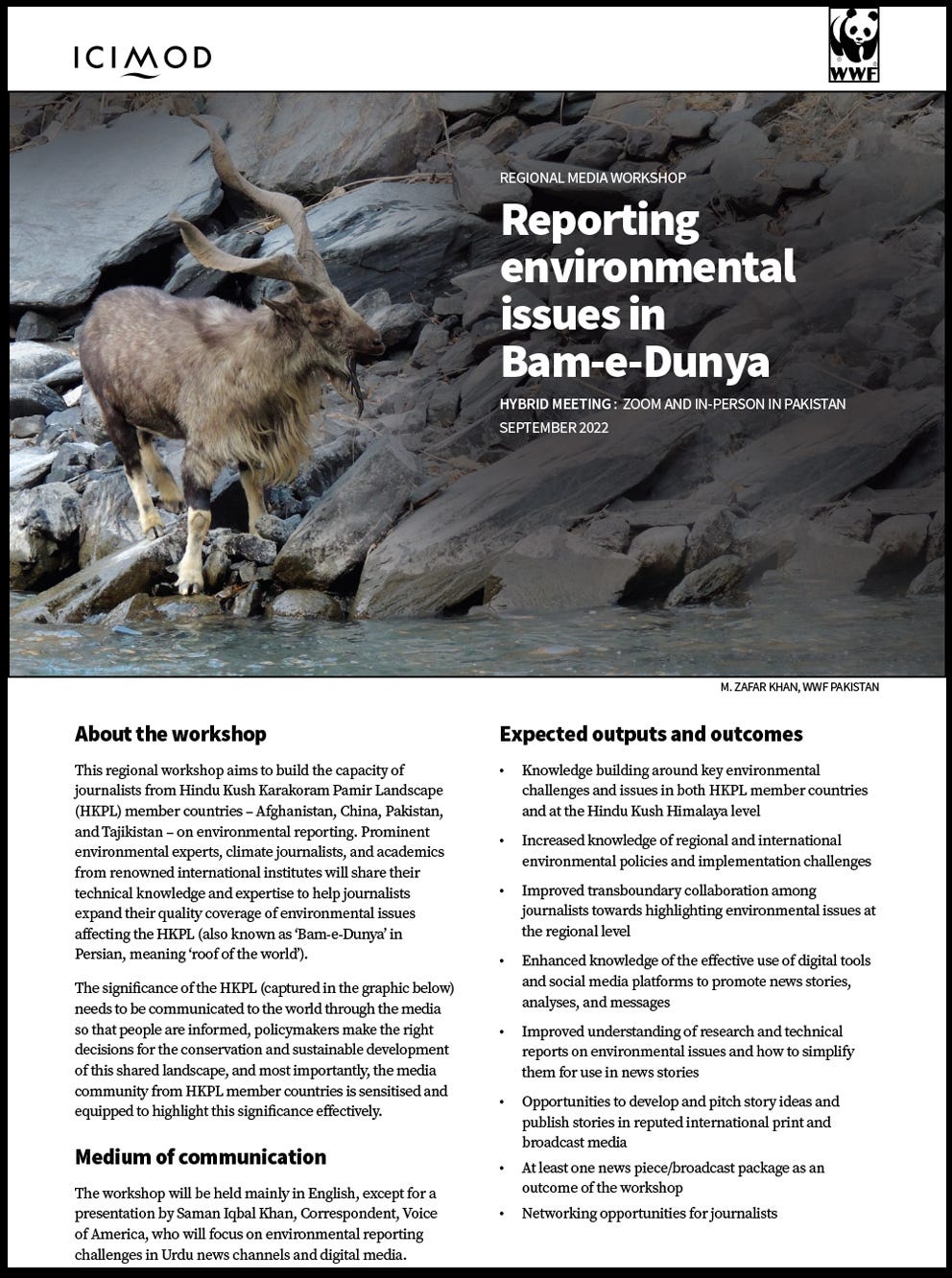
Meeting Online, as well as in-person, the organisers pre-determined focus is one of the most striking, life-supporting, and picturesque regions of the world — the Bam-e-Dunya. It means ‘roof of the world’, a vista of six of the world’s impressive mountains, supporting a spectrum of habitats. Ironic, as the roof of the world is collapsing and those below slowly atrophying.
Valiantly, an award winning journalist and one of the organisers Abubakar, has made it his mission, through deep dive research and report, to expose the region’s life, traversing, amongst others, the famous Khyber Pass that connects Pakistan and Afghanistan to interview mountain women.
CLIMATE OF NEWS
The swell of global cataclysms thus far may not yield enough empathy your end to make a radical change to behaviour and to halt a diseased climate. The reasons are plentiful.
If anything it’s occurring in a space with which you may have little emotional connection. If you do catch a glimpse of human sacrifice and ruins, it’s transient. There’s another calamity, perhaps not of this scale, but enough like a game of musical chairs to occupy your thoughts. Carl Sagan, a noted scientist, nailed it back in 1987 with his observation. No one cares because it’s not going to affect them. It’ll be their children or grandchildren.
For my hosts across the Net, I have a solution, of sorts, in this complex web of solutions in applied storytelling. There are two ways, by no means exclusive to each other, of looking at this. Let the conscientious thinking policy makers do their work setting rules and influencing governmental behaviour or get the ecosystem of communications; in this case I’m focusing on News and journalism, and its impact on consumers, to do your bidding for you.
Why News? It shapes your understanding of the world. But there’s a snag, if you’re relying on News, that requires untangling. Mainstream TV News won’t have the answers for you in addressing viewers enough that may motivate behavioural change, even if you get precious moments of coverage.
The reason is simple. It’s TV News’ detachment that sits at the core of its impartiality and guides its output. This from The Power of News by the influential media historian Michael Schudson.
Increasingly journalists take a distanced, even ironic stance toward political life- in fact they are en-joined to do so by both the tenets of their professionalism and the cynical culture of the newsroom.
TV News, through the presumed lens of its audience, sees climate change as “boring”, too complex to resolve into story arcs and too remote. Otherwise a whole 30 minute programme would be dedicated to it: “Dear Viewers. This is a special news programme about Pakistan”. It’s issue led, and if a story of the scale of Pakistan does emerge there’s a debilitating sense amongst gate keepers of ‘how-do-you-tell-the-story’ without, wait for it, putting off their viewers.

LANDING A STORY
Itmay have caught your attention that to illustrate a global climate crisis I’ve used a polar bear. I’ll come back to this. Another reason that TV News will likely fail to capture how the story could be told is the lack of representation in western and global north newsrooms.
Take the BBC, there’s no person of colour at the helm of its domestic TV News output that more likely will be emotionally, psychologically and culturally tethered to a story of this nature. This doesn’t necessarily mean impractically hiring every national for a potential disaster zone to be an editor, because a consultative editorial advisory group, comprising wide representation would suffice.
I remain intrigued why stories about human suffering are always confide to day shots. What happens when the lights fade? What happens when in Pakistan you’re five feet in water with children and there’s no light? I remember, flash floods in Ghana, not on the scale of Pakistan, but at night, the suffering intensified.
For the neuroscientists and psychologists amongst you, the quest is how do you tell an empathetic story that motivates people into action. Again, modern mainstream News isn’t your answer, but there’s a hint towards solutions.
The passing of the Queen provides an illustrative canvas. There are countless reasons why the death of her majesty would make global news. I’ve worked in newsrooms in the BBC, Channel 4, WTN and so on, enough to know the answers, or most of them. She was the Queen. Celebrity sells too.
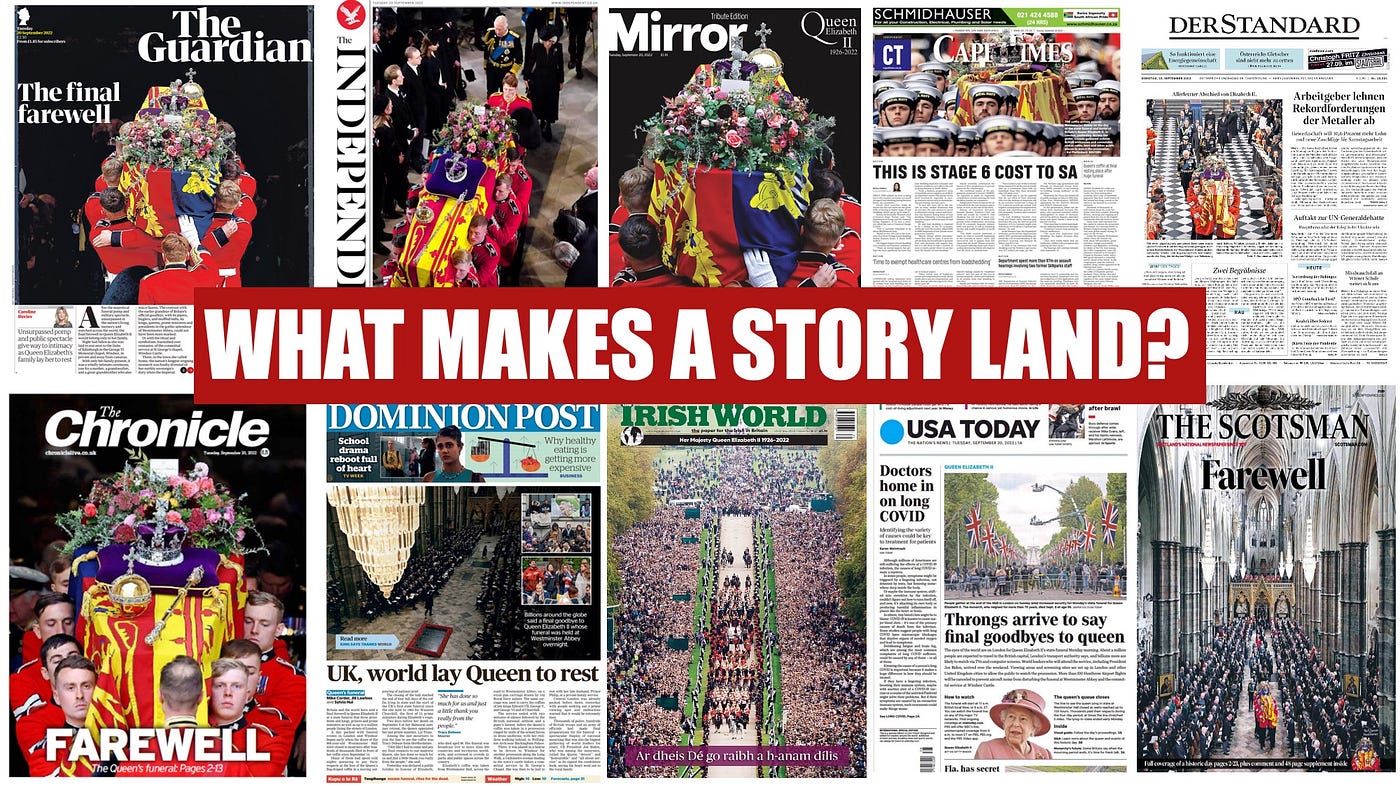
But a look at some of the front covers from around the world reveals something interesting. The pageant was an organisational feat of pomp and circumstance and some images dominated front covers. This is no accident for the organisers and the media who know an arresting image when they see one. What makes a story land? Powerful Images that coherently tell a story, often where few words are required. It’s not always a given; it’s a cognitive puzzle.
Whilst researching for my keynote, I tried in vain to find free copyright images or video like the ones below from The Guardian and The Atlantic. Nothing! The use of a Polar Bear from Unsplash was to make that point. If you want your Human interest stories to travel, make pictures like the below available for public use, and social media share. This brings me to a set of solutions I provided in my address. But before then, more on the power and reach of international stories done well.
ANOTHER WAY
How did a report about famine and deaths in Ethiopia in 1984 spur on a rock singer to put together concerts, Live Aid, that would motivate generations into action? Why did a 30-minute report Kony 2012 about an outlaw in Uganda (East Africa) Joseph Kony garner so much attention? Today it stands at more than 130m views. How on earth did a fictional film, a Korean story “Parasite” about domestic workers out on their luck become an Oscar winner? It’s how they’re told.
Television News is one of our biggest influencers; its currency is information, but that doesn’t necessarily translate into action on the consumer’s part. In any case, the argument is that’s not TV News job. That’s PR! But that’s not entirely the case either.
Coupled with this complex matrix for telling a story that seems far removed from viewers’ consciousness is the growing impact of climate state craft practitioners working to suffocate meaningful reportage. My next slide I shared.

They can’t be ignored, however there is a solution to story craft that is journalistic, not PR, and cuts through to viewers.
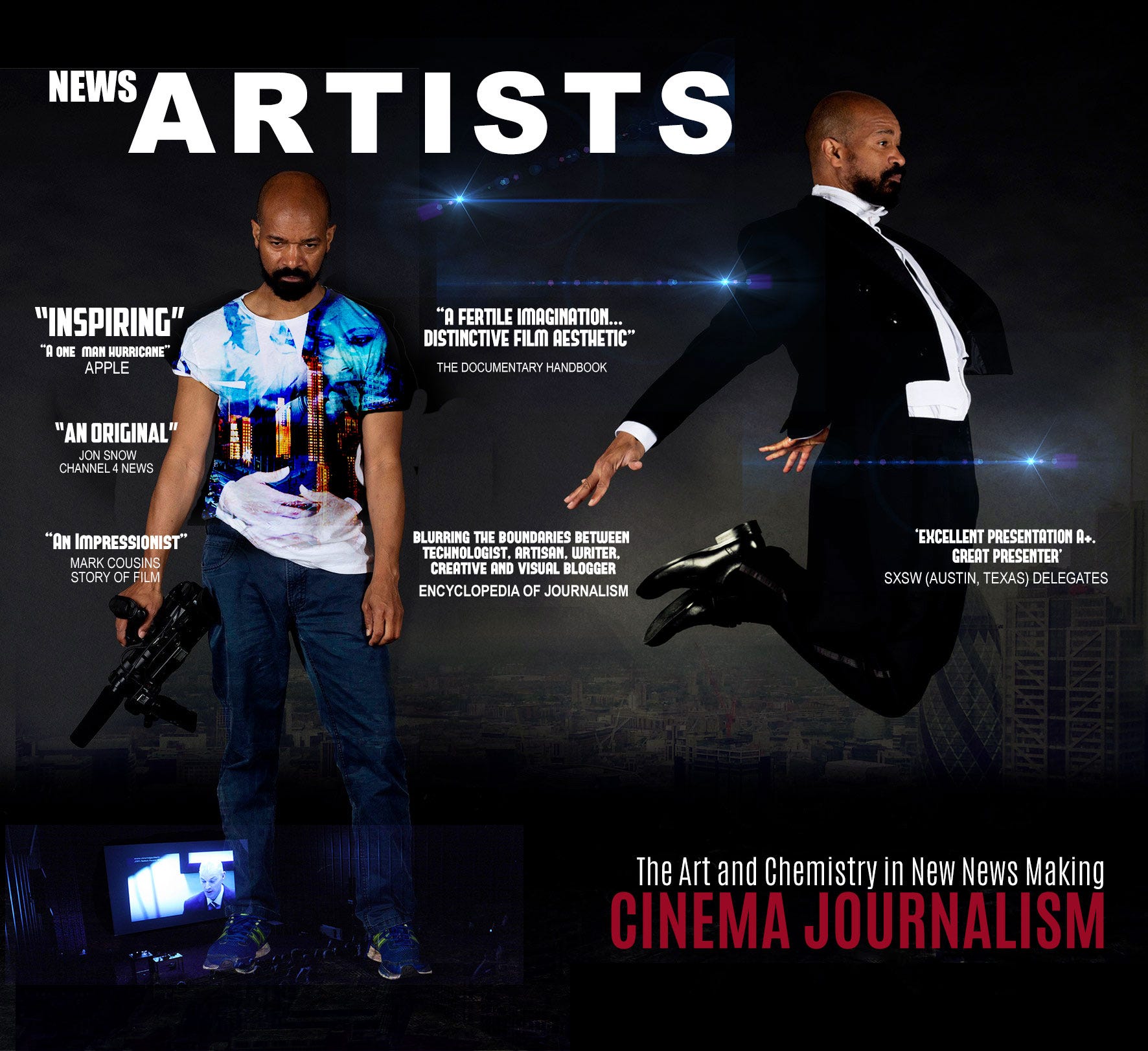
In the past 20 years plus through global research which would form the basis of my PhD, and coupled with my experience at making programmes, I identified a new breed of storyteller that embraces a different storytelling ethos.
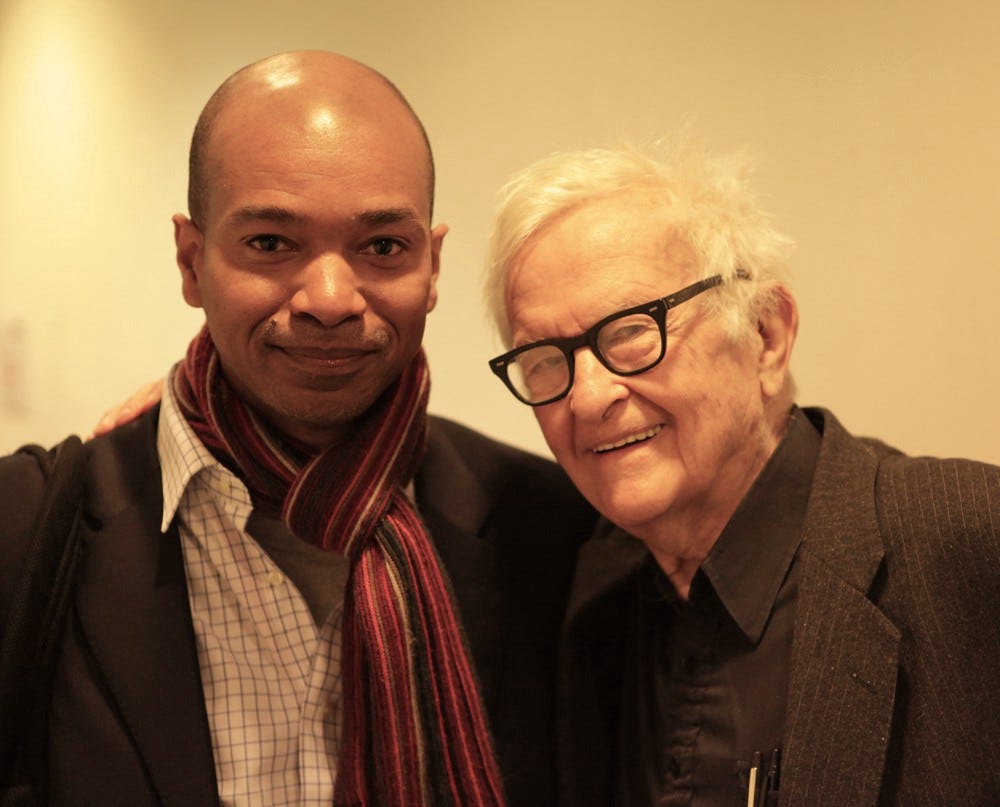
Let me first provide context. You may be aware of something called Cinema Verite or Direct Cinema that emerged in the 1960s as a style of news and doc making that radicalised factual and news narrative. The figure behind it was the late Robert Drew.
It’s no exaggeration to say what Drew and his colleagues did was to fundamentally change the way viewers would come to watch and interpret news films. If you’re a seasoned documentary maker or news person, your understanding may be that this style was designed for documentaries. No! Drew in our conversation was emphatic. It was to recreate a style of news, but they news folks didn’t get it, he told me.
That’s the parallel example for where we are now.
THE APPLIED NEWS STORYTELLERS
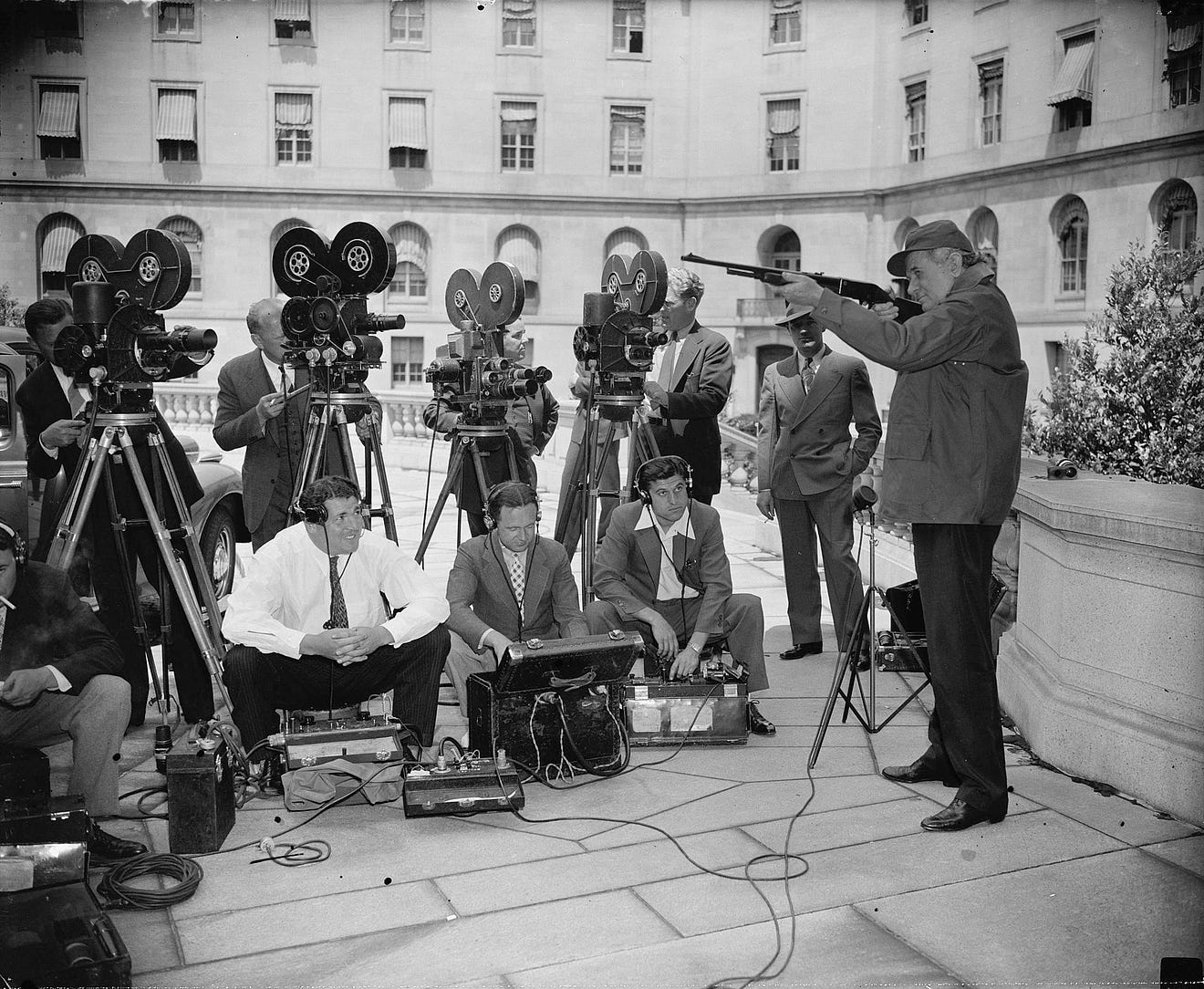
In the 1990s-2000s a professional class of news makers would realise, just as Drew had done in the 1960, that by changing news gathering tools, approaches and methods something happened. Left to their experimental space, and unencumbered by Journalism’s detachment and the rest, this new breed of journalists intentionally or unknowingly approached a story like a film director/cinematographer cum photojournalist.
The research showed that some videojournalists and some mainstream reporters were being influenced by wider storytelling models observed in cinema, not for its fictionalisation, but how story forms worked.
If this sound strange, this is what Drew realised and hence the word “Cinema Verite” was coined. He uncovered a cinema style of filmmaking for its time. Forty years on from his find, when I spoke to Drew (made into a short shown at Apple) he was confident the myriad of new storytelling styles was on the horizon. He wasn’t wrong.
Solo and small mainstream teams of journalists and camera operator were reaching beyond information as the driver, and making sense of the story by asking the question, “how can I make you feel how I felt?” Each frame mattered. There was no such thing as GVs; general vision shots to which TV news is attached.
For the coterie I’ve spoken to across the world, there’s a fundamental break with the detachment model TV News promotes, and whilst this new breed of storytellers demonstrated what they could do, they still generally held firm to the qualities that frame TV journalism and would go on to win award after award.
They include Raul Gallego Abellan, which Sky’s Award winning reporter Thomas Moore would comment upon below.
Another exemplar is Travis Fox, whom I provided a content analysis to his news filmmaking below. I’ve had to warn Chinese students when I’ve showed them the full Travis Fox film.
So to the questions asked at the top of this piece. How do you get people interested in climate change against the inertia of TV News management and the statecraft of disinformation? It is at first a complex chicane to navigate, but here are some solutions that should help garner viewership.
How can stories reach more people

- Work with the top news agencies who have the infrastructure in story workflow. You may have access and contextual knowledge of the region for co-creation.
- The MSF effect. This global humanitarian outfit regularly allows professional media and photographic crews like Magnum to accompany them into disaster zones and makes their media available to use.
- SuperSize me, Kony 2012, An inconvenient Truth reveal patterns for how to make stories with an impact. Tell longitudinal stories over a lengthy period of time. If I were an editor I’d pay for a solo videojournalist to go and live and document for the next year to six months, and connect them to different geographical spaces.
- The future is Web 3 and decentralising. Those images found on the Guardian and The Atlantic, hold an insight into bringing in young audiences via NFTs and DAOs.
- The TikTok effect. This is the platform for innovators and now the not-so-young viewers get their news. It’s where you can experiment and find traction CNN’s Max Foster told me. TV News note, the trajectory for viewers will only decline further if you can’t find new ways of engaging audience.
- Super collaborations. Co-create with others involved in the story. Just as you see with the Queens front covers, co-ordinate and share output so it creates a news cluster, which will also be picked up by social media.
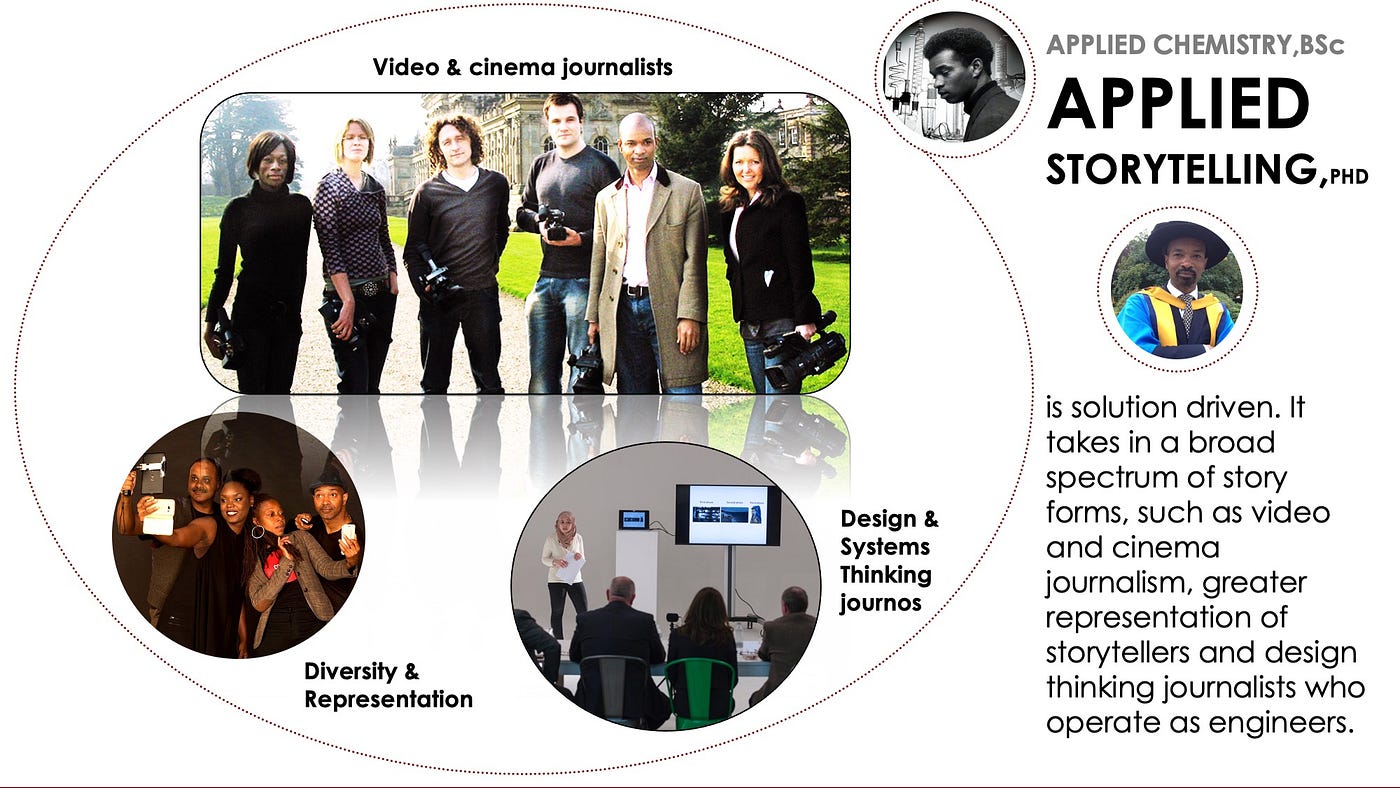
I explained in my talk, there are other factors. We run a digital storytelling lab which combines the videojournalism/ cinema journalism ethos described, with design and system thinking journalists and diversity and representation are key components to the art and science of storytelling.
That science falls under Applied Storytelling. My degree was in Applied Chemistry which provides parallels to seeking solutions.
I explained I have form in innovation and hence am confident that any co-creating alliances will have an impact.

At an international level, there are too many projects to name, but some that feed into the sense of reporting on stories that thread big movements include working alongside Nato to train journalists in risk assessment and the likes, and reporting from Apartheid South Africa in the early 90s for the BBC World Service. This summer I worked on Google’s European News Innovation Initiative as a reviewer, and before then, moderated and worked on a UN conference on the Ocean. This is the head of comms’ feedback.
The way forward is mired with levels of difficulty. It involve training new storytellers, revising language ( I’ve tried not to use the word “Climate Change”) and involves exemplary reporting on one hand and fighting disinformation on the other.
There remains a big hole in this advance that could bring greater attention to some of the world’s most pressing problems, and that is places and seats of learning working in alliances with media makers and the public, in a way that has yet to be realised.
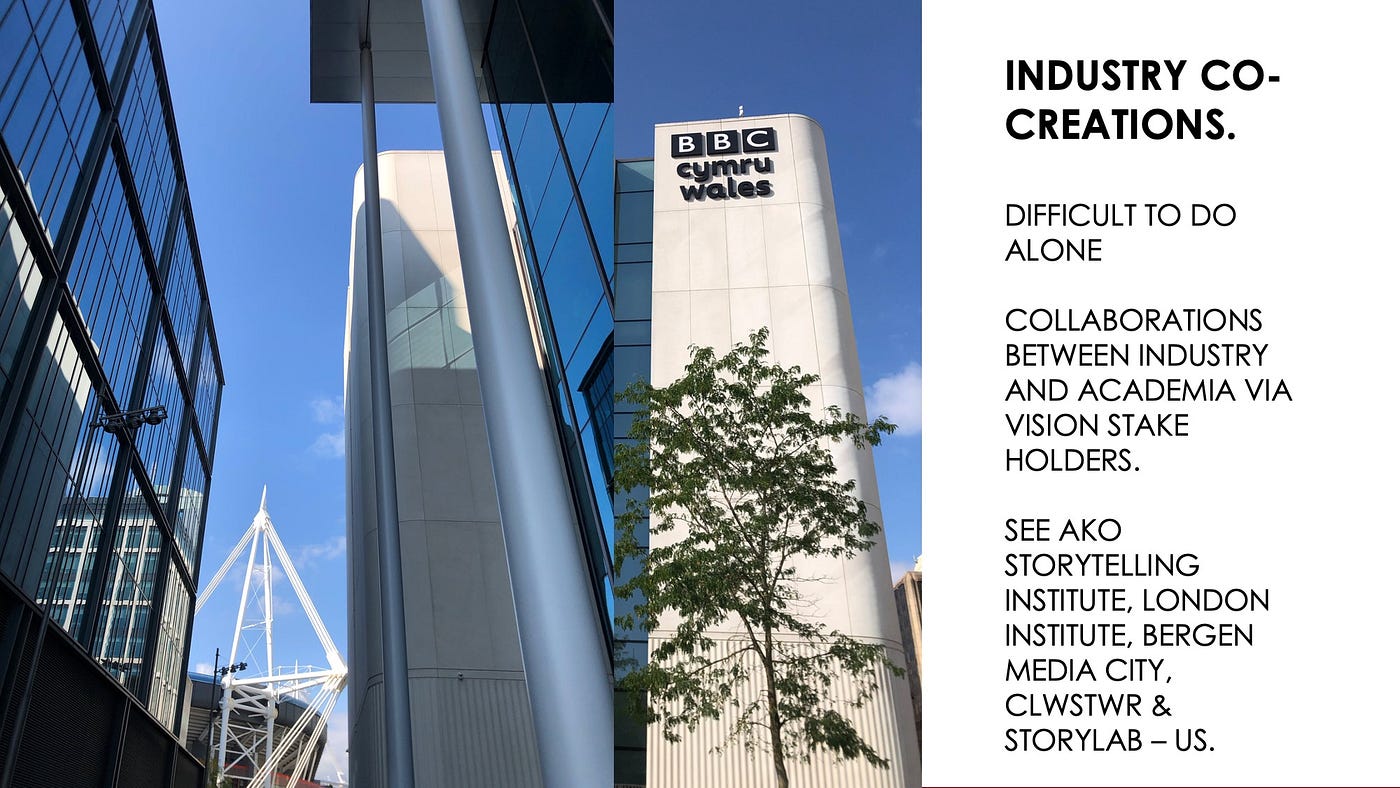
Some are forging these bonds, Media.Cymru, The AKO storytelling Institute, Bergen Media City, and the London Institute. Collectively there needs to be a more amplified concerted effort, embracing people and organisations on the sharp edge of the issue.
Perhaps then, in these approaches Dorothy in Arkansas will come to feel the chaos theory of events; the monsoon butterfly that flaps its wings half away across the globe which will be felt emotionally, proving she has more in common with global events than previously thought.
Dr David Dunkley Gyimah has been described as one of the UK’s leading videojournalists. More on his work in innovation here and background here. More to follow.