Showing posts with label Channel 4 News. Show all posts

Saturday, April 05, 2014

Videojournalism, past, present and the future, and now the real news... (My 2000th post). The president of the....

This is my 2000th post since I started blogging properly since 2005 - a milestone of sorts, and so I wanted to share a wrap.

In television jargon a wrap is a story that extracts a point from the beginning to emphasis an overall point. It can also signal the end of a show.

Last week, in bringing the Masters in Journalism online module to a close, I took my students  to Channel 4 News, one of the most seminal newsrooms you'll find anywhere.

I worked for almost five years as a freelance producer and videojournalists at Channel 4, at times producing the indefatigable Jon Snow.


Jon to a US audience would be the equivalent of a Peter Jennings. Smooth, unruffled, old skool and new mixed together, and much admired (and disliked by some, ah well). 

Jennings is someone I have met too when he toured the ABC Newsroom in South Africa. He was much taller than I imagined.

I was a producer for ABC News during South Africa's epoch first all-race elections.  

All this paints a picture of sorts of the journey I have had in news. In spite of the number of natural and artificial barriers, journalism morphs from being an occupation into a lifestyle. You live news, you see news.


I was like any other producer in news- the people who make it happen, but whose credits lay under the radar.

When television news adopted cinema positions in the 1950s, the producer role was one too that was adopted. However the reality has been that it does not have the same visibility as producers in cinema - a small point, which has no consequence to this post.

News according to Richard Sandbrook is one of those versatile disciplines which provides knowledge for other careers. What it teaches you I add quickens the mind,  elevates the power of judgement and gives you a window on the spectrum of human conditions e.g. grief, malice, sloth etc.

Conversely, traditional news also sets up a picket fence adjudging what is acceptable  and what is not. To the students of Westminster University, Snow's conversation with them may resonate for a while. They are within a golden age of news,  he said, a rebirth, bringing to mind Neo and his matrix-pod moment.

I could not agree more, but what is this rebirth  and how does that translate into anything meaningful?

Data journalism, social networking, coding, software compliance across AE, Indesign and the lot. And videojournalism.

They all matter in this golden age of share. But to share, you need something to share, and videojournalism is proving to be a much sought after commodity.  Read Peter Preston's piece on the challenges the Telegraph is facing with its web strategy and its 'US' editor being at the helm of a British institution, and the schisms in journalism become evident.

Incidently, if you're a Telegraph reader, you're likely to have £100,000 tucked away in the bank, so it's small wonder , the web is not their buzfeed. 

But there's something profoundly at fault with the present model of videojournalism and its custodians, the power brokers, who framed what journalism was, or is.

And herein lies my wrap. The something that is happening in journalism ignores a fundamental theme to characterise its approach and what it offers.

We hold the belief, that journalism is bound by set values, framed by unyielding parameters, practiced by a professional class with their codes.

That's true, and was during its inception, but journalism is a construct. I repeat journalism is a construct. Its values, its legacy comes from men and women, often self-appointed, who debate and share, at that moment and time common understandings, until they're threatened by another professional class. 

Note I said professional class.  This new age of journalism seeks to adhere to rules, many of which need a reboot, but their legacy is so entrenched, we believe them to be immutable laws.

One of those journalism tools is videojournalism. A practice I have come to know and love for what it does. Videojournalism was supposed to be one of the disruptors, to break open a new dawn, to revolutionise the manner in which we create journalism.

But it's rarely happened. The idea that you can shoot and report your own film, is not videojournalism or a radical departure from news. Ask any self shooting camera man or woman who operated in the 1980s.

The philosophy of this new journalism form was the ability to undo the binary simplification of television journalism. In TV if its not black it;s white - one of the most dangerous premises for judging. The texture of this new journalism reportage revealed something far more discursive and challenging.

Oh and by the way, reporters actually with their gear did try this. This image of ITN John Suchet in the 1980s epitomises the videojournalist ( from my PhD research) and don't be fooled by the big camera. 


 In the 1970s Ken Richter produced the smallest 16mm camera that a journalist could shoot with


So what is videojournalism ( not in an academic way) and why is it so deeply relevant that you know what it is and how it functions?

Gina Deeming tweeted this recently

I responded that the conscientious teacher points you to look, but resists telling you what to see.

That's been my mantra with our Masters cohorts and is the subject of my presentation at the International Festival of Journalism opening up a new, overlooked, ignored journalism that is 21st century.

I presented a weakened argument at SXSW in comparison to my present performance lecture. The reviews were largely favourable from  global patriot ,  technology tell and austin bits and atom.

In the lecture room of tomorrow, the sharing zone for future masters students, new fundamentally different pedagogy should align with new social journalism practices.

The ... And now the news, is not just about reform in the way we look at the creation and outcome of stories, but how our cultures, our individualism plays a bigger role.

It couldn't before because journalism as western model, was practiced by a homogeneously same culture, and colour set. 

Remember when news practised parachute journalism, or that the attitude to journalists who were not of the same cultural pool was akin to Farage shouting "bloody foreigners"

In the West in the 1960s/70s, the UK was predominately white. In the Ghana of the 1960s, Ghanaians were influenced by their own values of what made them Ghana, in spite of a legacy of British influence.

The views of say a Ghanaian therefore play little role in the understanding of journalism in another culture. 

It's a related reason why, often on the tech circuit of high flyers the speakers tend to emerge from a particular cultural milleu. Does this matter? 

When we speak of social news and its impact, in the West we're only now coming around to a different idea of news. But as a baffled Ghanaian student of mine, Daniel Kofi, from 8 years ago recounts, news should be something else, than what it is at present- social news.


Well founded sociological research tools, such as semiotics or even cognitivism make no allowance for the culture, race and beliefs of the storyteller. How could they ? 

Both purport to be scientific models to evaluate research, so beliefs and thoughts are not permitted to be part of the person's story form.

News companies that seek to simplify stories are intellectually ill- equipped with the tools to understand  that a take on a story may be influenced by the fact I grew up in Ghana. but can still be truthful.

That wonderful moment when the late BBC journo Komlu takes his shirt of to decree his Ghanaianesss is an example of this.


Only now, through social news are we beginning to understand that who you are, where you're from, your likes, dislikes can be collated to give meaning to readers about you.

We've come a long way from  the traditional journalism that was apt for its time, but in the transition to a new technological flattened culture, we're still perpetuating beliefs that ill-suit the potential of story telling.

That's what I will be sharing in Perugia at the journalism festival. Hope to see you there.


Friday, February 22, 2013

How Channel 4 News won the RTS innovative news section, 2012

David arrives early at the judging meeting at the RTS

The winning entry for this year's innovative news read as follows on the RTS's website


Innovative News

No Go Britain, ITN for Channel 4 News
“The winning entry stood out for the novel way in which it helped to give a new look at one of the year's big stories. It built upon the strength of crowd sourcing and social media and then added the clout of a broadcaster to build up the channel's continued commitment to people with disabilities in the year of the Paralympics.”
The Nominees were: 
  • 50 States: 50 Voices, Sky News
  • The Olympic Torch Relay, BBC News for BBC

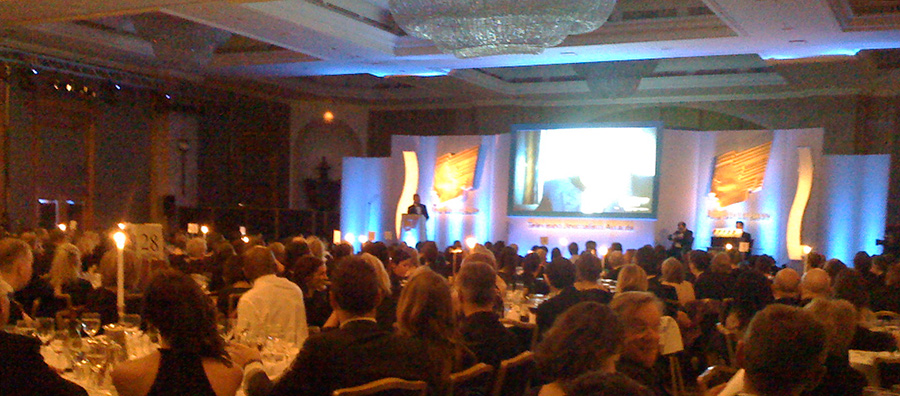
Within the glitz, as well as, sombre mood from remembering fallen journalists, the industry gathered at the Hilton to crown the victors. A couple of months earlier, however, the business of finding a winner and why fell to ten of us gathered at the RTS headquarters in central London.
Jurors are pulled from across the industry, as well as academia, from where I come. It's an interesting area to diagnose. What does constitute 'innovative'? We have guidelines and the mood is relaxed, yet business like to soul search, if the need arises.
So why me, how did I get involved? I can't be sure. There's a panoramic look across industry for people with the skill, and presumably, the fact I have worked for BBC, Channel 4 News, WTN, ABC News and a host of others might suggest I possess some understanding of the broadcaster's production process.
In 2005 I won first place in the US' Knight Batten Awards for Innovation in Journalism, a decade earlier was one of the UK's first videojournalists, and am completing my PhD which examines innovative news. So I guess I have a penchant for the innovative, which I try to reflect on my site, viewmagazine.tv.
Now, it would be grossly unprofessional to write about our conversations when judging, in that common courtesy alone dictates I should at the very least contact my fellow jurors. I also feel a bit of Chatham House rules  applies to be frank about our conversations, so I will only reflect on my thoughts on 'No Go Britain' and what caught my interest. I'll do the same for '50 States' and 'The Olympic Torch Relay'.
Also, a myth buster to friends who have asked. The voting is such that I genuinely have no idea who has won, until it's announced on the night.

No Go Britain
Awards Night at the Hilton
'No Go Britain' did something that broadcasters rarely have time for, because of the news agenda. They took an off diary event, that is people with difficulties getting across London because of disabilities and contextualised it  via a bit of advocacy journalism. Or as Katie Razzall, C4 reporter put it: 'This was about empowering disabled people to lobby for change'.
The plight of anyone disabled trying to get by on London transport may seem anecdotal or at best isolated, but the programme followed a couple of subjects around as they negotiated their way across the capital, evoking Robert Drew's mantra of 'being there'.  But how did they get their subjects or begin to understand how deep the issue went? Old media and the not so new in twitter collided.
The twitter discourse allowed the programme to pull the issue together. and once it turned from tweets to taped interviews, the subjects within the film were invited to speak on the programme. The shift had been made now to good robust studio debate. It could have been left here, but the producers now made the issue an open platform for the disaffected to meet and discuss on air with execs. 
If there's one thing new media by itself still has yet to do well,  its the clout and platform to call on high profile interviewees, in this case transport bosses and let them face their accusers. When John Major, from the Confederation of Passenger Transport spoke about changes that would take place in 2017, presenter Jon Snow tells us of an audible gasp from panelists, before Anthony Wilson quips: we live in 2012, not 2017.   Good television.
Channel 4 News then announced it would be taking on further campaigns and execute a similar strategy. So what made it innovative?  Tying all those elements together rather swiftly, mixing old and barely new media. Twitter was not incidental, but strategic.
A couple of years earlier CNN used twitter for the world cup in an innovative means. Nope, this doesn't mean you need twitter to impress. But C4News made it look integrated. Other factors included:  letting the stakeholders tell the story, finding strong interviewees who could articulate their concerns and were not fazed by the studio or even the execs they were meeting. 
Finally looking at the workflow, it appeared seamless and the thought did cross my mind of the strategic use of resources and personnel. 
As an acad-ournalist or hack academic ( both horrible words) a critique, such as this will hopefully provide ideas for up and coming practitioners, online media and Masters students looking to understand programme making. C4 News provided a text book case on how to leverage a story. I might have gone slightly further with the videoing, using the Go Pro 3 so the subjects could bring back vérité videos of the troubles they face, but that's a moot point.
Tomorrow I'll talk about 50 States and The Olympic Torch.
Click here for previous posts
David in Tahrir Square, February 19th 2013
In this post I talk about the debilitating effects Egyptian journalists say social media is having on finding the truth in Egyptian politics
David in Chongqing working with universities
In this post I present some pictures towards the shoot we did between new and old China.
On another related matter  I am convinced that Chinese narrative, with its multiple foci in painting, holds an important understanding for elliptical narratives and new media story form.
Speaking at NewsXchange in Barcelona
Here I spoke about journalism and its fragmentation, which is a natural cause, given that journalism, as Schudson says, is a social construct.


Thursday, February 23, 2012

RTS Awards Night Stuart Webb

RTS Awards UK
Stuart Webb doesn't do awards, a peculiar thing to say as you could say almost all practitioners might say the same.

But standing in front of his peers, bathed in glowing lights having just been told he was the best cameraman in the TV News business this year at the Royal Television Awards (RTS), his demeanor said so.

Stuart Webb award winning cameraman
copyright C4 News
His praise for his industry showed a deftness to this sometimes awkward occasion.  The words were gilt-edged, in which any journalist, manager, or TV practitioner would want to imprint on the viewing public at large.

Webb's speech was also for those often evaluating TV News for its dearth of humanistic coverage, a robust and eloquent defence of its realm.

He described how he'd covered conflicts with Alex Thomson, Channel 4's award winning correspondent; and how the bombs fell as loud menacing thuds.

He spoke of a child being severely hurt and how over a 30 minute period the crew watched as the injured child died, once, twice and again.

The viewer at home tends to forget the intricacies of TV News' logistics. The crew watched the child die in reality, and then relived it through the monitor on playback and then again as they decided what editable sequence they would show us viewers at home. The immanence of those inhumane images lives with you.

Webb's parting words from the podium, his voice restraining traces of emotion, was as nuanced as his filming.

He delivered a sincere thanks to Channel 4 News, a tribute to ITN, and then to acknowledge a TV Industry that had given him the selfless opportunity to bring incredible stories to the viewer, for as he so powerfully put it those bombs that reigned down on him and his colleagues, well:

"On our best days we are louder than the bombs".

You can read more about Stuart Webb and his many experiences such as Iraq a hollywood start that descended into war on the channel 4 website.

David Dunkley Gyimah was a juror at the RTS, the highest awards for TV journalism in the UK, and a freelance producer for Channel 4 News from 1997-2001. He is completing his PhD on the TV/ online news industry at the SMARTlab, UCD and publishes his reports on his award winning Viewmagazine.tv.

Further related links for RTS and Al Jazeera winning their major awards

Tuesday, October 23, 2007

Rendition - shoting styles and braodcasting

Directed by Gavin Hood, Rendition, a taut thriller ( nice site and use of masks as well) stars Reese Witherspoon, Meryl Streep and Jake Gyllenhaal around the much-publicised practice of carting off foreign nationals for interrogation on foreign soil.

As highlighted on BBC Radio 4's Saturday review, there was a healthy tension between the director and DOP about camera movement. Should it hover, stay where it is, or adopt this evolving "dirty shooting" art form - so prevalent in Bourne.

Yesteday Channel 4 News, where I freelanced for four years towards the 2000, indicated its intentions with this new style by featuring a story about education, with all the hallmarks of the camera being the subject.

Channel 4 News has always been about innovation and risk, so I hope they continue.

Where the VJ element of this adds further to the story is extreme personalisation.

Storytelling has invariably sought to tell the story through someone, to give it empathy and meaning.

Vjism - the size of the cameras, the nature of the vj, and stories element, gives an edge to really get a personalised view of the story at hand.

We're seeing two broad forms emerging then.

VJ made for TV - using the same TV language but with one person - sounds like a cost element could drive this.

Or Vj as is own fluid language, were personliasation opens the story further, with potential fast follow ups and the ability to keep the story going.

Going back to Radio 4. Guys I love the programme. But it would be a good idea if

a) you didn't give the plot away
b) or say something like. . . ( Right I won't say that either otherwise it might ruin your viewing experience.

Just stop it Saurday Review

Monday, October 01, 2007

Black Image on TV - Channel 4 celebrations


Geoff Small - a respected TV producer/director invited me as an added panelist to an event he's hosting for Channel 4, which celebrates 25 years on British TV.


Good cast of speakers mentioned here.

I can't make it for reasons, but here's what I suspect will emerge and what I would have wanted to contribute.

There's no doubting the contribution black people have made to Channel 4 and British TV as a whole.

Panelist and Big Brother winner Derek Laud joins a long list of talent, whilst Channel 4's own Dr Robert Beckford's blend of the visual academic thesis on a current affairs bed have become appointment viewing.

But despite coming a long way in representation on screen and off, there is still work to be done - something the Cultural Diversity Network, supported by the industry would acknowledge, and the BBC's Director General Mark Thompson mentions from time to time.

There has been some sterling work:
  • Move on Up driven by BECTU's indefatigable Janice Turner

  • Aspire - a collective of concerned journalists out to promote more inclusivity

  • Mark Boothe's B3 Media, which hosts a number of digital events.

  • Black Britain's range of networks

  • and many many more agents.

    However the CDN having staged a fair few events appears somewhat bereft of the big ideas to seismically move on the agenda.

    The last event I attended at the BAFTA yielded an interesting debate, but how did they follow up?

    Style and Substance

    This could be a presentational issue for there are many many actors within this area and It would be churlish of anyone including me to suggest I'm privy to all internal and external workings.

    However there have been successes. Something to build upon.

    BBC 3's Three Non- Blondes, Some excellent music docs on BBC1, and Channel 4's Dr Beckford and its brilliant late night interactive drama Dubplate.

    In the mid 90s there was the BBC's Black Britain which either launched or provided oxygen for many of the careers of today's well known TV figures and executives.

    But as the industry with its pending sqeeze on jobs at the BBC and ITV and a dearth of risk-taking ideas looks to the future, what hope for black images on TV?


    Programme maker and academic David Dunkley Gyimah hosts B3 Media's "Breaking, Entering and Staying in the Game" at the
    ICA Cinema
    with Nelson George (US' Filmmaker, writer), Catherine Johnson (Screenwriter, Bullet Boy, and author), Ray Paul (Executive Producer 1 Xtra, Specialist & Live Music programming 1Xtra), and Maxine Watson (BBC commissioning executive)


    What hope for TV?

    For the industry as a whole the outlook may not be as bright as the Culture Secretary James Purnell so bouyantly suggests.

    That's inspite of the recent shenanigans.

    Greater innovation within broadband and cable e.g. streaming HD without compression will continue to put pressure on the TV Industry. The triple play scenario, greater broadband speeds and if BT can pull its finger out optical cabling will push broadband as a viable transmission network.

    Note this number 10mbits at MPG2 coding.

    Bleak is the Future?

    However for people of colour, bleak could be an early assessment.

    In times of crisis, those policies and pledges not occupying centre table at exec meetings see the waste paper basket first.

    Now even docmentary programming is feeling bruised and embattled. Who would have thought?

    But unlike a decade ago, today the landscape offers a burgeoning solution in broadband and IPTV and other potential online broadcasters, such as the newspaper industry.

    Today it really is a global market, with new players looking for talent.

    That shouldn't make broadcast managers complacent, but provide a window for all potential broadcasters and ethnic minorities.

    Future TV strategy

    Part of any strategy hereon must involve a multiple track approach both in self suficiency and preparing the next generation for the new market place which desperately requires cross over convergence skills.

    I made a passing point recently in this postingUniversities of the 21st Century

    Last week Guy Ker of ITN was unequivocal: "We need videojournalists!" But they're rare on the ground.

    Also, there must be a concerted approach to remove the stigma that broadcasters are giving people of colour a leg up when recruiting ethnic staff.

    Similarly, the industry and broadcasters still need to work on their presentation to explain their position to non ethnic parties alarmed at what is perceive as discrimanatory employment.

    The operative word here is "perceived".

    Ethnicity and the media is an emotive topic.

    I also believe the industry should not shy away from telling truths about future prospects.

    At Move On Up's first event industry event some years back, I bumped into a very senior BBC producers whom I'd worked with some ten years ago.

    "David we simply don't have the sort of turn over that enables us to go on such recruitment drives", he said to me shaking his head.

    As a member of BECTU and Director-member of the UK Broadcasting Journlism Training Council (BJTC) whose job entails assessing the strength of UK-university media institutions, there has to be more work with broadcasters and places of learning to provide the necessary skills to all, including ethnic people.

    Too often in my capacity as a lecturer and public speaker, I have come across students of all hues, particularly ethnic, whose understanding of the industry is skewed.

    Three former very talented black students, one of whom (Dionne Clarke) blagged her way onto the red carpet premiere of Dream Girls and Sin City, and produced wonderful interviews, are still without work.

    Yes, a life lecturing is required. It's a tough industry for everyone and you've got to be driven and know what you are getting yourself into.

    Margaret Hodge, (MP) Minister for Culture, was not in the wrong once on Channel 4 News when she remarked to a recent graduate, a black woman, it would be a struggle finding work because of the nature of the industry.

    Where Next?

    So what's likely to be the outcome of the event?

  • Rigourous debate and hopefully a genuine reflection and zeal to understand the issues, more so in these dynamically changing times.

  • A chance to speak to the TV execs in a language they understand.

  • A further opportunity to talk up that its about talent and diversity of talent


  • This latter point is something Simon Prosser from Macmillan Publishers, behind Zadie Smith et al makes in an interview - part of which I have clipped in my report Is Television Killing the Arts?

    There are 6 million people in London, 2 million of those are from different ethnic and religious backgrounds, who we should have the opportunity to hear something about, he suggests.

    All Change

    Will there be fundamental change?

    Geoff and I have been around long enough to know that answer, but what Geoff has is a platform to shine a big light on a topic that often lies under a bushel.

    It's a chance to find new patrons, supporters and like minded souls interested in the contribution black people have made, can make, and should make in the years ahead.

    Programmes like BBC 3's The Trouble with Black Men, even if it was a polemic, should be more responsible in their quest to entertain as well as inform on such controversial subjects.

    In remaking our own programme here, The Trouble with the Trouble with Black Men, what emerged was the need for the broadcaster to provide a forum to discuss the issues. Crimewatch cum reconstruction without the desk exchange.

    One thing though is certain when we look past ethnicity and the colour divide it's about TV making, good TV making - and the industry has shown that it recognises that, with reference to Geoff, David Upshall, Paul Blake et al.

    It just that it, well, needs more commitment.

    Friday, September 28, 2007

    Successor Generation - Videojournalism's 7up


  • David shooting with a Digi700 camera for a Channel 4 News feature from South Africa

  • It is an incredible feeling as a journalist, sociologist, or an interested party to see change within a nation take shape before you.


    The Civil Rights Movement of the US, Glastnost and Perestroika in Eastern Europe, Thatcherism and the politics of self - these provided genuine reflections of our changing attitudes.

    Often documenting them yields first time rough drafts; a snap shot of history by the hand of the achitect.

    Nonetheless they are visual documents for new generations to ponder.

    Truth, I don't by any stretch think so grandiosely about this work or others.

    But watching this film - a version of which was made for Channel 4 News - is a strong advocacy for videojournalism and  why we must persevere to tell non ageneda stoies.

    The Successor Generation
    In 1999 working as a freelance producer at Channel 4 News, I learnt the programme had no plans of reporting South Africa, five years on from its historical elections.

    The most would be a short report from the studio.

    So I did what many others I feel would do with 18 months prior experience reporting from the region in 1994.

    In that year BBC Radio 4 commissioned me to make a documentary following the lives of four South Africans.

    They were about to vote in their first election.

    That documentary proved a huge success, which is why I went back and shot this piece.

    There's lots today I would have done differently. That's progress.

    But what they have to say here is still relevant today as it was back then.

    Sunday, February 11, 2007

    Video Journalism Book - first draft

    THE NEW NEWS MAKERS


    Mark Jones, a veteran 20 year news man now working for KRON4 Bay Area News Station, San Francisco summed it up: traditional news making is anachronistic.

    Most new outfits trawl the newspapers looking for news, then depending on how detailed the newspaper has covered the subject, they'll send a news crew out.

    Funny, newspaper have never really taken credit for that. In the 50's with TV News becoming a main stay of the media landscape - many publishers originally laughed it off as a fad - newspapers had to adopt a different approach.

    Many became more feature-led or weighted with commentary. They could no longer break stories in the way electronic news could. But what they still had was the nose for developing news features and putting specialist personnel into the field to nuture contacts.

    TV borrowed the format of using specialists and also poaching talent from the publishing world. Video journalism gives newspapers the edge again. Out researching their story, they can film the construct. Meanwhile, the fight for news is taking a secondary turn.

    Newspapers have always dabbled in video scoops. Now they can strategically combine it with their own online output. Note the Sun Newspaper's exclusive video scoop featuring the cockpit exchange between US A-10 tankbuster planes attacking a Britsih convoy on March 28 2003. They could then follow it up with exclusive articles, effectively keeping the spot light on them.

    I find this all very fascinating and have done since sitting in my bunk bed days at boarding school where I wrote my first article for our college magazine on the Neutron Bomb. Does anyone remember the Neutron Bomb?

    So finally, this weekend I completed my first draft of a chapter in a book I have been wanting to publish, but perhaps now believe I have some substantive material to commit to old traditional paper. " Oh yes you smell that? Do you smell that? books son. Nothing else in the world smells like that. I love the smell of books in the morning."

    I will be posting samples online for you to comment and include your views hopefully in the finished product.

    The book is part biographical within the context of media work, part "how to" and part about self-help, the unwritten word of working in the media - short cuts etc. I hope it in some way also helps invigorate those who might see themselves in my shoes. Aristotle said it in so many words: there's no such thing as special, other than aplying those hard grafting days. For me it's the hard graft, simplified for you.

    Some of my former colleagues and students have been extremely gracious in acknowledging some of these and I will leaning on your wise words and counsel again. So please comment.

    Here however are the chapters in the first draft annotated with what I believe they try to achieve.


    VIDEO JOURNALISM BOOK

    CONTENTS


    VIDEOJOURNALISM
    The beginning, middle and the end
    Notes: This chapter is the thread - telling how VJ came to the UK, via Channel One, which I worked for. It looks at early working practises, going as far back as the 1900s and examples from the 1960s which I refer to as the victorian vjs. Then I chart how the BBC adopted Vjism. I interviewed Channel 4s executive in 2000 who lost out to being the first major company to adopt the format. I would in 2001 be invited to speak at the BBC managers conference in Birmingham. The chapers unveils all the techical and creative know how at shooting like a VJ, many from my own experience, with examples drawn from noticeable VJs and also my work with the Press Association, newspaper groups and lecturing Masters and MBA students.


    THE LEGACY OF BBC and CHANNEL 4 PROGRAMME MAKING
    BBC reportage to South Africa’s Through the Eyes of a Child.
    Notes: BBC Reportage and Def II's Network were without question turning points in British current affairs creative film making in the late 80s, early 90s. Firstly, more importantly it was driven by youth telling stories about youth. Many of the styles and sleek ad-world creative look on British TV stems from what Reportage and Network 7 acheived. Not suprisingly, many of those who went through its revolving door are now big figures in the TV industry. I worked for Reportage in 1993 and that series run taught me more in TV making than a silver-haired man with brogues could. We made some mistakes but there was a strong formula. After Reportage I moved to South Africa and within two months was given a huge project: Through The Eyes of Child. I posted the pilot of the series on view magazine last week. BBC Reportage I believe was the perfect template for understanding the radical nature of video journalism. Simply, because Reportage under Janet Street Porter was radical. At WTN, which would become APTV, news driven primarily by pictures becomes the focal point - with an emphasis on how to quickly turn around copy and video. I hated and relished the job. Channel 4 News - where I spent 4 years freelancing offers an alternative insight to programme making to the BBC. Centralism Vs indeference. And then political programme making which is very structured. I had various stints working under Andrew Brown - the chancellor's brother. One of the progs I'll dissect was an audit I produced during the election weighing up what all parties had to offer.


    RADIO PLAY
    Radio, Podcasts and critically acclaimed BBC Radio 4’s First Time Voters.
    My first love and my first point of contact with the media was when as a first year Applied Chemistry undergraduate I approached my local BBC station to become a freelance radio journalist. BBC Leicester is where I made all my mistakes. It's where also a roll call of British talent has emerged, which meant I was really learning from the best. Those included Julian Worricker and VJ Sharma who would set up Britain's Asian Network. Radio is pivotal. Sound is paramount. In video journalism, you're also the sound recorder. Radio's package - the term given to a feature - is the height of the podcast. Understanding the iambic penatameter nature of speech will make you a better radio features maker. My trajectory in the 90s was working for the BBC's london station co-presenting and produding a thursday one hour show, which was sandwhiched between an unknown Vannessa Feltz and Chris Evans. My peak though was a BBC Radio 4, 40 minute feature, called First Time Voters in which I would solicit the views of four South Africans voting in their first election. That feature played on BBC 4, The BBC World Service, then the chiefs of South Africa Radio heard it and bought it. It was played on the eve of their historic election - the only foreign feature played on SA Radio during their election run. Podcasting is the package with a few things to heighten the sense, which I talk about.

    THE UNITED STATES OF AFRICA
    Video Journalism on the Continent.
    At last year's WeMedia conference that old chestnut arose. How will we help Africa's media? It's madness. A problem that exists could easily be handled with nothing more than training and the small video cameras. That's notwithstanding the ethics and system of rule in countries that may thwart reputable reportage. But in practical terms what networks like Ghana need is equipment. What they can't afford is the discriminatory high investments that comes with setting up a broadcast station. I was asked to be a consultant for Ghana TV on and off for three years. In a station that serviced the whole of the country, they had three beta cameras - only one was working and it was seconded by the president - and two editing mobile panels. One of the most ambitious projects on the continent was undertaken by a friend and ex-head of CNN. He wanted to know how easy it would be to produce the first international co-production between Ghana and South Africa. My idea was to use video journalism. The net result was Africa ( Ghanaian and South Africa journalists) producing their stories of interest. The chief executive wanted one good one hour programme. We came back with seven programmes. I was introduced to Nelson Mandela and was relayed a request from the president of Ghana. The programme had a huge impact bridging further ideas and collaboration between the two countries. After featuring Mccan Erikson's Herd Buoys - one of the most successful advertisers in South Africa - currently handling campaigns for the World Cup, they were invited to Ghana to adress government and industry. In this chapter I explain how we achieved what we did and why I believe Apple's broadcast solution is ideal for African broadcasters.


    IDOCS - Interactive Documentary Evolution
    In 2001 working at a Soho advertising company, a colleague and I hit on an idea of reproducing a documentary which was initially made for Channel 4. The Family took on a new life when it went online. It was an interactive documentary, which ( my first awards submission) netted us runner up in the Channel digital awards. Idocs comes with a formula that's replicable across any docs. Lennox Lewis' team saw it and asked us to pitch for their account. We lost in the final selection, but Lennox's team understood the combination of the web and video journalism, so asked me to join their outfit for the fight with Tyson. Videojournalism meant I could be discreet. And my web skillls meant at 3 in the morning after the fight I was writting copy for their news on Lennoxlewis.com.
    The idocs formula was used to produce a series of online promos. Remember this is 2002 - and Flash was not well known
    outside of the design community. Hillman Curtis who I stumbled upon in 1999 was my inspiration.
    Idocs will deconstruct some of the promos made but also give a behind the scene look at being the only journalist in the world allowed into the Lennox camp. Sorry that's not meant as boastful, but Lennox's team turned down every media organisation imaginable and their PR team would ocassionally remind me. Maybe they revelled in the thought.
    I still have with me original footage I haven't posted of filming on my super 8 mm inside the Tyson camp.


    VJ’s VIABILITY
    Pop Promos and Advertising
    XTP, Kuyah, and Wars - 3 different projects but all of which pull on the techniques of video journalism. This is probably the starkest illustration of how versatile Vjism technique is. XTP is Cross Track Projection and the use of ads on London underground being trialled at Tottenham Court Road statoin.
    Viacom UK contacted us at re-active.net and we devised 5 degress of motion showing how different movement could equate to a structured cost. Pop promos is an area I have dabbled in - again using structural form - to make an arduous process simple. Couple of weeks ago my nephew wanted a video, so in the space of 5 hours I taught him and he shot his first promo - not fully completed - but not bad. Advertising looks at one of the most high pressured campaigns I have been asked to front. CNN International reccommended me to a client who wanted an ad on air within 24 hours and was willing to pay for the premium. The bidding war that was sparked made me think whether journalism was really where I should stay working.
    With no assets, no brief, no pictures, I had 18 hours to make it work. Here I deconstruct the production process. The ad made it on CNN International the next day.


    NATO’S WAR GAMES
    The reporting of war
    A growth area for vjism - war corresponding. There have been many instances of personnel in the field as VJs, with modern figures as the BBC's Leithhead and the award winning Ruud Elmendorp. There have been casualties. Wars attract the media and many freelancers and I have been no exception. Photographers are at most risk and the transition to video journalism comes with risks as well, but photo journalists and video journalists share a lot in common. The skillset's are more or less the same. No coincidence then that Digital Photographer - by Dirk Halstead marries the two. Here I deconstruct work in Ghana with the US Special Forces training ECOWAS soldiers preparing for assignments in war-torn Liberia. I also look at an incredible excercise working with Nato as an editor-in-the-field. Video journalism and back pack journalism offer an immediacy to war and conflict reportage that is still unmatched in traditional broadcasting, barring the use of video-sat phones.

    8 DAYS -
    The making of the first VJs from Newspapers
    *International VideoJournalism Awards, Berlin
    This is the chapter more complete than the others and charts how to make long format features. 8 Days is the story of the UK's first newspaper journalists learning to become VJs. It won the international VJ awards in Berlin.


    ACADEMIA
    The Net and Digital Diversity
    A critique in academia. What should be a lab for ideas has become a quality assurance excercise. No bad thing, but while we give students the basics shouldn't we also be seeking to to let them experiment and come up with models for the future? In the US when you look at the web, it's an eye raiser that a lot of innovation has come from students.

    Our lack of innovation in the UK comes down to structure and a hierachy, where the system has little notion what huge potential lay ahead if they took the reigns off.

    Podcasts, MUDs, Atavars, Second life in academia are to be welcomed. Innovation overall is unfolding, but there's too much inertia. Here I'm looking at a comparative approach to different countries including Ghana - with its high standards in university.

    I'll also round up views emerging from Digital Hollywood's conference where I shared a podium on education in the 21st century. As a quality regulator within the Broadcast Journalism Training Council, I'll give my views on observations from universities around the country. Here Chatham House rules may apply.


    VIEWMAGAZINE.TV
    Mi2 Videojournalism - Shoot, Cut, Mix, Code, Publish 5 ways.
    *Batten Awards for Innovation in Journalism, US
    There are many things the media industry willl say can't be done. But we fail to remember that the media is still young and growing, particularly electronic media and the web. Execs will tell you what not to do. There will be hundreds of conferences this year extolling virtues of broadcasting, pubishing and the web.

    Our role is to listen, deconstruct and see if we can build anew. An excercise I run in lectures is to randomly pick a site, a tv news show and show flaws. Often ideas are cross national. So being aware of different cultures helps. A masters student asked about the garish nature of Chinese web sites. I disagreed, the Chinese culture revells in bright primary colours ( reds).

    Viewmagazine was another pet project asking what if. Its 1t took 1st place honours at the US Batten Award. I speak about website's becoming more televisual. That video would be key. That the language of reportage would change to incorporate aspects of zoo media. Here I walk readers through through viewmagazine's initial incarnation. How senior personnel believed it didn't have a chance . I also look at a number of new websites and what they're achieving. I'm fortunate here because the nature of viewmagazine attracts others who are breaking traditional practices that I can share them with you.


    BROADBANDERS - TV’S DEUTEREONOMY
    Next Generation Web and TV, the OuterNet and Video Hyperlinking
    *WeMedia Felllowship, American Press Institute.
    The future of the medium. Marshal Mculhan's future as I visualise it, Blade Runner, Minority Report et al. The clearest ideas thus far include video hyperlinking, the outernet and green screen second life.
    I could write a whole novel here from my fantasising mind.


    Your comments are duely welcomed.

    Labels: BBC, Channel 4 News, hyper linking, outernet, video journalism, video journalist, videojournalism, videojournalist