Showing posts with label videojournalist. Show all posts

Sunday, December 22, 2013

Viewmagazine.tv - The New Cinema Videojournalism of 2014: a different type of media - cinema comes home


Viewmgazine had been redesigned.

And David is really excited to bring you the new layout and  approach it's taking in 2014. This will  combine a return to my core roots of filmmaking, but bridging it with the innovations of cinema and social from the results of my six year research.

Whilst the carousel effect is no by new, we hope your like the way viewmagazine.tv has laid out its themes and the design.

Carousel 1 
Features the big theme of 2014. Cinema is coming home. It was always the intention of some of the brightest minds to bring you the zenith of storytelling e.g. journalism, through cinema, but the institutions fudged it.

They did so for various reasons, but in 2014, viewmagazine.tv and David through his work will explain the approach. Elements of this led to awards in the past. e.g. Knight Batten and Videojournalism and this year is also partly responsible for me being made chair of the UK's highest television awards in the category of innovative journalism.


Carousel 2This shows one of the biggest stories that was started late 2013 profiling some of the most courageous young people in Syria who supply stories to the international networks. Today, when I heard about the death of seventeen-year old Molhem Barakat, like many I was deeply sad and also angry [see his pictures here].

Sad that a promising photojo should lose his life and angry that whilst many are paying homage to him, there's a debate about risk assessments that is happening and should. A couple of weeks ago I attended a BBC event about safety. One of the popular news sites in the UK is looking to run that story.

The group I met near the Turkey-Syria border ttake incredible risks and they eloquently lay out the issues that we, outside of the war take for granted.


Take this pic above. A young videojournalist is taking a photograph of a camera, but there is a deep history behind this camera. Up close, the next shot shows the scars of the camera.
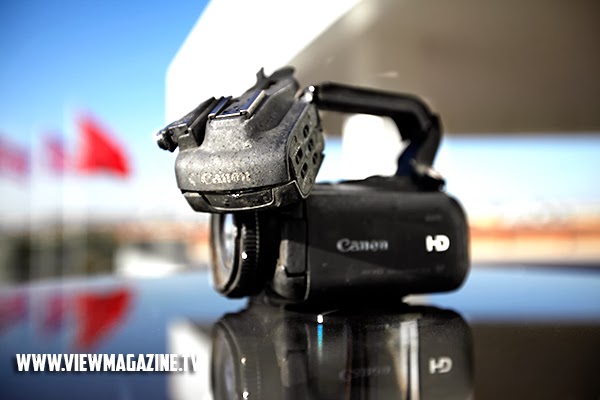


The camera belongs to the brother of the videojournalist taking the pic. The brother has been abducted by either the free Syrian army or government forces. But on the cameras chip may be clues to this mystery. The scars on the camera come from an explosion.


Carousel 3


Back in London, and the absurdity of segue way from war into the prosaic of music. One evening I was invited into a house of a friend of a friend. If you've heard of living room restaurants or underground restaurants, this is the underground gig.

But there is one significant difference, the host is an Ivor Novella award-winning singer/ song writer. Her friends e.g. Heidi Vogel,  like her fill out huge venues, but they're going local and intimate. Why?


The reason why this is significant and will have a meaningful effect in 2014 is because of what Beyonce did a couple of weeks ago. Friends, fan base, call it what you want, but by going intimate with your friends you raise social to a cool new meaning.

And in the UK, South London, the home of cool, this social matrix will revolutionise the music industry. As one friend, Q put it, why does Jay-z come to London all the time and quote Magna Carta in his records?

When Prince Charles met Prince Jay-z

Carousel 4


We are Social. Some months back I attended a BBC social meeting. Anyone who was anyone in the world of Social was there. Look carefully and you might just spot me.

But here's the question, why is it that most journalists don't have as many socialees as non journo types. OK, whilst some journos have huge followers, I am making the point that there;s something inherent in appreciating social networks that most journos need to unlearn.

Journalism is hierarchical, Social media isn't in that naked way, though by default the share acquires social power. I'll explain more of this in several projects I'm involved in. One of which is working with one of the UK's leading comedy houses to find out what makes different cultures laugh.

Carousel 5


This is the film that started it, back in 2005. The first UK newspaper videojournalists, who I trained and then turned this into a film. Since then, the same methodology has been extended to Egypt, Lebanon, Chicago, China, South Africa and the Financial Times UK.

So what have I learned and what can you learn from the interviews I have conducted?

Carousel 6


I dug this picture up from back-in-the-day. +ILICCO ELIA one of the UK's leading mobile technologists said recently "come back 2007". I took it to mean in 2007, as the industry was in stasis, people like +ILICCO ELIA were turning it upside down. I shot this below when he was at Reuters.

They pushed hard with their ideas, but institutions, Foucault stated in one of his philosophical musings that big business has a way of bending creativity to suit its own needs. He called it discursive formations.


In 2007, I had strong ideas myself and was invited to speak to the ONA about videojournalism. Those pictures were beamed to Time Square.

Seven years later my exhuberance has not diminished, but I am bound by a different type of curiosity. If I thought I knew what I did then the way I do now, my future would be different. In 2014, my PhD draws together. Six years of intense research comes not just from contemporary knowledge, but an understanding of the past.

Wow! One of the biggest revelations was to learn that what we're going through now is akin to what our grandparents went through in 1920. Technology was on the verge of breaking in a big way. It was a carnival of ideas.

If anything between the period 1930-90 could be argued as the destructive in terms of creativity. It's the period when the artisans give way to convention. When the suits came to dominate creativity through structure and finance.

I'll post more shortly, explaining other new structures to viewmagazine.tv

Monday, June 10, 2013

The Videojournalists's Playground in Denmark

Pictures from my presentation as part of an international line up for #Videoplay  (Video Playground) at one of the prestigious films schools The European Film College in Ebeltoft, Denmark


This is their really nice cinema auditorium we're presenting from


I had two 2-hour slots mapping out how different styles can be used to create different feelings in videojournalism. I also proved to delegates that cinema has nothing to do with cinema. Darren Dutch, a US Emmy award winning solo videojournalists tweeted.


: cinema is the spectacle, it's what draws you in

The seminars over a week are aimed at predominately mid career photojournalists, photographers and TV Camera men and women.

My presentation was titled Doing as theory, the reflective practitioners. The goal was to show how new ways of working are becoming theory and that its the crafts person reflecting on what they do, which has currency, and differs from citizen journalism.


I have enormous respect for anyone doing video, i particular those calling themselves citizen journalist, but here I argued that unless you can begin to read media and change styles accordingly, you're very different from those who have spent years wrestling withe their disciplines.


I probably over did the slides running at 53, but I wanted to ground the theory. I stated there was no such thing as a unitary future of journalism. Why? because our ideas are as diverse as they are disparate and post modernism doesn't facilitate one big idea any more.

Can you think like a videojournalist? I ran a few cognitive experiments, but here's one that was a favourite. If you want to play here goes.

1. Look at the balls and see if you can detect a pattern


No? Ok look at this one


Any luck yet?  If you saw this. Well done.


But what about this? Did you get this? Prime numbers versus even.


Effectively I have demonstrated how we read media from patterns, but because we go for the obvious, journalism gets a bit dull. These are called semantic fields and the really clever videojournalists break conventions.

We looked at several videos and I talked about how some broadcasters were changing from the traditional package, but the delegates detected some short comings. Look at this incredible video from Alleppo from Channel 4 News, which will likely win awards and see whether you can come up with a critique.


I reccommended books like this one that gets you into the headspace of understanding how to reflect on what you do


And played through several videos deconstructing with the audience why they worked, or not

And demoed some of the kit I use on stories, such as the pocket rig, a small devise that mimics those huge shoulder rigs using the 5D, expect its much smaller.


There was a good degree of audience feedback on personal films I have made, and it was great to see critiques which acknowledged and challenged what might be acceptable or not. Great questions start the thinking process to reinforcing reflective thinking.


I summarised that it was neither my job nor my intention to claim to teach you my style. By showing tow different films and a range of commercials I wanted to prove that the best way to become a film maker or videojournalist was to pick a style and hone that, before moving onto another.

Thanks very much for the generous reception. Here's the image that underpin my practice.


And we end with these two pictures and my thanks to Martin RamsgÃ¥rd and Søren Skarby two formidable practitioners who are driving various projects in Denmark to increase the value of professionals shooting video and making films.  

Next up was Daniel Moj, a prolific entrpreneurial videojournalist from Germany who put on a wonderful show, and tomorrow is   award winning videojournalist from the US whom I really looking forward to seeing. 

And finally it was great to meet up with Henrik from the Bombay Flying Ducks, photography and Flash producers par excellence. 

You can learn more about the event and the people behind it on their Facebook site aptly called Video Playground. My thanks to all the delegates for being so generous, Leif, his assistant and Michael for taking the photographs of me including these two below.


David Dunkley Gyimah is a senior lecturer, videojournalist, filmmaker, artist-in-residence at the Southbank Centre and consultant for a number of compabies, He tweets and can be followed at @viewmagazine

Tuesday, January 08, 2013

Drive, be Driven or drown in creative media, film & videojournalism


Videojournalist David Dunkley Gyimah filming in Egypt behind the scene filming Tahrir Memento

The stories we hear, the one's that stick with us are narratives about individuals, who possess definable qualities. 

One of these is what the art world calls provenance -  a back story that provides a deep level of interest.

A painting found on a rubbish dump is picked up by a fisherman, who gives it to his daughter. 20 years later she comes across it in her loft and has it looked at. Turns out its worth a fortune and Sotherby's expect a bonanza sale which will make the struggling daughter, now a mother, a millionaire many times over.

It's an interesting story in itself, before provenance kicks in. 20 minutes before the sale, Sotherby's receive a call to halt the sale, a gentrifed family, providing a whole new different back story is claiming the picture was stolen from them 20 years ago

They have no evidence of the theft, but they can prove it's theirs.  And they will only give the daughter 25% of the sale. The painting is now worth considerably more.

In all of us lies a back story, but it's knowing how to tap into it, how it can be harnessed and how it serves as a source of intrigue or inspiration, and to whom.

Where you're from, how you got here and where you're going matter.  Curtis Jackson's story aka 50 Cent I recently watched on MTV, like many rappers, is steeped in provenance, as is one of the world's most famous men's designers, Ozwald Boateng, proving its not exclusive to art.

The Backstory is...

David with Ozwald Boateng at the Mayfair Club
No one starts of famous or well known, unless they're born into privilege. Ozwald Boateng answered the call: Drive, be driven or drown, and has the most fascinating back story.

From outside tailoring stock, he penetrated the hallowed lines of Saville Row. A Brit, with Ghanaian parents dared to think the impossible taking to designing in his teens. In the 1990s he staged a fashion shoot in Russia, then several fashion shows in Paris before making his way into the Brit psyche. 

I might know because I have known him for more than 20 years and directed one of his first features back in the days when we would hang out in his Ladbroke Grove home,where he would struggle to fit the stars. 

Today, Will Smith, Samuel L Jackson, Royalty... there are few stars he has not dressed.

Creatives driven to the top have provenance and its the back story that provides currency for as many times they might drowns, but come back again.

Licked by life's fires these individuals scour new peaks on a regular basis.  The higher they go the more rarified the air becomes. Fires can't burn without oxygen. New challenges await them.

Drive, be driven or drown, should be your mantra for 2013 - if it isn't already and you want your provenance to work.

Rewind to the beginning of this tale. There is no institutional, common place way of doing things that you frankly want. You, me et al are searching for ourselves somewhere within the text, beats, zoom, and digital movements of someone else that we can make our own.

But how?

The answer as a blueprint, though personal stories differ, is: 
  1. Scare yourself to do that thought-thing. The one that's been weighing on your mind.
  2. Share ideas as collaborative goals. BTW collaboration is not a recent Net phenomenon. If you've read Stephen Covey's 1989  international best seller: The Seven Habits of Highly Effective People, I recommend it where he talks about interdependence. 
  3. Learn what you can from wherever you can and then carve your own niche. 

Provenance and purpose

A friend starts a new job today. I'm wishing her the very best. Quietly driven, she has provenance and a story to tell which partly inspired this post. It brings me back to:  Drive, be driven or drown.

This alliteration is life's journey and in finding it in others, it made me self reflect on its application.  A note of caution though, provenance depends on you the recipient deciding its level of interest, not me the teller believing in its sense of importance.

Part 2 continues here


Tuesday, December 25, 2012

A New Present of Video Storytelling & Videojournalism


David Dunkley Gyimah with CNN Anchor Becky Anderson at CNN party in Barcelona 

We're 12 individuals - academics and professionals - like CNN's Becky Anderson who annually sift through the most innovative UK broadcast news programmes to crown the  RTS (Royal Television Society) winner.

This unique behind-the-scenes insight has also proven to be useful in other ways. It's one of several features I have used to build up a theory of video storytelling and videojournalism.

PhD Thesis first draft examines the future of the storytelling 
The practice-based theory being completed at  University College Dublin runs to 85,000 words.

It has taken five and a half years to complete, but really covers 25 years of my career and goes back much further still.

And, it has driven me mad more times than I care to remember. It's my new present, which I'm hoping to share with anyone interested - soon.

Along the way some 200 people (experts and clever people who understand media) have helped shape its outcomes from their contributions.

It is a story about storytelling: video storytelling and videojournalism.


The story about the story
This relentless research covers processes before they take shape and the "inbetween". The space between what defines something and the next form, which is often disregarded.

In his book Mike Conway, through exhaustive research, showed how America's broadcast industry came by its present form. A passage of the book read as follows:


"Well before a technology is accepted or medium becomes mass, the key players, the people and industries that could win or lose depending on the direction and purpose, negotiate a specific role for the new invention. Focusing attention only after people start relying on a medium misses the critical era in its development. By the time an audience has gathered around a source, many of the negotiations over purpose and mission are complete. Routines have already been developed. Limits have already been set. A “hard pattern” of processes and purposes might already be guiding the product. These negotiations not only provide an important view into how and why a medium developed in a certain direction, they can also give us a glimpse of the roads taken".

We tend to care less about the inbetweens because the present forms provide us with what we want.

It complies with narrative conventions we are familiar with and above all trust. But the inbetweens do something else, they move us away from stagnation and formulate fresh conceptual ideas.

And these actions are not achieved by whims or banal strategies. Sometimes, the audience exhibits traits that suggest they are ready for innovation.

Dimitri Doganis, arguably one of the most innovative storytellers in the UK, knows this all too well. You will know him by such productions as: Banged up Abroad, National Geo's Jungle Gold, and The Imposter.

The Imposter is one of those extraordinary stories, so tantalisling, that it borders on fiction. A teenager returns to his parents, having been abducted as a child, but all is not as it seems.

Like Doganis' production slates factual programmes take on a filmic schema creating hybrid forms. They look too good to be true.

 But how did Doganis come by this way of thinking? To the left is Doganis in 1994 as one of the youngest reporters working for a new venture in the UK, where I used to work and to the right my recent interview with Doganis.


I'll post a trailer of this investigation in due course.


Sunday, June 10, 2012

To the things they are - Journalism. How we shouldn't teach


WATCH THE FILM-REEL ON VIEWMAGAZINE.TV

The question was asked and produced the cacophony of predictable responses. "To show what's happening", "to root out corruption", "to inform us".

Asking what the purpose of news is, is the equivalent of tatooing your forehead with "imbecile". It's puzzling and denigrating to you and the great doyens of the profession.

As a former broadcaster, who still practices independent videojournalism I could be equally irked, but I have an itch that requires scratching.

Working for ABC News in SA.
So what's the purpose of news in the media machine age?  My thanks to Paddy Scannell whose ideas have catalysed my own. [fade to black]

A hypothetical experiment, for it can only be hypothetical imagines, like the crew of Aliens, we awake from a deep coma to find out we live in a world such as this in which various technologies exist, such as this, and that we try to describe what it is we're faced with by building knowledge that has not been filtered through others.

Michel Foucalt referred to it as discursive formation. It is when, say, a new technology is formatted around  the institutional settings of a previous technology. Hence an expressive ingenious creative form such as twitter becomes redefined by the act of (instant) broadcasting, when it had a previous aim.

This embodies the train of thought employed by phenomenologists who urge us to look at things the way they are, and sadly phenomenological enquiry is not practiced within media according to Scannell.  In the 1970s academics opted for sociology - studying forms within society - but you the individual, forge-labou-it.


Inside the Matrix


Freelancing  for the BBC 1987 onwards

A super academic word, phenomenology, it seeks to understand the world by asking questions about everyday things, which we often take for granted. You can trace it back to the daddy in Husserl, but more contemporary experts include Harold Garfinkle.

To gauge a meaning of phenomenology, place a teenager next to a baby boomer who has no knowledge of the new machine world or for this sake is like one of the crew from Aliens - they've been asleep for a while.

The teenager assumes the world was always googlable. The baby boomer remembers a world without instant search and the machines world's acceptable Tourette's writing syndrome - Twitter. The baby boomer learns by assimilation, and what if that boomer had a fertile skeptics brain?  What would she make of twitter?

Now this all sounds terribly dense and academic, but I'm not the academic type and I'm neither looking for dense debates.

In the practical scheme of things, how does such thinking help? If we consider things by themselves, then we begin to see things by themselves and what factors impact on them.  I'll provide an example.

Journalists are taught to be objective and rightly so, a position valorised in the late 19th century to stop this band of new professionals, calling themselves journalists from lying to readers. You must be objective.

100 years odd later, the chorus is there is no such thing as objectivity; like the emperors no clothes, it was an illusion that held.

So today new positions are being adopted, such as "transparency" and "pragmatic objectivity". The latter by Professor Stephen Ward is a basic questioning of ... can you really be objective? Since the answer is no, but the word "objective" has become tainted, Ward's "pragmatic objectivity" will suffice.

What he says is equally interesting, in that objectivity was never meant to be dissociated from personal feelings, it just happended.  Here comes the fascinating thing now. If you ask a 100 journos what they think objectivity means, you'll more or less get the same answer.

The meaning of things
Foucalt's discursive formation is at work again. We know what we know because often it is filtered to us from the fruits of a tree that at some point became poison. So you ask the question: what does objectivity mean, and what you realise is that even if the word has not changed, the conditions that we live in from 100 years ago have.

Scannell makes a point in his writings that suits me too. It's not I'm claming to be clever, oh nooo, but when conditions change, its beholden on us to find ways of adressing those changes.

So even as Ward states the word has not quite been interpreted correctly, in today's machine world we need to look at the word again. We need to perform phenomenology.

Why this matters, not the example per se, but this way of thinking is because it orientates us into considering things we should not take for granted.

That is to look at journalism in ways that ask what is it meant for. Or if that sounds too existentialist to start educating a generation where they question what they're told.

At the very least it revives a "get out and find out" attitude. You want to know the facts, go and find them.

This is precisely what videojournalists did almost 20 years ago with television. They asked why should it take on all the things television does.

Now in case you thought that question is a imbecilic, I did some work with Ghana TV some time ago and was quite taken to discover the management looked on television as a socially cohesive force.

In the Machine World, journalism and many other professions require far more actioanable thinking than we might think, without being wedded to Occams razor - which is the path of least resistant thinking.


Thursday, October 20, 2011

New Horizon For Cinema Journalism

Berlin 2006, Video journalism Awards

Berlin, 2006 in a cinema house, I'm showing a clip to a group who have kindly stayed over from watching a film I made called 8 Days.

It featured the UK's first regional newspaper journalists being converted to videojournalists.  It was a story in a story. For in the first case, it was a film about how they performed and secondly a film building on cinema Journalism.

I'd been invited to Berlin as a finalist for its International Videojournalism Awards. The outcome, me taking the top prize for an independent can still generate high pitch wheezes.

At the ensuing lecture - an ecosystem I often get too excited with -  I would talk about cinema journalism and the photojournalism praxis. Way back in 2006 I didn't coin the word but it was a regular theme in lectures. In 2007 in this article written by journalist Zoe Smith she partly reflected on a number of films I showed to express a contemporary visual language on the up.

Image from Second Genertion, 1999
It still is, talking in 2002 for  Flash on the Beach,  and in 1999 using a digi-beta to film and direct Second Generation - South African's young urbanites voting in their second election.

In 1994 I made first time voters for the BBC - a documentary whose greatest honour was that the South African Broadcasting Corporation aired it a day before their historic election.  No other foreign made documentary was aired on their domestic stations on the eve to end apartheid.

In 2005 as a videojournalist labouring with the Sony A1, one of the facets of cinema which is shallow depth was achieveble only via pushing the zoom to maximum. That is squeezing the aperture, but thus also limiting the field of vision.  The added complications was a loss in steadiness whilst going hand held,which would lead to a technique I would develop  built on NYPD's russian footstep - a name coined in Soho.

That changed in 2009 with the 5D.  Now the 5D is synonymous with cinema, when oxymoronically cinema is much more complex than that. You might even phenomenologically see it as a state-of-mind. We could have a five hour chat abut that.

a fifth of tape collection
Film is not just my profession, which was crystallised around 1994 as one of the UK's first officially recognised videojournalists, but also a hobby. It's also become a new mission in an intense five year study in which a number of figures have generously given their time for me to explore a canvas I so look forward to sharing with you.

This all came to the fore today looking at the thousands of tapes Beta, DVcam, DV sitting in my garage which I'm about to digitise. It's a sort of living experience shedding light and context on factual film making and the concept of cinema journalism.

There is an interesting junction we're approaching which taps into Documentary scholar and Emmy Winner Brian Winston's notion debunking technological determinism.

By that I mean as we pay heed to less and less what the equipment can do, important though it may be, we're begin to relive the 70s-80s - a period when ideas meant more than anything else.

The film makers amongst you will recognise it was a period when Cinema was losing its currency, ideas were on the wane and it would take a new breed of thinkers to turn that around.

Tuesday, January 04, 2011

The Cathedral and Visualist, and Videojournalist

For a moment discard all labels: video maker, videojournalist, VJ, Solo VJ, Videographer and the rest and imagine as you would the following.

You're faced with a scene: an event such as a man running down the street being pursued by another man, wearing a uniform. You watch, observe, unpicking the scene, taking in scraps of information, though that's not how it seems to you.

To you, you're witnessing a major scene and as either a journalist or blogger possess the skills to relay that in text. It reads well, it's real; you're a natural. A man is being purused by a policeman. Why?

Unbeknown to you, you're doing something remarkable aided by your senses, your sensory perception to be precise: eyes, ears, smell, even the breeze of air are being interpellated and interpreted by you.

Unconsciously you're going about a task, not that unfamiliar, for which you possess the ability to make some sense of.

A new scene
Imagine now the scene was a riot. If you're unfamiliar with such surroundings, you may feel intimidated, unsure. You're capacity to witness is heightened, though you may be fixated on particular scenes. The man yelling at the police etc.

You're subconsciously imbibing the scene again, based on differences in the texture, complexity, difference in what would be the norm of the scene. The hundreds of people looking on are not so as interesting as that man yelling at the police.

Then you remember you have a camera in your bag. You take it out and commence to shoot. There's a problem because the settings of the camera aren't giving you an account of what you see unaided.

By now you're spending considerable time on the camera. The world's still turning and for seconds and minutes your attention has been procured elsewhere.

Then the camera works, You begin to record. What you saw with your eyes is being recorded by an instrument; an instrument which intelligently makes a record of what you see, but cannot interpret the events for you.

The camera has yet to become your haptic device - an extension of your arm; the equivalent of the game console for the gamer.

When you play the recordings to a friend, he or she will be relying on connecting the dots in a manner they see fit.

What you didn't see.
But remember when you were filming, the woman standing three metres away crying. To your left 100m a phalanx of youth are storming a building. All around you something is happening; some more engaging than others.

Very little of that is recorded on your device. The youth who shoved the policeman man to the ground did it with a force that had the policeman laying postrate.

You got that on camera, but some how the venom of the shove is less than it appeared in real life. The dazzling of the lights and fuse of colours diffused.

What then if at the point of impact you were in a position to capture that event with the camera compensating for its lack of intelligibility.

In other words laying lower that the two figures you capture the arm foregrounded, huge on the screen and then the shove.  What then you might think would that look like if it were a macro lens magnifying that push?

The account I have just given plays off a logic for consciousness provided by Husserl which I have adapted for my own ends.


A new unconscious understanding
What the eye sees

Imagine for one moment that your ability to interpret events live, not hindered by a camera, but aided by it. That the ecosystem of the event, not just the panoramic, but the detective's gaze a perceptive figure who reads crime scenes,  was your visual palette.

That your skill at recording unfurled a narrative of questions and answers, but always with enquiry.
That so unconscious are you of events that you captured scenes that in playback surprise you.

The camera has become your eyes. Impulses lead you to film the event, but also frame along the axis of N.E.S.W. ( North. East. South. West. South - NEWS) and then the i-component.

The cathedral that embraces a true account of that event is an unobtainable one, but you, skilled unconsciously at bridging and welding the literary, with sound and video-sight, yield an account of the scene which is emotive.

Unlike the mere physical or mechanical recording of this scene you have delivered an interpretation true to your principles of wanting to tell the truth.

The result is your film: a collocation of reality in life and on your website.

This thing you do is but a strand of your malleability, because the timing and texture of a riot is diadactically different from comedy or the country side - other areas of interest.

Think for a moment if you had a name for this. Videojournalism might do, but its tainted; it appears limiting to others when you try to explain this church to them.

Then you remember from readings of plato that our comprehension and beliefs because they are in perpetual change, at least in liberal societies, that conclusions are not finite.

Every new enquiry which is legitimate opens up discussions to tweak or radically change our positions.

For the moment then videojournalism will do. You are a videojournalist.

And you can tell us why. This is the growing church of the visual- narrative story teller.

NB Remember your answers to questions are not based on experience alone, but by causal links that are stregthened by rigorous defence. However the more widespread your experience, the more sharing and participation you've been involved in, the more your perceptions and beliefs are changeable. Nothing as they say is finite - even death is contested, religions tell us 

Here for what makes a good reporter
Many students have now graduated, some have found jobs, others will join an unofficial club reeling of letters and CVs.

Having been on both sides both in the media; I still have all my BBC rejection letters and then got into a position to recommend others for broadcasters and newspapers. Now, I'd like to share some of my thoughts. More here.

David Dunkley Gyimah is completing a PhD combining experential learning as a practising videojournalist over 16 years and broadcast professional from 1987. You can more about his work and commissions from viewmagazine.tv

Saturday, May 15, 2010

What video and Videojournalism can do for you

What videojournalism can do for you - an integrated approach illustrated with this diagram below.


Firstly videojournalism sits at the heart of what I do in media. It is an integrated approach which allows me to pull off or push together cognate media, explained much better in this Apple article.

I call it the IM6 Approach.If you search IM6 on viewmagazine.tv, you'll find a range of articles.

The phrase was coined by Ted Turner... "Use every part of the pig, including the Squeal". In video as the illustration shows, I can and often pull put or put together a number of assets.
  • Website - viewmagazine.tv ( winner at the Knight Batten Awards 2005) was built around a videojournalism praxis. The original submission in 2005 can be found here and I did think of flat screens from Minority Report in making it, so there are similarities with IPad's presentations today The presentation of film and text means if you take a page like this one below the video comes first with text wrapped around the video - film. This example below shows videojournalism training at the Financial Time. The article and film can be found here.
    1. The FT has now a bouquet of programmes it has created using the videojournalism paradigm
    2. Sites like MultimediaShooter.com show how Videojournalism is also integral to Multimedia storytelling. Here's how videojournalism made this multimedia game theory documentary: The Family

    3. Promos - The Yannis Kontos Photopromo I showed was influenced by the overlap of videojournalism and photojournalism. You can see that here (pixels without borders). The background to the video is we had about 1000 pics to sort through in three hours and then score the piece which he presented on a big screen to the World Press Photo Awards ( Ist prize)
    4. I mentioned during my talk, students I lecture at my university and the three different sites. Alas time constraints I could only point to the one.

  • Pics and Design
  1. Here's a snap shot of a video I made - an interview with the CIA. Using Final Cut Pro, I can also pull of a pic whose quality online on an HD camera rivals still cameras

  • Audio - which I can pull of the video timeline
  1. On the Final Cut Pro pic (above), you'll notice the timeline is a block - (1 brown, 2 purple). The purple element is the audio component which I can export to form an Ipod or audio track for any number of projects, including this one here from South Africa ( see below)
  • blog- This blog; its specialist topic is videojournalism. Though apologies because of commitments I have not been blogging as much as I should. But the point is there's a content pathway derived from Videojournalism.
  1. Multimediast bloggers like Adam Westbrook have made invaluable contributions in this space
The slide below gives my POV of the the many things you can do within the video ecosystem making films, but that was more than brilliantly shown and executed
  • Thomas Loudons' fabulous VJmovement - the BBC of the future
  • Irina Samokhina, publisher of Krestyanin, Russia demonstrated how in the short space of two years she is transforming her company into a digital platform using videojournalism
  • Premesh Chandran CEO of Malaysiakini.com is blazing a trail with videojournalists working with citizen journalists and finding an out on TV screens as well
  • And then Thomas Bella's of SME.sk who showed how branding and the use of entertainment programming can bring in audiences.
I'll fix the links on the above and post some more soon and speak about the second slide later. BTW this and much more is being published in a book by Peachpit called Revolutionary Video

Sunday, February 14, 2010

Videojournalism - a brief visual history - the future

A brief visual history of videojournalism from david dunkley gyimah on Vimeo.


David Dunkley Gyimah provides a visual journey of videojournalism starting from 1995, a year after the web became a feature for UK newspapers to the present and cinematic praxis.
Includes the influence of BBC Radio and TV e.g. Reportage - the BBC's 80s current affairs series, the current.tv, of the 90s and then to the UK's first regional newspapers turned vjs.

Interview clips include CIA former boss, Quincy Jones and Chatham House. Videojournalism's aesthetic is mentioned, as well as new techniques - all wrapped together across continents, Chicago, Cairo and South Africa - explains the z principle of video film making. Shot on sony cams vx1000, digi-beta and Ah1. Watch out for the uber talented Rob Chiu.

David is in China, Egypt and Australia later this year where among others he'll be training in video storytelling, videojournalism and the psychology of news film making.

Wednesday, December 23, 2009

What do you want from Videojournalism?

Videojournalism training in South Africa

If you're looking for some of these from videojournalism, then I look forward to saying hello and getting reacquainted in 2010 here and in Viewmagazine.tv


  • Ability to make good films
  • To understand how to make different films appropriate to the subject
  • To be fast at turning around films
  • To get access to your subject
  • To speed up your workflow
  • To gain an insight into a relevant history of image making
  • To see how you can use videojournalism in various innovatory fashions
  • To keep up to date with new practices
  • To experience the works of those that inspire us all
  • To see what you could do differently to traditional media

If these are some of the things that by mistake or purposefully landed you here, then in the 2010 I hope you'll come back.

Because in 2010 I'll be shaping viewmagazine.tv towards the above in greater detail.

For instance, there's an interview with Rob Chiu whose Fear/Love series around youth issues explains how to make stunning shot films, using DV Cams and Reds, but also how you produce short films that don't lecture to the audience.

See Rob's trailer here ( You won't be disappointed )and then see his interview on Viewmagazine.tv click "scene". Government's take heed.

In Collisions from the (South Bank Centre), some of the foremost experts in film and video will explain where next for the medium. I have my own interests in cine-videojournalism, but there's more, much much more to hopefully sate your appetite.

I'll be talking to a range of bodies, whom may be interested in your talents. For instance with the Olympics looming I have been having a wonderful conversation with various bodies e.g. Sports governing body at looking at new ways at recruiting multimedia journalists.

Do drop me a line to say what you'd like to hear about as well. Happy Holidays.

David Dunkley Gyimah
Senior Lecturer
University of Westminster
Creator, Viewmagazine.tv
Artist in Residence South Bank Centre