Sunday, May 12, 2013

Journalism's continuous flux of change should be expected and will favour the fittest


David Dunkley Gyimah teaching at the Chcago SunTimes, in Chcago 

When you’re own nothing something is everything.  

The assumption, perhaps some of us make, is journalism owes us something or society. That somehow we elect our journalists in an attempt to see democracy work, in the way we elect politicians.

That the right to practise somehow is beyond reproach, once you have deep pockets or a benefactor to build that institution. But history tells us journalism has a continuous streak of turmoil.  

Today's 140 characters would have been as painful to newspapers as the threat of Television in the 1950s. Our pain is just being expressed here and now. Picture Post, a highly respectable photo mag lost the bulk of its journos to this new medium.

Burgeoning communication theory from the 1920s with the heat of industrialisation gave journalism recognition and some stability. There was the them (citizens) and us (journos), the few who could afford the license against the many who couldn't. The theories and practices that underpinned it. The business of journalism took hold.

Yet share a thought for those who also wanted their voices heard, but couldn't. There were just so many outlets where you could practise the craft, while others clamoured against the walls.

Struggling to find work in the UK in the 90s (all sorts of reasons), though I have had a fairly successful career with the BBC, Channel 4 News and a stint with ABC News in S.A, I tempered my frustration with the following:  "the media doesn't owe me a job, though I’d really like one".

Today, many more of us are realising that.  But history also tells us of the ingenuity of those scribes and image makers continually attempting to safeguard their livelihood, as well as push boundaries. Daniel Defoe's attempt to practise a new sort of journalism 300 years ago was derided by many at the time. Defoe, to make a living and extend his creativity also became an author, a tradition not uncommon today.

In effect, journalism is experiencing its own market correction. Did it have it so good that making money became the motive for some proprietors? That's another debate. But the soul searching we're undertaking, necessitated by the Net and digital may well be welcomed in years to come.

Because if the science or art of info gathering and dissemination is about holding the powerful (how did they get there?) to account; or making society work better because we're better informed, though, yes, knowing is not the same as doing. Then there's a strong case to be made that we're not doing so well.

Politicians have learned to run rings around journalists. We need more training in the zen of the new media. PR has become JR (journalism release) and soft news can't often tell the difference between primary requisite news, e.g. there's going to be bad weather ahead and it's down to global warming patterns, versus there's going to be bad weather ahead so wear your grey scarf it'll match the sky.

So if somewhere in this chaos a new journalism emerges, different to its antecedents, because now the pros, prosumer and citizen-journos have to try harder, well that can't be a bad thing, and by the way I don't believe in utopia either.

David Dunkley Gyimah is a former Knight Batten Winner for Innovation in Journalism for  viewmagazine.tv. He is an educator, videojournalist and is completing his PhD examining a unique aspect of news and videojournalism.

Saturday, May 04, 2013

How sharing became the new anti capitalism/ softer capitalism : innovation web and videojournalism

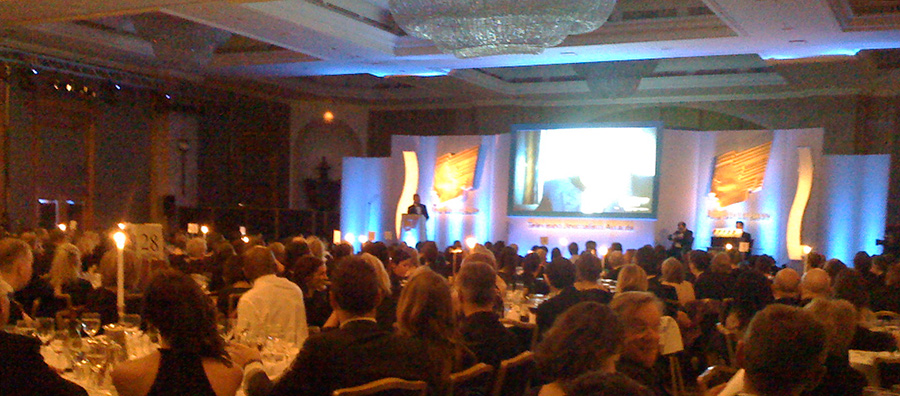
Mark Little CEO Storyful hosting at NewsXchange - Pic David Dunkley Gyimah

"People say to me, what's your business model, and you know first of all  if I knew I wouldn't tell you"... Mark Little's remark eighteen minutes into this video: Innovating in tough times raised a chuckle from his fellow panelist.

Out of camera view, there were no audible gasps or sighs of despairs. After all you could argue the reason why delegates attend any number of media gatherings is to learn methodologies of success from the innovators.

And they're entitled to their pound of flesh, except perhaps where the theme is explicit e.g. How to be an innovator in tough times, is about innovation and not revelations of a company's business model.

Overall a schema, if not an overall methodology, is to attend a conferences where the jewel crowns are of any small, to successful company, is likely to be on display. Between 2001 and 2008 by my own estimates this was rife as web 2.0 and the conversational tone engineered into the web took hold.

The most prominent in the news rooms became the heart model for the news workflow. Gone was the cinema stall arrangement to a theory of funnelling the news into the centre of the news space and metaphorically the heart of operations.

BBC's heart model in construction - taken in 2012 before their launch


Now, largely the strategy for writing a blog, creating a social universe or showing how to crack your head open for a You tube laugh is common practice.

But look hard enough and the same subjects recycle various conferences, unless that is it involves pedagogy in research, and even then. In the latter case you'll likely to pay a prettyish penny.  Take knowledge that is a unique commodity e.g. Financial Times data news, or how the Concord Monitor made good on its paywall. Both good examples of info that is rarely, if ever free.

How to learn how to shoot  as a videojournalist is another.  Otherwise, you're never short of digital know-how boxed as your cure-all coming your way at the next conference.


The Sharing Theory 
The sharing theory, which has engulfed the internet is a combination of cognitive practices as  ecclesiastically old as Adam offering Eve an apple and more contemporary and postmodernism partnerships, which involve BOGOF, buy one, get one free, or GOFTU Get one free then upgrade.

The latter surfaced in the mid 90s following Marc Andressen's Netscape breakthrough. Whilst Andressen subscribed to the true spirit of disruptive anti-capitalist economics in his ground breaking work, by the time Microsoft frankensteined Moasic to Internet Explorer, the idea that nothing is really free was crystallising fast.

The push for sharing as a theory can be attributed to one of the most remarkable doctrines of its time, which was so alarming when it emerged, it was as much ridiculed as it was adopted by the new evangelists.  Doc Searls, Christopher Locke, Rick Levine and David Weinberger published their opus de The Clue Train Manifesto.

Its 95 thesis read as a social, cultural and economics panacea to the status quo. Anti-capitalism was the new hip with decrees such as:
  • Don't worry, you can still make money. That is, as long as it's not the only thing on your mind.
  • Have you noticed that, in itself, money is kind of one-dimensional and boring? What else can we talk about? 
  • Markets are conversations.
It's good to give became the new mantra, because sharing ultimately is altruistic, though that is a myth.  While that has currency for those who are clearly selfless in their aims e.g. Gates' charity, many of us share because it buys us credibility. It's a social badge of sorts. On the other hand businesses threatened by Net's anarchy re-engineered their own business model.

By providing you a platform to speak, share and talk to one another, you become one of their matrix and if many of us sign up, to advertisers that's eyeballs. And eyeballs mean (all together now ) MONEY!

Ten years ago, I can still hear the howling laughter of BBC types as I,  a zerozen tried to get a commission for a programme. There are citizens and netizens, but in the early days any netizen without any successful scars from the maddening dotcom boom was a waster, a zero.

Why does this matter at this moment and time. I have been musing over what I do with the pragmatic sections of my PhD practice which takes a deep look at developing a theory that would underpin videojournalism on the web.

That research over six years, involving four continents, hundreds of interviews needs to be shared, but its intellectual property is, I'm told by my supervisors, worthy of a book.

It's a no brainer really, but more importantly, it underpins a new tide that is grabbing hold of the web, a softer form of capitalism, a new Clue Train Manifesto that says we love to share, but truly not all things are sharable, which makes Mark Little's opening remark refreshingly candid.

End ++

David Dunkley Gyimah is an Knight Batten award winner in Innovation in Journalism and International videojournalism winner. He is completing his PhD which examines and posits ideas for an evolving story form. The grand theory encapsulates various media and storyform theories. David has previously worked for BBC Newsnight, Channel 4 News and ABC News in South Africa in 1994.
He is an artist-in-residence at the Southbank Centre and a senior lecturer and academic supervisor for a number of companies. His work can be found on his site www.viewmagazine.tv

Friday, April 26, 2013

Integrated Multimedia Videojournalism's New Ideas. Please bare with me

Prepping on late night food for the Arab Media Summit in Cairo

It's 11.30 pm, we've just stepped of the flight to Cairo to find out in the morning the agenda we had planned for their summit needs to be changed. &^%$£?? Major ouch! Journalism is in a crisis in Cairo, that swiftly needs a solution.

It's different to what I am aware of  in the UK and US. The pros are, they believe, suffocating under the weight of social media and the independent news maker.

Nothing stays the same, everything changes.

Followers of this blog, which principally deals in videojournalism, , ideas, academia and journalism innovation may have noticed how strangely the blog has changed over the past couple of days.

The reason being I'm experimenting with a new layout. After six years of blogging and with a whole wealth of information to hand from my extensive work, the need has arisen to display this on a more open, and easily navigable blog site.

Some of that info includes work I'm about to start with the Comedy theatre, one of London's most successful comedy houses, as they go digital in a big way, looking to expand into India.

Equally exciting is another company, OrgVue which has found a way to use data visualisation to help companies figure out their output/ staffing etc.

More rceently, I have had the pleasure of working alongside a medical data company, Dendrite, supervising a true talent who has built a top rated site from scratch.

Pragmatic ideas
Then there's my own personal work from my thesis, which, if the logic holds means the way we teach doc making/ videojournalism and news needs a radical overhaul. The text tells you how, with some powerful people in the industry combining their thoughts. I'm looking forward to sharing that with the industry.

Couple of years back I received this email from the BBC.

Dear David 
We are currently organising BBC Worldwide's annual Leadership Conference in October which is aimed at the top 150 senior leaders across the company. We would like to invite you to speak at a session focusing on 'Creativity and Innovation: Creating the Winning Idea' which currently has speakers including Innocent; Ten Alps and Bebo. The session will run on Thursday 5th October from  11:20 - 13:30. With your fantastic experience in both old and new media and your insights into next generation TV both in the UK and US, you would be a valuable addition to the panel. Your slot would be around 20-25mins, followed by a 60 minute Q&A panel session in which you would jointly answer questions from our staff.
About the Leadership Group Our Leadership Group consists of around 150 of our senior staff from acrossour seven business areas: Global TV Sales, Global Channels, Content &Production, Magazines, Digital Media, Home Entertainment and Children's. They are a lively and talented group of people who would greatly enjoy theopportunity to hear you speak and we very much hope that you will find the event interesting too.
 
Head of Communications

More recently, I spoke to executives at the BBC, so with my new findings rather hope I can share some more with broadcasters.

Recently speaking at BBC Meetings

In June, however,  I'm in Denmark presenting to their journalist in a week which includes some of the world's best thinkers in image making, such as Bombay flying Duck, Drea Cooper  from Califormia is the Place and Michelle Michael, a highly respected VJ from the US.

Timetable for Denmark talk.

One that I hope meets the need of the pro and pragmatism of the student, whether that's academia or life-student.

Unfortunately, many of the blog skins treat key words as categories resulting in a mis-alignment of pages. Horrible!

I'm hoping this can be resolved really soon. So in the meantime, I have reverted to the blog of old and hopefully over the weekend can present the new site, without all its detritus. So please stay in touch and we'll get this experience to where it should be.


Wednesday, April 24, 2013

What is videojournalism on the web, in multimedia and offline - a major study and film - and why it matters

What is videojournaism and why it matters?

What is videojournalism?  

This could be a boring academic question, but it isn't. Many have defined, or described it, but few have attempted an anthropological (historical) examination.

Some people have, but as journalistic enterprises and as a journalist myself they've made for interesting reads, but I wanted to attempt something different. A deep invasive examination into what it is, and its purpose. I secretly refer to it as the lost chapters.

Why does this matter? Here's an analogy. You can't begin to understand social media, without the contribution of web 2.0, web 1 and unequivocally going back to the break out of the web itself into the public domain in the 1990s

Only by interrogating its past, provenance,  can you understand the potential of its future. And that's what I have set out to do.  In the 1990s there were around five different pioneers that emerged in the US, UK, Denmark, Germany and Japan.

What if some of those people never went away. What if they quietly continued with their craft? What if they harboured deep thoughts about it and amazingly emerged and said we did it quite differently.

What did they mean? Then they showed us and from that we could see the endless possibilities, its potential and where videojournalism was strangled. Yes its potential was pared down.

You may think I sound like a salesman. That magic snake potion for the media's woes. But actually my research has the dryness warranted from academic research. No hyperbole, but substantiated facts.

The process has taken me to China, Cairo and Chicago. Its language and construct is more expansive, yet as previous posts going back to 2007 show it's not a utopia. There is no such thing, but the form when it bears its fangs it constitutes an artistic form par excellence.

But why would anyone bother reading it?  Its 85,000 words, involves more than 150 interviews.

They include the figures that brought videojournalism to the BBC and has taken 6 years as a part time PhD.  So when I do publish please feel free to skip to the conclusion then work you way backwards.


5 Reasons for presenting

Why would anyone consider reading it. If you don't mind here's 5 rhetorical answers
  1. I was one of the first official (National Union of Journalists) videojournalists in the UK in 1994.
  2. I have spent near 20 years immersed in its form and style, in one year creating 500 stories on air. Before being a videojournalist I worked for the BBC e.g. Newsnight, was an on air reporter for BBC 2 Reportage and ITN's London Tonight and produced for Channel 4 News and ABC News.
  3. I have used it on projects to create: 
    • commercials, turned around in a day that went out on CNN International
    • Being Heavyweight boxer Lennox Lewis videojournalist during his fight with Tyson. 
    • Creating the first ever Country-to-Country videojournalism broadcast (Ghana and South Africa)
    • Launch the UK's first newspapers training with the Press Association
    • Created films that have been well received international, winning international awards
    • Used it t create Obamas 100 Day film showed at the Royal Festival Hal

     4. It's been one of the most difficult things I have undertaken and I'm grateful for opportunities such
     as being a judge for the UK's television Emmys, the RTS that opened my mind some more.
    5. Its work that extends from winning the J-lab knight Batten Awards for Innovation in Journalism
     and the international videojournalism awards in Berlin.

And I'm looking forward to sharing it with as many people as possible, my good friends in the US and universities, Europe, China and Ghana/South Africa. They're linning up nicely.

Its place in a future of journalism when its done and that's soon, because I'm also making it into a film. The results I believe will question videojournalism to the point that "there is no such thing as videojournalism, yet there IS videojournalism". This almost drove me mad.

In the meantime I look forward to sharing and explaining some of its preliminary findings such as the image above, how videojournalists read a scene in making a film.

Monday, April 08, 2013

10 things social media is yet to get right in the new society


The clamour for all things social could make you think nothing else existed remotely similar before 2000. Hobbes, 300 years ago puts paid to that. 

Whilst it would be difficult for anyone to deny the benefits of social media, the corollary is that its blind side obscures an array of pernicious tendencies.  Put succinctly, we have acquired social tools without the social etiquette or an acknowledgement of the framework that Hobbes considered important for the social contract. That is things that are ethically and morally right to do.

The effect has been a growing, perhaps more selfish (meism) social class, sometimes unable to see past the effects of their own screen. Of course this will change, but before that here's 10 things that social media and its evangelists are yet to help us get right.

1. Anti-social classrooms.

Until universities understand how to thoroughly uses social media in lectures and one of the deepest thinkers here includes Howard Rheingold, the design and exchange of knowledge will be found wanting.

One of the biggest setbacks is the now antiquated front-facing design of lecture rooms, followed by the inevitable FB time inbetween that crucial link in information. You could argue if the lecturers were more engaging this wouldn't happen, but that's not always the case. I have come across past students who

  • from the onset are buried in their FBs and when asked will say they can multi-skill. 
  • or that they were not supposed to be in lectures in the first place. 
Multiskilling is a now an almost ubiquitous function, yet as many scholastic works prove, left side brain associated with reading, and right side brain in watching are two separate brain functions.

In my own simple tests, I have students read a book then attempt to play ping pong at the same time, otherwise a more severe act with sometimes tragic consequences is texting and driving at the same time. It's not advisable.

Until we evolve more efficient brains or find ways of making lectures more socially engaged, (I now build social media breaks into lectures which appear far more important than tea-break) the lecture hall becomes the anti-social classroom.


2. Dear Ms Elizabeth Landy.

Oh no, the social media generation opt for the more "Hey Lizzy ". A blurring of social space and real space means increasingly its difficult to separate who's your friend and the people with which you ought to be building a professional relationship.

We're only a click away from addressing our next potential employer, Jonathan Barnes OBE, for that banking job, with "Hey Jonny". Either we get socially etiquetted up or a new range of finishing schools will emerge to help us understand that there are your friends and professional friends.

3. Likes You.

Liking and disliking someone and their exchanges has moved from the water cooler into a social space, where authors, particularly budding journalists struggle to understand that the whole point of journalism is to "be on the record" .

"Oh no if I reveal myself, I'll get lower grades", I overheard this once. What you're not prepared to say in person, refrain from saying on public space. We're actually getting much better at this is my perception.

Partly because, whilst an out of place comment is one thing, tipping your hand too far is likely to incur the law of defamation (if you can afford it), a potential beating (which I would not advise) or an exchange which may hurt you when you realise the person you've taken on has bigger google juice guns than you.  Overheard, a student photographer asking her lecturer to take down his comments about his brilliant writing as it occupied the top ranking of her name, and the photographer wanted to be known for his photographic work.

Quick win solution:  encourage trainee journalists to learn to say what they feel without always hiding for the wrong reasons around anonymity.  You're going into a profession where you get paid for critiquing with your byline attached.

4. Eyes on your forehead.


In 2056 human beings will have their eyes situated on the crown of their heads. If that doesn't happen, the number of fatalities walking the road in a straight line into traffic, whilst texting, will continue. It's more dangerous than you think says Laptopmag blog. In the US, according to the Guardian newspaper, fines will be issued to those walking as if they needed a tan on their necks. The walking talking texters have created their own social rule so that they have right to way on crowded streets. But what happens when we're all double bent walking along a-texting?

5. Damn politics.

3,000,000 online petitions versus 3,000,000 people lining the streets. Which one appears more potent? No one's saying online campaigning doesn't work, but its been said on more occasions than I care to remember that the lot who campaigned against Thatcher's poll tax were more political active on the hustings compared to today's youth. Is this all myth?  Will it be social media that makes politics cool to the point we hit the streets again? Would the poll tax have been abandoned solely if people adopted an online strategy, not withstanding the occasional Flash mobs?

6. The Coward Boss.

Not up to breaking the news, as it should be, on something as dramatic as a loss of job, or ending a relationship, a generation of social mediasts might argue what the fuss is about.
As a media exercise I pose a question to delegates that challenges when and where they would report casualties in a combat army. Some are quick to express how Facebook would be ideal. Then there are those that acknowledge that the ideal situation would be to firstly contact by phone or face-to-face someone from the injured person's family. Social Media scholars may need to provide the blue book on what is socially acceptable to say and what requires the human touch.


7. Its not on google, it never happened.


Yep, it's that simple, social media's omnipotence means a generation believe if its not on google, it never happened and if it's not on the front page, it's not important. Mediastorm are arguably one of the best global cinema journalism storytellers, but you won't find them on page one of "cinema journalism", though I'm certain that will change.

This reliance on the world's leading internet service provide led one scholar Professor Tara Barabazon to ban her students from using google and wikipedia. My own reasons for cautioning the exclusive use of google is the loss of flaneurism - the art of physical wandering and serendipity finding new contained knowledge from journals and books.

But actually a more pressing reason also exists. Dr Alison Williams, a colleague of mine, has just completed her doctorate and part of her study showed how physical spaces assist in creativity: going for a walk, a shower, riding in a bus. So walking to a place where knowledge is, the library, may provide additional, hidden reasons for creativity.

Undoubtedly, google and Wiki (Wiki leaks) have proved their importance, and google continues to digitise the world's brains, but knowledge from social media does not yet trounce all the other media entities. Confidential agreements, and research knowledge still restricts information.

8.  Think before you reflect.

Social media has made us more prone to speak without sometimes reflecting on what we're saying. Cognitive awareness is being substituted for immediate emotional gratification and sometimes playing to the gallery, making us perhaps more socially impoverished. Paris Brown, 17, one of the youngest youth police commissioners in the UK, found this out to her embarrassing costs when she tweeted .... "or I am an anti social, racist, sexist, embarrassing XXXX. Often its the latter." Here are examples of Tweets gone wrong from ReadWrite Social.

9. Lonely girl, lonely boy.


Paradoxically, and not unsurprisingly we're social beings who like physical company. And while social meet ups via social media may increase our social network, nothing beats physical space. That feeling of finding friends online, combined with other factors, can lead to the most un forseen consequences e.g. grooming.

Dating, or trying too in the social space has led to a new word, Catfish, and the series from MTV featuring couples meeting up for the first time and realising all is not well.

10. The secrecy syndrome

Social media makes us increasingly unable to hold secrets, but also inadvertently creates the perception of one upmanship. Paraodixically, the hiearchies we so complained about in journalism, have been replaced with a new breed, endoresed by their social media status.

The more folowers you have, the more important you are. Except that we know that's not the case, but online that's the perception and has led to the practice of tweet-trawls ( I have made this up) where we discover how Tory Minister Grant Shapps in boosted his twitter followings,  first broken by Channel 4 News.

Bowie's comeback album was not only a triumph in music, but in presenting a majestic surprise to his fans. It didn't make social media. Neither did an important assignment endorsed by President Obama who had to act as if nothing unusual was taking place at a correspondents' dinner when Navy Seals were prepping for that mission.

The argument isn't whether we need to keep information secret. That debate still rages in the wiki-saga, but that in dealings where we would prefer personal information was not divulged it stays secret.

I often say to students I can give you the on the record of what's going on in  journalism and the off the record, which comes from private conversations and since those conversations  can be damning, I'd prefer they were not discussed, but you decide on the arrangement you want. Chatham House rules or no rules.


Monday, April 01, 2013

The Flow - Like minds, the cinema journalist and high performance car driver - business

Flowing in the Porsche with cinema journalism

They call it 'the flow' and if all you see is the car and the driver, you're missing that something.

It is a point of contact between the car and person, Woman and the machine in concert, the physical and transcendent.

Formula One racers could write poetry about it. Ayrton Senna did, but through his unworldy performances. Kevin Haggarthty, a name you're unlikely to be familiar with and his protege, does too, though he'll be the first to feel deeply embarrassed by any comparison.

10.00 am Bank Holiday and we're hurtling about through country lanes testing the Porsche 911 Carrera. She is a beautiful beast and my lack of respect for her and her driver have twice made me feel like throwing up.  The G-force in the car is measurable, made visible by a dial on he dash board.

Kevin, a high performance driver is making his monthly assessment, road testing the latest super car. What a job eh? Lucky so, so and so.

We've known each other for a fair while, but today the conversation goes into an area between him and Patrick, which is almost uncar like, but I get it.

"What's he looking for in a car ?", I ask

Response. How it communicates back to me, he says, adding, it's how she feels, not as a series of technical measurements, but....

Here you almost  imagine Haggarthy as Claude Lelouch shrugging his shoulders with that 'Je ne cest quoi' look explaining that epic scene in Rendezvous 1976..

Epic. Irresponsible! Epic. [below]


Kevin does his with a series of spurts and tight bends on a secret location and whose speed I won't even humour you with.

He continues. When a driver becomes one with the car, it's called the flow. I recognise this. At some point labels that distinguish between forms become meaningless. When you're making a film and understand the audience, the rules that once guided you become irrelevant.

I reply, you rely on instinct, learned instances that become reflexes, so you're judging the future, limited time ahead and making decisions.  Sometimes you're wrong, but you're more often right. And what evolves from the process is meta language, a flow.

A place where commitment seems casual, but involves a heightened sensorious state.

In a couple of weeks we're meeting  up again. Kevin, with a new car. Me, with a new insight into how I might use artistic practice to get more out of this assignment. Now that would be a double flow.

Afterward:
For this shoot we used two go pros, the 5D and a  Panasonic. The next shoot will be built around 5 go pros and the 5D. We've found something we want to exploit.


Saturday, March 30, 2013

Understanding changes to 21st century media, journalism and videojournalism


How artistic practice played a role in BBC executive interview Peter Horrocks for a Vlog Butterfly

You're a student journalist, a traditionalist, pragmatist, entrepreneur, or media dean of a university. Everyone tells you journalism is changing - even your three year - old niece.

Listen out for the upcoming series on News on BBC Radio 4 next tuesday.

Largely, and I haven't heard the contents of the BBC programme, but gurus of the media attribute changes in news to digital, some to social, others to a generation of news consumers having different brains, or even blaming climate change - who knows?

Their reasons aren't necessarily without some truth, but as a former broadcast professional, still practising video journalist/ designer/encoder and filmmaker, an educator/trainer and consultant, I have wrestled with the question.

The question: how the journalist is changing and her impact on pedagogy? By that I mean how the rhetoric of her argument is grounded in academic rigour and research as well as pragmatism.

But the question is itself vacuous and irrelevant were it not for its prompter. That prompter says how do you know what you know?  How do you become knowledgable and deliver information that is truly relevant to others when:
  • There is a sea of information you could drown in. So how do you access the appropriate bits?  
  • Public bodies and private companies conceal information that is highly relevant to citizens and if we could find these it would enable us to make meaningful decisions.
If the people of Cyprus knew of the EU's raid on their banks beforehand, would they have acted differently?  Did Rumney's view of the electorate, made evident from a secret recording, contribute to image as a potential partisan president? Does this article provide any intent so far about how relevant it could be?

Conflict of ideas
But first the conflict. The one experienced by mediast and parties in this field of enquiry, which is a perennial one. If you're a lecturer,  student or journalist look away now.

Practitioners, the argument goes, with years of experience in the industry will give you a real world account of the media and in the process pour scorn on the codswallop of the theoreticians.

Meanwhile, the statement you've also encountered is that the theorists who have been engaged in deep joined-up thinking develop sound knowledge of the media ecology and thumb their nose at those practiced-based luddites.

The divide between the two is so defined in academia they occupy different departments. I claim no special status in this debate, but I do make a claim to understanding both sides. As with most things in life, a little bit of the other would not be a bad thing.

The changes I express, as both a practitioner and theorist, is presented as a many-media presentation on viewmagazine.tv.  It's been a joy putting it together and given its organic nature it will grow and in the process overwrite most of the articles on my site. Here goe's then.

The image as it appears on viewmagazine.tv will be accompanied by the html text, making it easier to read and is an edited version from the one found on viewmagazine.tv

Presentation


1. 50


1. WHAT'S THE LAST VIDEO NEWS YOU WATCHED AND REMEMBER?
EXACTLY! IF IT REALLY WAS THAT IMPORTANT HOW COULD YOU FORGET IT.

Mainstream news storytelling uses 50 year-old values and processes  to produce its content. And whilst you may think you've seen changes,  a 6-year PhD study conducted across the world shows the biggest change is on its way.

Also, how pivotal artistic practice is to communicators and business.


2. PANELIST DAVID TALKS AT ONE OF EUROPE'S BIGGEST JOURNALISM GATHERINGS, BARECELONA.

If you think you're creating news, then today you're thinking the wrong way. The reason is the definition of news is so immutable as to discard many things that have value. A documentary can be news. A tweet can be news.

So, you're creating stories, particular meaningful types of stories, that are actionable and have a high value for the end user.

And those stories framed under journalism are, says Michael Schudson, a cultural construct, dependent on societal changes and literary traditions.

When one of those variables changes e.g. culture, the story form re-adjusts to these changes. It changes.


PHOTO MOVIE

The story of the first 100 Days of US President Barack Obama, told as a series of powerful stills to a live orchestral score, written and conducted by composer Shirley Thompson.

The film was produced overnight, with the kind assistance of White House photographer Peter Souza who directed me to the pics and my friend former Washington Post Video Editor, Tom Kennedy, who provided the contact. It was screened at the Royal Festival Hall, London.

Influenced by Chris Marker's La Jetée, "Obama's 100 Days" plays on art historian Ernst Gombrich's aphorism that all art [media] forms are variations of the past.

Innovative story forms trade on this ethos, so the Sound slide that blazed across the net was nothing new as I explained presenting at SXSW, Austin Texas and Apple Store in London.

APPLE STORE, LONDON


Digital as a phenomenon is the physical manifestation. Ones and zeros replace analogue in data transmission. Yet, there is an underlying causality that comes from innovators wanting to do something different.

Take film directors, Ang Lee and James Cameron, both created new technologies that assisted them in creating their dreams. Technology then becomes the enabler re-feading change.

Videojournalism is another example. It arrived before the digital explosion, but the group who pioneered it already had grand plans. How do I know?  I was fortunate to be part of that wave.


SOMETHING THAT HASN'T BEEN DONE IS WAITING TO BE DONE  (ARDEN, 2003)

Channel One circa 1994, 24 people chosen from 3000 to pioneer something called video journalism. So, what was it about those 24 that enabled them to take on one of the most challenging, but innovative jobs in the media?

The Internet wasn't public yet, but we were all made aware of what lay ahead. Videojournalism back then was different in many ways to the one you probably know today. To understand this, is to dwell into something the French philosopher Foucalt referred to as 'discursive formations'. I'll be presenting this to Denmark's national union of Journalists again in June 2013.

There are different points of invaluable contact in any data interpretation. Broadly, just before something has begun [the nascent] which means focusing on the surrounding environment, after its started [inception],  and then years after its matured [growth].

Most things need time to mature before its possible to frame a more meaningful longer trend analysis and that's what's happened here. Now those cues begin to yield amazing data from once unsighted DNA, which is extrapolated to map new digital trends and future story forms.

Today, from the former Channel One group, you'll find award winning authors, A BAFTA winner, an MBE, several stars of the BBC, and er, me!

Want to see what Channel One looked like? Click viewmagazine and goto page 5.


Whether its interviewing CEOs and VIPs, such as R. James Woolsey, Director of the CIA (93-95).


Working with the Heavy weight boxer Lennox Lewis at his filmmaker, designer and writer, fighting the likes of Mike Tyson.


Or collaborating with World Press Photographer winner Yannis Kontos on his ceremony acceptance film. The approach to these and varying projects is underlined by a particular philosophy


Artistic Practice
It may see obvious to call this dancer an artist, but she had to learn to use her body to communicate, to tell a story. 

This short film I made demonstrated how various groups of young people abandoned 'technical competency' within their disciplines to go further, deeper into uncharted collaborations. This understanding elides with what Heiddeger calls phenomenology.  

Others may euphemistically state you must be able to "think outside the box", but anyone who is familiar with Johari's window, of known knows, and unknown unknowns made famous by Rumsfeld, will know you can't think outside the box, if you don't know what the box is in the first place.

Artistic practice describes the overarching method of enquiry and interrogation deployed by the individual who assimilates varying number of interests to build knowledge and enhance their practice.

If you still think that defines journalism, the major difference is the lack of a conventional approach or what I would called 'traditionally framed' approach that's required without breaking any laws. There is no specified routine, or  definable route to problem solving, but many that undertake different perspectives.

It is not a quick fix panacea, and artistic practice is difficult to define, otherwise there would be many more Truffaut's, Picasso, Spanish football teams, Ed Murrows, and Darcey Bussel.

The Spaniards afford one of the best examples. Everyone in the beautiful game will tell you how you ought to position your line up: 4:4:2, 4:3:3 then the Spanish football team came along reworking a new style called tiki taka.

Now instead of playing in a rigid traditional formation, the Spaniards were playing as if they had 10 forwards, 10 midfielders, or 10 backs.

Artistic without the Art


Masters Students reacting to artistic practice in learning to self critique


You do not have to be an artist to be engaged in artistic practice. But it's interesting, how many journalists when asked avoid the term art for its presumed pretentiousness. Furthermore, artistic practice is not taught as a core subject in journalism schools.

If anything the value of artist thinking is so minimised that its arrested before we enter secondary or high school.

Artistic practice too is so individualistic, though you can teach people the skill to begin to understand their own artistic temperament, that you cannot separate the practitioner from their art.

I regularly engage in the practice when I'm lecturing Masters students, often saying to them it is not the marks and artefact, but the problem-solving state, the art of self-critique, and meaning-making by looking to other disciplines. 

So, I'm a creator of videos, either earmarked as news, promos or documentary, a designer, a journalist who's reported conflicts and interviewed CEOs and executives e.g fmr CIA boss R. James Woolsey and I have created creating multinational projects, a deeply embedded artistic practice is core.

But you also don't have to have a fixed discipline; it's the approach and the real problem identified is that its not a method that is taught or encouraged when we go also nothing of the above. I'm not a videojournalist per se, but artistic practice provides the room to do things innovatively

David Dunkley Gyimah completes his PhD this year examining the corpus of story form. His research has taken him to the following countries where he has taught and gathered data
  • China
  • Sheffield Doc Fest
  • BBC/ BFI executive meeting
  • Presenting at SXSW
  • Training in Tunisia
  • Training in Lebanon
  • Presenting and training at Chicago SunTimes


-
Next post - understanding the unnews
How artistic practice is crucial for journalism and businesses.

Sunday, March 03, 2013

The Human Cyborg, Videojournalism, and laissez-faire

David in Tahrir Square February 2013

I'm often amazed at the number of videojournalism courses or documentary courses I come across, which attempt to neatly package these various media forms. 

Often they're littered with dogma, offering quick and easy solutions to a dialectic language that is anything but simple. When I helped set up the Press Association's videojournalism programme that would train legions of regional journalists from 2005 onwards, this was a primary concern.

There is a fundamental reason for the lies of a quick fix. It mirrors film making at its inception when the camera's scientific purpose, its ability to capture an image was paramount for Lumiere and co, and furthermore the commercialisation of the process trumped any aesthetic representation.

To make money from the process charlatans learned to deliver an intoxicating ikea- assembly formula, which appealed to its recipients.  After all how could they make a living.

This, however, obscured the wider point. Telling you how to do something as the only mode of comprehending film making obfuscates the discourse of this fantastical medium and its ability to invent language.

In essence teaching videojournalism, documentary or film making is not a formal process, but an artistic one. It resides in the power of thought, in the lecturers' ability to stimulate how you think and for the students rationale at refluxing those thoughts, returning them with interest.

Behind every great director of filmmaker you've ever known lies a student once who pursued the craft with an intense curiosity.

In Detachment (2011) Brody's character,  a supply teacher to problematic children sums it up when he says, If I give you the images, where is your power of thought.  He adds you need to be constantly assimilating knowledge.


Dampening our senses

That's problematised because we've entered the era of the cyborg, the human cyborg, not a computational being of prometheus power, but one which requires an ecology of byte-size command signs. Here, quick fixes, gibberish and physical tasks mimick heroine's quick hit as the norm.

The power of thought is reflexive and in generations to come, 140 words, a singular manipulated image, and a point-and-shoot camera will probably give room for nothing else. It's not your fault, that's technological progress of sorts.

But if those that teach negate to tell their charges the other world, the one which offers an alternative deep richness that require meditative attention, then we have wronged a society. Bordwell captured this as the implicit (hidden) meaning lauding Hitchcock as the master of thought-film.

In Cairo, while addressing the Arab league summit, this was my message. Film communicates to us in a way that the signification of verbal language cannot and vice versa. When the conversation tipped to the acquisition of knowledge, western knowledge, I was firm in pointing out that the answers to cinema journalism in Cairo rests in their own literature and the likes of Naguib Mahfouz.

David speaking at the Arab league Summit in Cairo

Meanwhile to talk of digital now as the new collapsible economy, blurring of boundaries, and multiple disciplines, wholly ignores the golden period of the early 90s which Tom Gunning refers to a Cinema of Attractions.

Cinema journalism, that I practice and teach, is itself a well worn path, but we can certainly tease out strands that have a specificity about them in the millennium. That's the power of thought.  And that power , as witnessed by Malick's "To the Wonder (2012)" can become so intricate that in the end  words, the signifiers, will not do.

In Malick's world we're invited to think within thought, a philosophical quest that pushes the language of film to its extreme, careering towards Sigmund Freud's  psychoanalysis. Confusing, perhaps, but it's the one thing we must nurture through debate, discourse and trial.

On viewmagazine.tv I'm about to post a trailer from Tahrir, as a follow up, to Tahrir Memento. It features no dialogue, but as Dirk Bogarde would tell us, the camera's ability to portray thought.

It's the thing that we cannot afford to let go.

David Dunkley Gyimah is completing his PhD into the documentary making process. He has been a journalist and filmmaker since 1987 working for the BBC, Channel 4 News, ABC News and WTN. He is the recipient of the US Knight Batten Award for Innovation in Journalism, and an International Award winning videojournalist from the Berlin festival. lectures at the University of Westminster.

Wednesday, February 27, 2013

Masters in online journalism visit ITN

Images from the visit of Masters students to ITN. 


Thanks to ITN for welcoming us and also hearing the Masters students pitch and providing a critique.  ITN's Jason and Emma were also very generous with their time and they spent a full two hours with us. 

Full write up to follow. 


Friday, February 22, 2013

How Channel 4 News won the RTS innovative news section, 2012

David arrives early at the judging meeting at the RTS

The winning entry for this year's innovative news read as follows on the RTS's website


Innovative News

No Go Britain, ITN for Channel 4 News
“The winning entry stood out for the novel way in which it helped to give a new look at one of the year's big stories. It built upon the strength of crowd sourcing and social media and then added the clout of a broadcaster to build up the channel's continued commitment to people with disabilities in the year of the Paralympics.”
The Nominees were: 
  • 50 States: 50 Voices, Sky News
  • The Olympic Torch Relay, BBC News for BBC

Within the glitz, as well as, sombre mood from remembering fallen journalists, the industry gathered at the Hilton to crown the victors. A couple of months earlier, however, the business of finding a winner and why fell to ten of us gathered at the RTS headquarters in central London.
Jurors are pulled from across the industry, as well as academia, from where I come. It's an interesting area to diagnose. What does constitute 'innovative'? We have guidelines and the mood is relaxed, yet business like to soul search, if the need arises.
So why me, how did I get involved? I can't be sure. There's a panoramic look across industry for people with the skill, and presumably, the fact I have worked for BBC, Channel 4 News, WTN, ABC News and a host of others might suggest I possess some understanding of the broadcaster's production process.
In 2005 I won first place in the US' Knight Batten Awards for Innovation in Journalism, a decade earlier was one of the UK's first videojournalists, and am completing my PhD which examines innovative news. So I guess I have a penchant for the innovative, which I try to reflect on my site, viewmagazine.tv.
Now, it would be grossly unprofessional to write about our conversations when judging, in that common courtesy alone dictates I should at the very least contact my fellow jurors. I also feel a bit of Chatham House rules  applies to be frank about our conversations, so I will only reflect on my thoughts on 'No Go Britain' and what caught my interest. I'll do the same for '50 States' and 'The Olympic Torch Relay'.
Also, a myth buster to friends who have asked. The voting is such that I genuinely have no idea who has won, until it's announced on the night.

No Go Britain
Awards Night at the Hilton
'No Go Britain' did something that broadcasters rarely have time for, because of the news agenda. They took an off diary event, that is people with difficulties getting across London because of disabilities and contextualised it  via a bit of advocacy journalism. Or as Katie Razzall, C4 reporter put it: 'This was about empowering disabled people to lobby for change'.
The plight of anyone disabled trying to get by on London transport may seem anecdotal or at best isolated, but the programme followed a couple of subjects around as they negotiated their way across the capital, evoking Robert Drew's mantra of 'being there'.  But how did they get their subjects or begin to understand how deep the issue went? Old media and the not so new in twitter collided.
The twitter discourse allowed the programme to pull the issue together. and once it turned from tweets to taped interviews, the subjects within the film were invited to speak on the programme. The shift had been made now to good robust studio debate. It could have been left here, but the producers now made the issue an open platform for the disaffected to meet and discuss on air with execs. 
If there's one thing new media by itself still has yet to do well,  its the clout and platform to call on high profile interviewees, in this case transport bosses and let them face their accusers. When John Major, from the Confederation of Passenger Transport spoke about changes that would take place in 2017, presenter Jon Snow tells us of an audible gasp from panelists, before Anthony Wilson quips: we live in 2012, not 2017.   Good television.
Channel 4 News then announced it would be taking on further campaigns and execute a similar strategy. So what made it innovative?  Tying all those elements together rather swiftly, mixing old and barely new media. Twitter was not incidental, but strategic.
A couple of years earlier CNN used twitter for the world cup in an innovative means. Nope, this doesn't mean you need twitter to impress. But C4News made it look integrated. Other factors included:  letting the stakeholders tell the story, finding strong interviewees who could articulate their concerns and were not fazed by the studio or even the execs they were meeting. 
Finally looking at the workflow, it appeared seamless and the thought did cross my mind of the strategic use of resources and personnel. 
As an acad-ournalist or hack academic ( both horrible words) a critique, such as this will hopefully provide ideas for up and coming practitioners, online media and Masters students looking to understand programme making. C4 News provided a text book case on how to leverage a story. I might have gone slightly further with the videoing, using the Go Pro 3 so the subjects could bring back vérité videos of the troubles they face, but that's a moot point.
Tomorrow I'll talk about 50 States and The Olympic Torch.
Click here for previous posts
David in Tahrir Square, February 19th 2013
In this post I talk about the debilitating effects Egyptian journalists say social media is having on finding the truth in Egyptian politics
David in Chongqing working with universities
In this post I present some pictures towards the shoot we did between new and old China.
On another related matter  I am convinced that Chinese narrative, with its multiple foci in painting, holds an important understanding for elliptical narratives and new media story form.
Speaking at NewsXchange in Barcelona
Here I spoke about journalism and its fragmentation, which is a natural cause, given that journalism, as Schudson says, is a social construct.